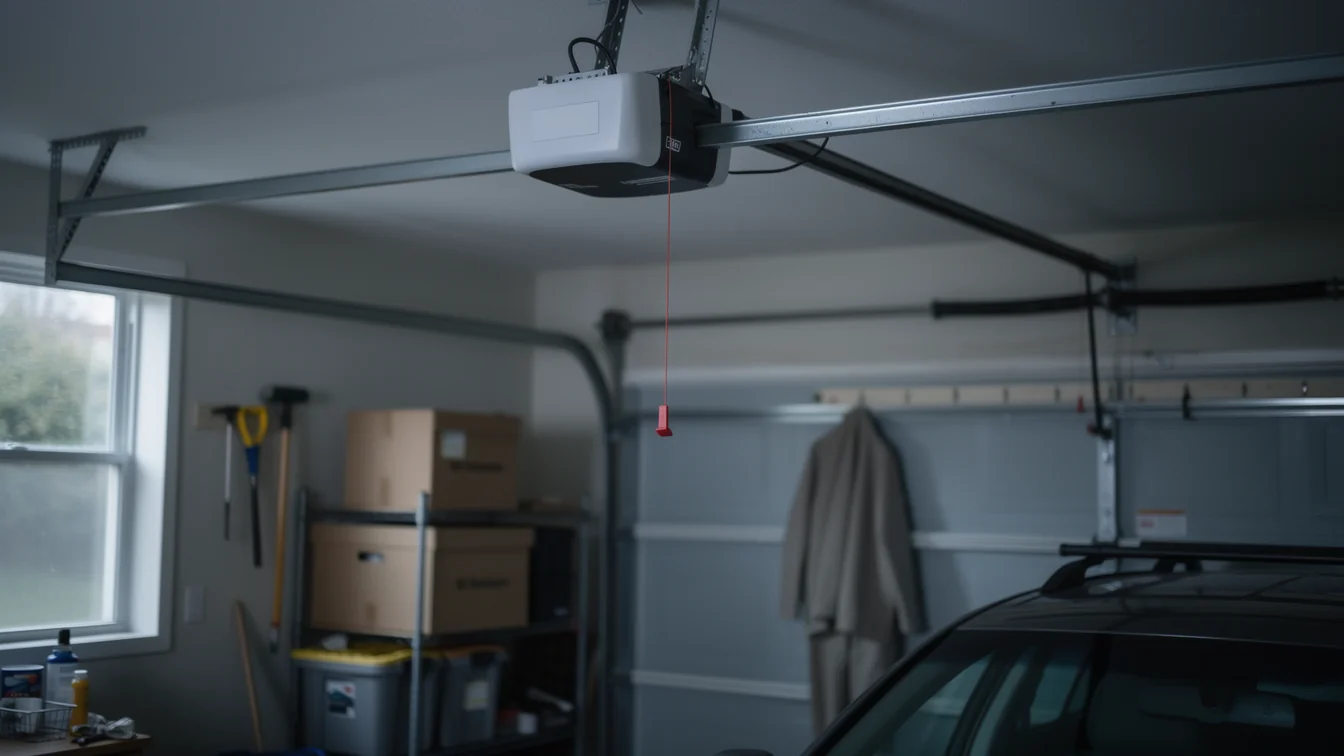
When the Power Goes Out, Your Opener Goes With It
Fairfield's 1954-1984 housing stock and severe cold winters mean garage door openers fail at outage time more than most owners expect.
Read moreA guide for Fairfield homeowners with 1960s-70s doors on why your garage door squeaks, grinds, or bangs, and which sounds mean a real problem.
Local detail
Most homeowners here assume a noisy door just needs oil, and sometimes that's true. But a lot of the houses around Fairfield went up between 1954 and 1984, with the bulk of that stock from the 1960s and 70s, and the doors and hardware on those original openings have had sixty-plus years to wear in different ways than a door installed last decade. A squeak on a ten-year-old door usually is lubrication. A squeak on a door original or near-original to a 1966-built house is more often a roller that's worn oval, hinges that have stretched their screw holes, or track that's shifted slightly out of plumb from decades of seasonal movement in the framing. The sound is the same word - squeak - but the fix is not the same job. People spray silicone on it, the noise goes away for two weeks, and they think it's solved. It isn't. The other common mistake is ignoring a grinding or rattling sound because the door still opens. A door that still opens is not the same as a door that's safe to operate, especially with the cable and spring hardware that's common on houses of this era's stock.
The area
Across the service area there are something like 141,171 households and 83,336 owner-occupied houses, and a meaningful share of them are carrying garage doors or openers that are original to construction from the 1954-1984 window. That means a specific set of noises shows up again and again on these calls: a loud bang on opening that's a torsion spring losing tension, a rhythmic thump that's a bent track section from age rather than impact, and a grinding whine from an opener motor that's been running on original gearing for decades. None of these are cosmetic. A spring under tension that's starting to fail doesn't give much warning before it lets go, and on a door this old the cable and drum hardware holding that spring in place is often the same age. We don't recommend waiting to see if the noise gets worse. On hardware this old, worse usually arrives as a cable snapping, not a gradual decline you can plan around.
What we find
Fairfield sits in a severe cold climate band, and that matters for noise diagnosis specifically, not just for comfort. Steel contracts in cold weather, and on a door with decades of play already built into its rollers and hinges, that contraction shows up as new sounds every winter - a creak on the first cold mornings that wasn't there in October, a slight catch partway up the track. It's not a new problem each year. It's the same worn hardware responding differently to temperature. Lubricant also thickens in cold garages, which changes how a marginal roller or hinge sounds without actually making it worse mechanically. That's part of why the same noise can seem urgent in January and mild in July - the hardware didn't change, the temperature did. We tell people not to over-react to a noise that only shows up on the coldest mornings, but also not to assume it's nothing just because it quiets down once the garage warms up.
How we work
The cold band this area sits in puts real stress on garage door hardware that wasn't engineered with today's weatherization standards, which is most of the stock from the 1954-1984 build era. Torsion springs lose a measurable amount of tension in sustained cold, openers draw harder to lift a door that's stiffer in its tracks, and weatherstripping on original doors - if it's still there at all - has usually hardened past the point of sealing anything. The noise that results isn't one thing. It's a chain: cold tightens the hardware's tolerances, the opener works harder against that resistance, and the strain shows up as a new grind or a louder bang on the next cold snap. We can't make a sixty-year-old door quiet in February the way a new, properly balanced door is quiet. What we can do is rebalance the spring tension and replace the worn rollers that are amplifying the problem, which gets you most of the way there even in a hard winter.
Questions
Cold overnight temperatures stiffen the steel in the track and tighten tolerances on rollers and hinges that already have wear in them. As the garage warms through the day, that stiffness eases and the noise quiets down. It's the same worn hardware, just more obvious in the cold - it's worth having checked even if it goes away by afternoon.
On a lot of the older doors common around Fairfield, yes, a bang on opening is usually a torsion spring that's lost tension or is close to failing. Springs don't fail gradually - they give little warning, so a sudden bang on a door this age is worth having looked at before it goes.
Sometimes that's genuinely the fix, especially on newer hardware. On original hardware from the 1960s-70s building era that's common here, oil often masks a worn roller or stretched hinge for a couple weeks before the noise comes back. If it returns quickly, the part needs replacing, not more lubricant.
Recommendation
More garage door guides for Fairfield homeowners.
Fairfield's 1954-1984 housing stock and severe cold winters mean garage door openers fail at outage time more than most owners expect.
Read more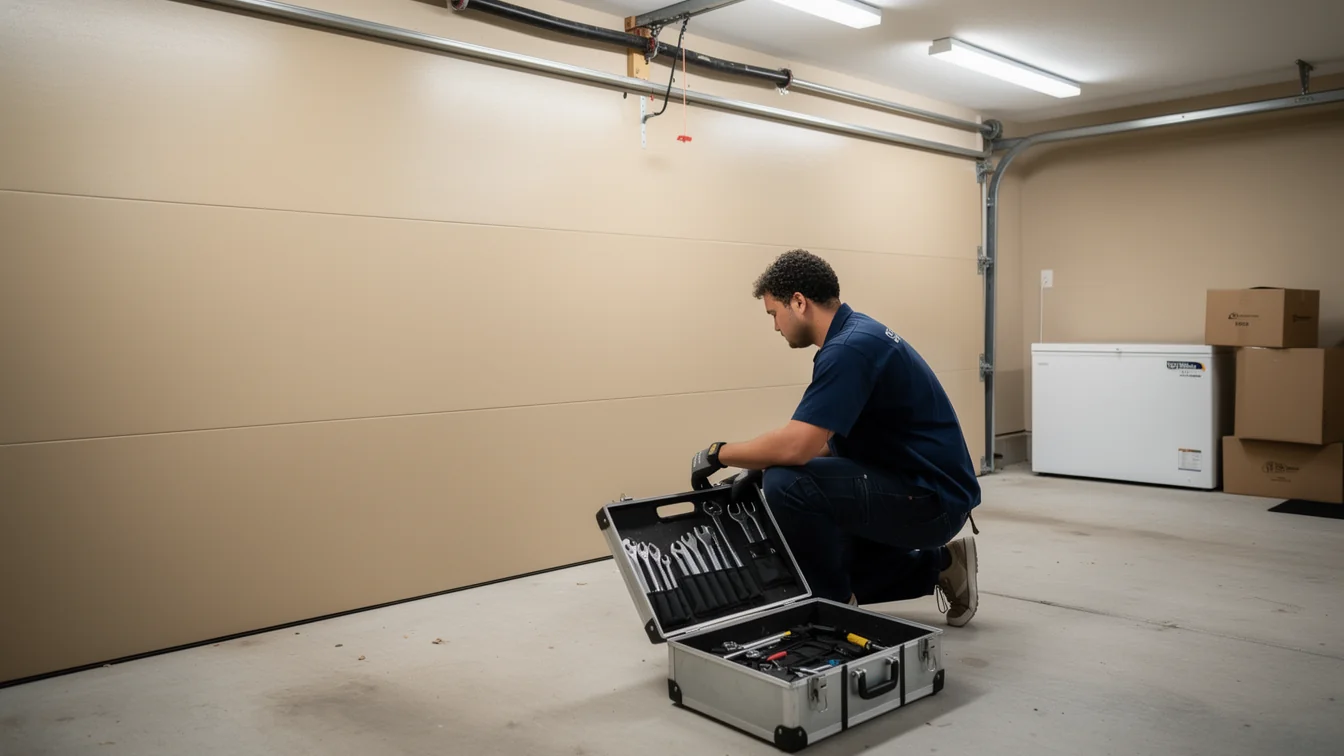
A Fairfield, CT garage door service call checks springs, cables, and opener hardware sized for homes built 1954-1984 and the area's cold, humid winters.
Read more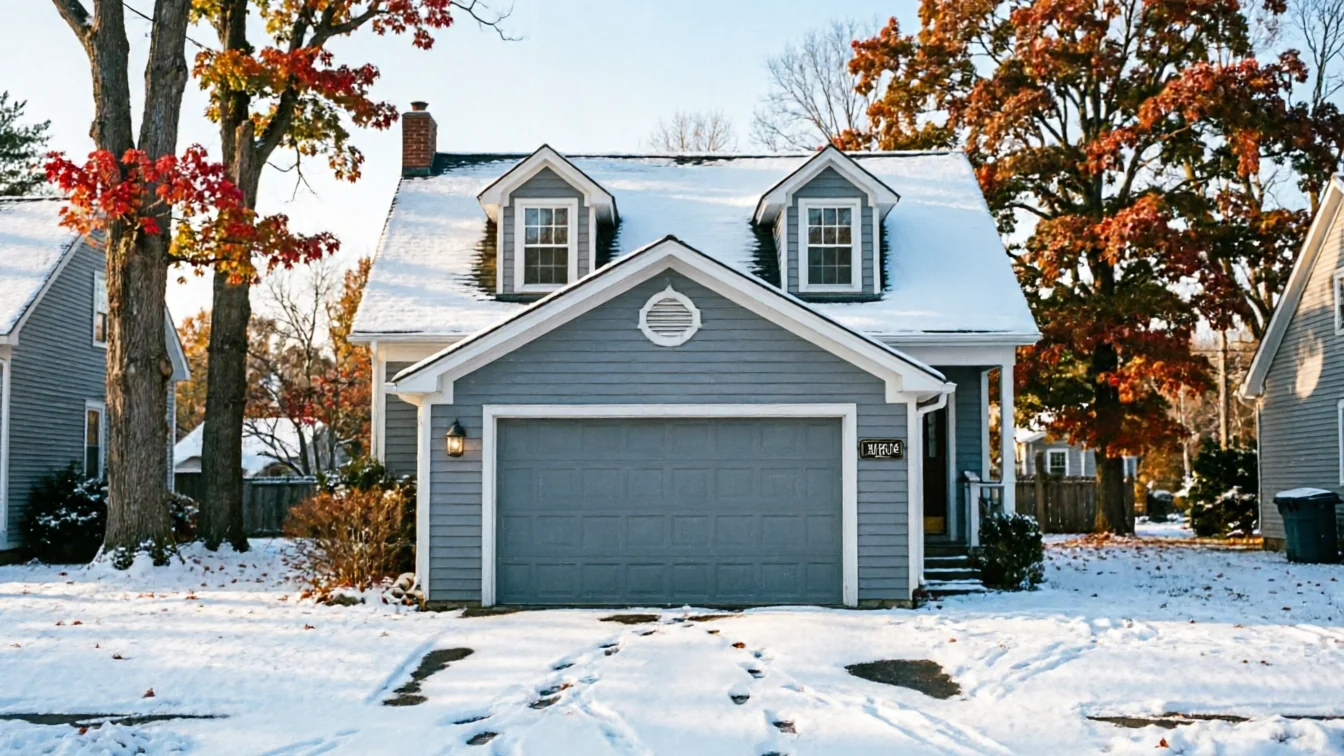
Fairfield homes built mostly between 1954 and 1984 carry original torsion springs that snap hard when cold hits.
Read moreReady when you are
Fairfield Garage Door Pros repairs and installs garage doors, springs and openers in Fairfield, CT and the surrounding area.