Why Fairfield's Garage Doors Fail the Way They Do
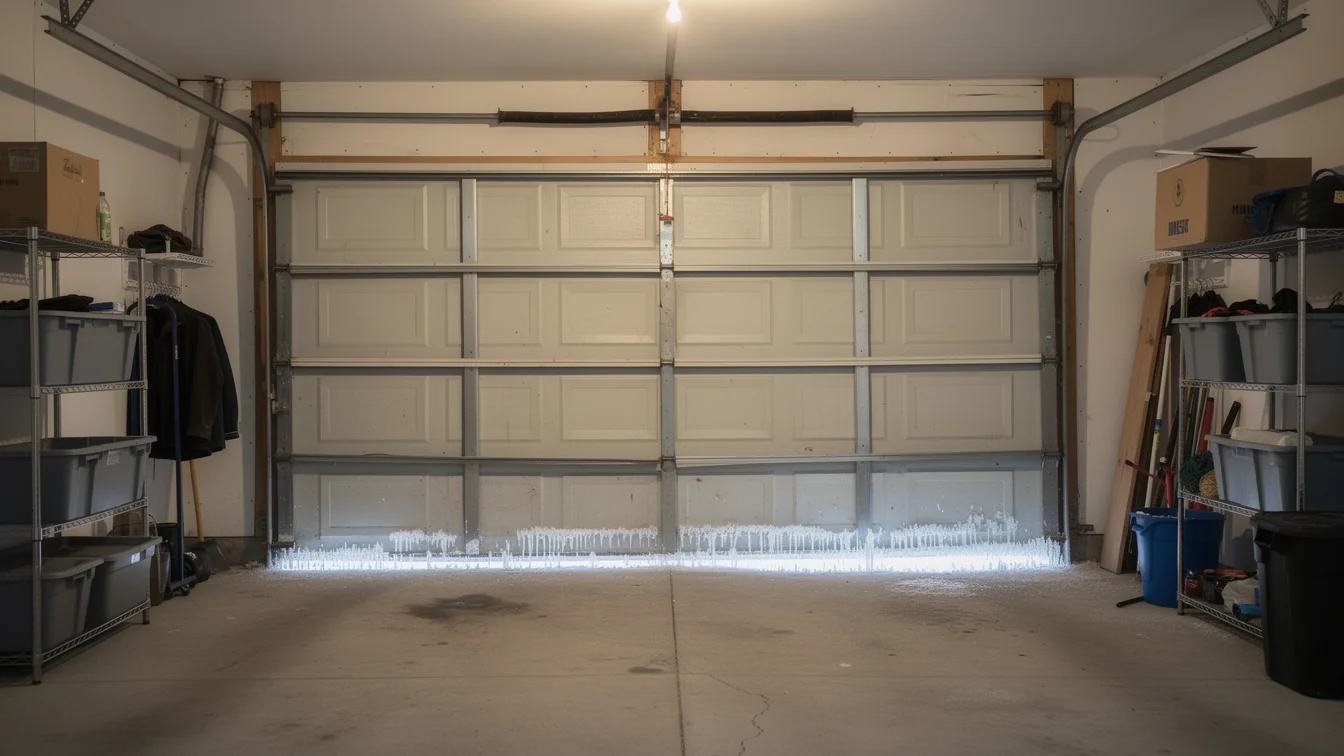
Fairfield's housing stock dates mostly to 1954-1984, built before insulated garage doors were required.
Read moreFairfield's 1954-1984 housing stock and severe cold winters mean garage door openers fail at outage time more than most owners expect. Here's why.
Local detail
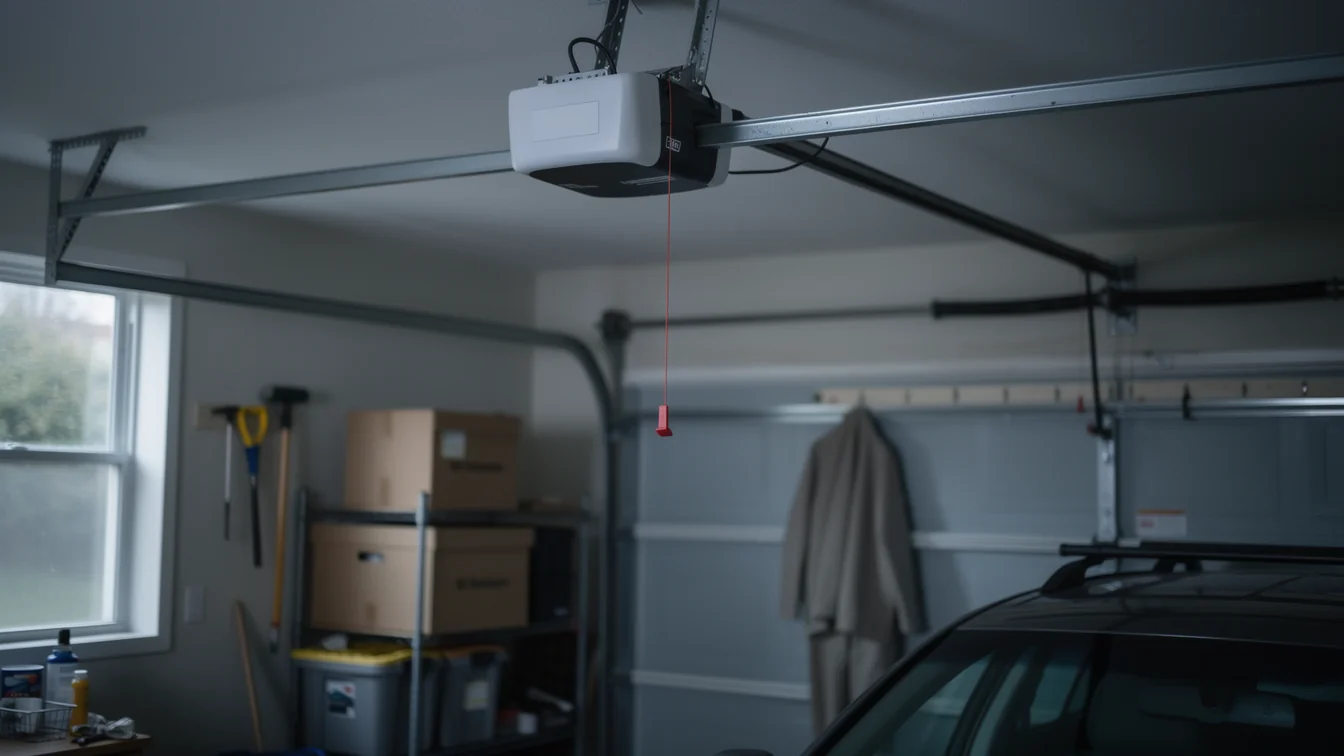
Most Fairfield homeowners assume that if the opener loses power, they can just pull the emergency release cord and lift the door by hand like it's nothing. That's true on paper, and it's the whole point of the cord. But a lot of the houses in this part of town went up between 1954 and 1984, and the opener running your door today usually isn't original equipment. It's a retrofit, often wired into a nearby outlet rather than a dedicated circuit, because openers weren't standard when these places were framed. That matters at outage time: the release cord itself is often original or close to it, stiff, and located somewhere nobody's touched in years. People go looking for it in the dark with a flashlight and can't find the bracket, let alone pull it loose. The fix isn't complicated, but it has to happen before the power's out, not during it. Know where your release is, test it once a year, and make sure the rope hasn't frayed through. That's five minutes now instead of twenty minutes of fumbling when the storm's already knocked your block dark.
The area
Here's the actual mechanical issue: a dead opener means a dead door, full stop, until someone manually disengages the carriage from the trolley. On the 1960s-70s doors still running in a lot of these houses, that carriage and trolley assembly has decades of grease buildup, and in a cold garage the grease stiffens enough that the release doesn't slide as cleanly as it should. You pull the cord, the carriage sticks halfway, and now you're trying to force a mechanism that was never designed to be forced. We see this a lot in homes built in the Fairfield service area's main construction era, where the opener's been swapped once or twice over the decades but the track and trolley never were. A battery backup on the opener solves the outage problem for most people, since it just keeps running the motor through a short cut. It won't run forever, and we're not going to tell you it covers a multi-day outage, because it doesn't. But it buys you the hour or two that actually matters for most storm-related outages around here.
What we find
Fairfield sits in a severe cold climate band, and that means winter storms are the main reason the power goes out in the first place. Ice on the lines, heavy wet snow on branches, a transformer that trips during a cold snap. Power cuts here cluster in the months when you least want to be standing in an unheated garage pulling a release cord with cold hands. That's the seasonal pattern worth planning around: it's not random outages scattered through the year, it's a concentrated run of cold-weather events where the opener and the power grid fail at the same time for the same reason. If you're going to invest in a battery backup unit, winter is when it earns its keep. The rest of the year, a dead opener is an inconvenience. In February, with a car you need for work sitting behind a door that won't open, it's a different problem entirely.
How we work
Cold does two things to an opener system beyond just the power supply. First, the battery backup itself, if you have one, loses a meaningful chunk of its runtime capacity in sustained cold, the same way a car battery struggles on a frigid morning. Second, the door hardware itself, the springs and cables carrying the actual weight of the door, stiffens and loses a little tension in deep cold, which means the manual lift after a power cut feels heavier than it would in July, even on a door that's otherwise fine. Combine an older torsion spring with a cold garage and a dead opener, and what should be a light lift becomes a genuine strain, especially on the heavier wood or insulated steel panel doors common on houses from this era. We don't sell whole-house generators or do electrical panel work, so if your outage problem is really about the house's wiring rather than the opener, that's outside what we handle. What we do check is whether your backup battery and release mechanism are actually ready for a cold-weather outage before one happens.
Questions
Not indefinitely. A battery backup is built to get you through a short outage, typically enough cycles to get your car in or out a handful of times. It's not sized to run for a multi-day outage. For Fairfield's typical winter storm pattern, where outages often resolve within a few hours, that's usually enough.
In a lot of Fairfield's older garages, the trolley and carriage assembly has years of grease buildup that stiffens in cold temperatures. Combined with aging springs that lose a little tension in deep cold, the release can stick or feel heavier than expected. A yearly check of the release mechanism catches this before a storm does.
That's an electrical question outside what we handle directly, but we can tell you whether your current opener wiring looks like a retrofit tap versus a dedicated line, which is common in houses built before openers were standard equipment.
Recommendation
More garage door guides for Fairfield homeowners.
Fairfield's housing stock dates mostly to 1954-1984, built before insulated garage doors were required.
Read more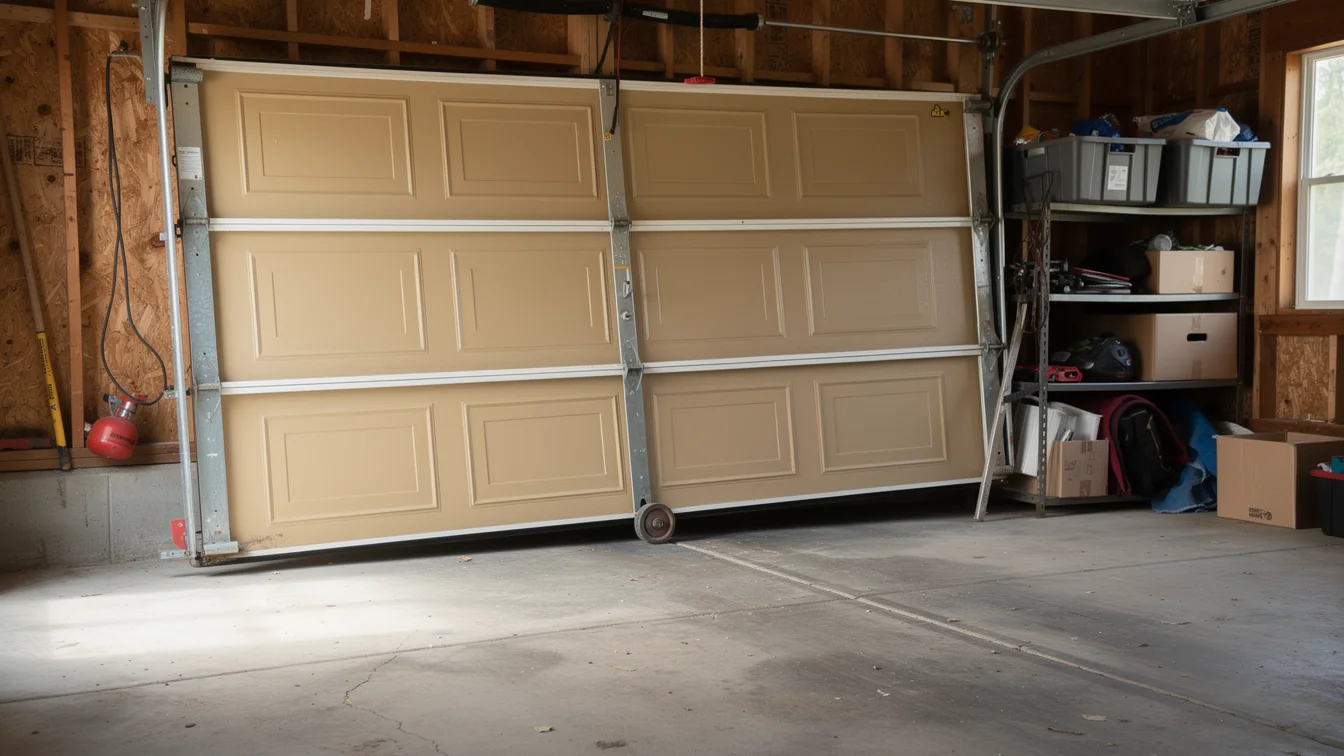
Fairfield's 1960s-era garages and cold winters push tracks out of line in predictable ways.
Read more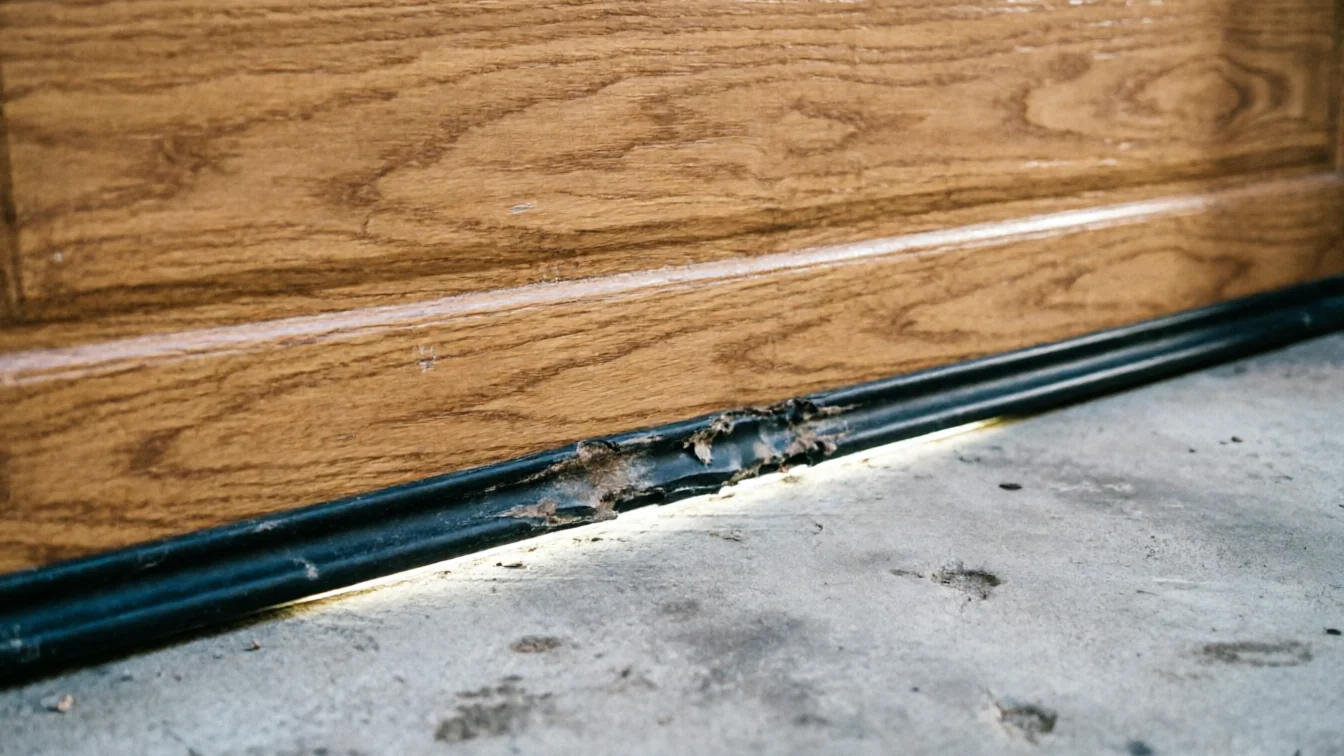
Why 1960s-era Fairfield garage doors leak cold air and how the original seals on this housing stock hold up against a severe cold climate band.
Read moreReady when you are
Fairfield Garage Door Pros repairs and installs garage doors, springs and openers in Fairfield, CT and the surrounding area.