What Can Go Wrong
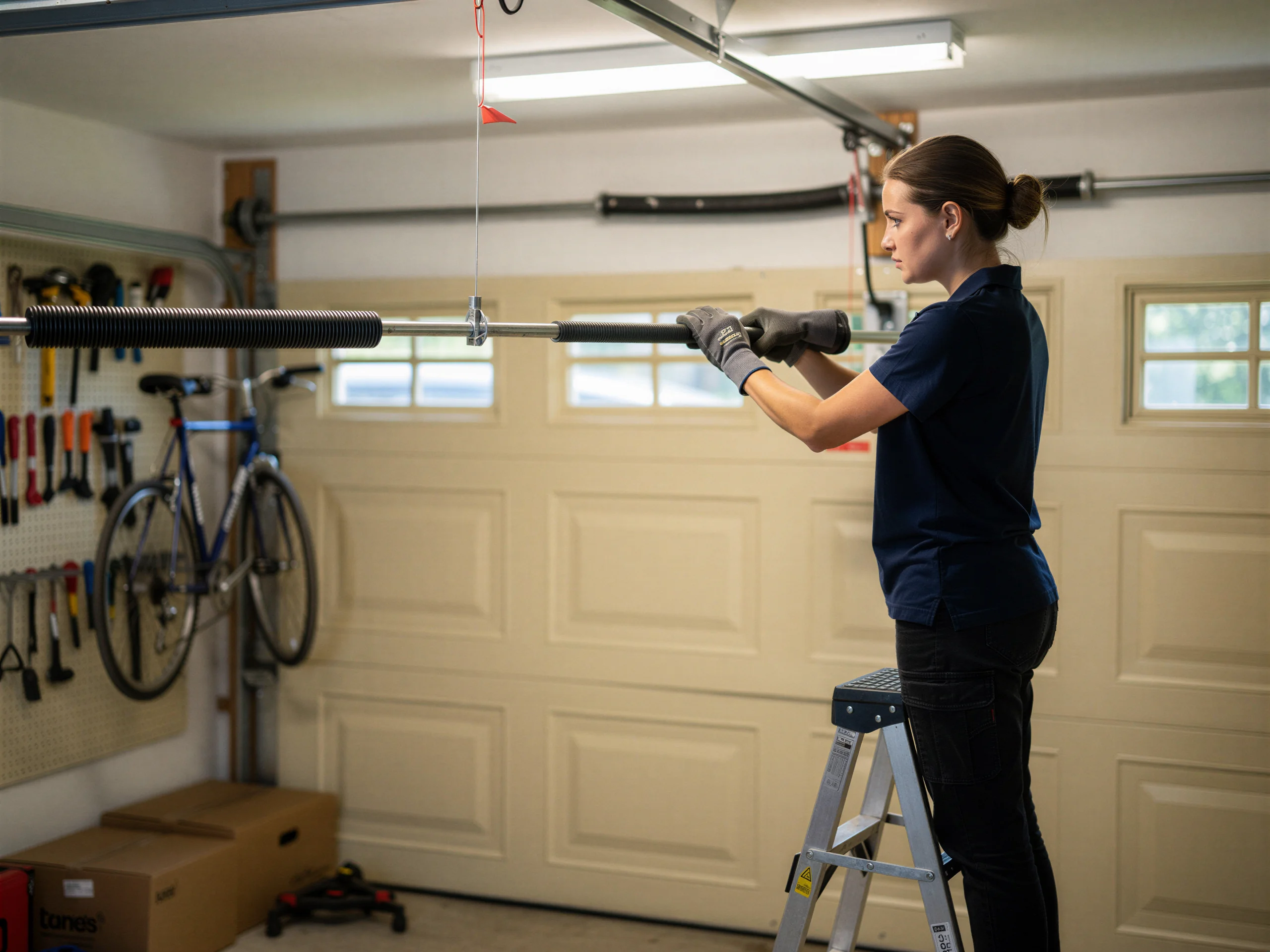
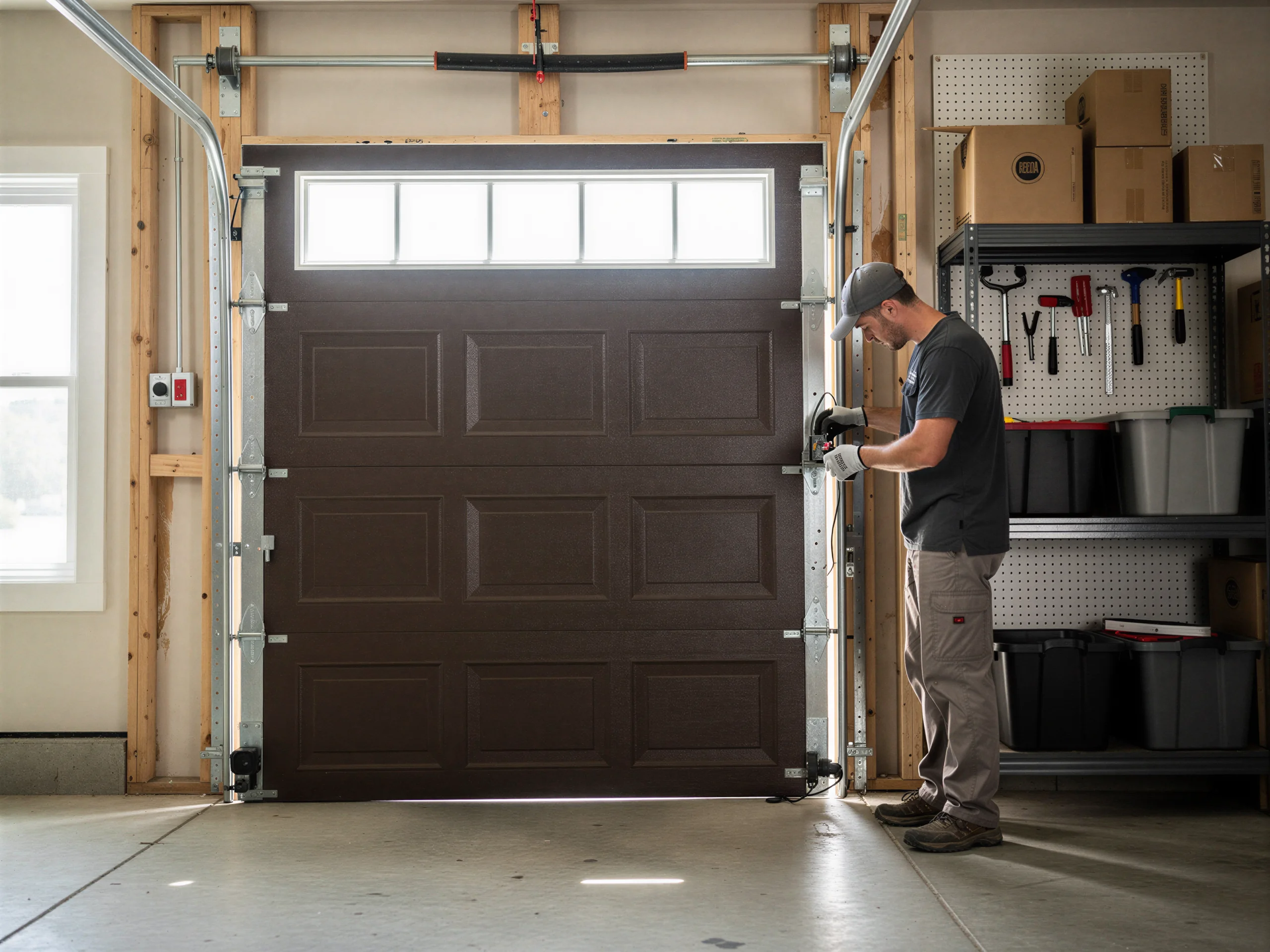
A garage door cable does one job: it rides the drum and lets the spring take the weight of the door as it travels up and down the track.
Three ways cables fail
When a cable goes, it usually goes one of three ways. It can fray where it wraps the drum, a few strands at a time, until the last ones snap under load. It can jump the drum groove and bunch up, which binds the door off to one side mid-travel.
Bottom bracket snaps
Or it can snap clean at the bottom bracket, usually on a cold morning when the door is heaviest to lift and the cable is at its stiffest. Across the service area, most of the houses we work on were built between 1954 and 1984, with a lot of that stock going up in the 1960s and 70s.
Old galvanized hardware
That means original or early-replacement hardware is still common - galvanized cables that have seen fifty-plus winters of expansion and contraction. A cable snapping on one side while the other holds is the single most common reason we get a call for a door that's stuck crooked in the opening, leaning down on one corner with the opener refusing to move it further.
Never force it level
We do not recommend trying to force a door back level with a jammed or snapped cable. The spring is still under tension on the working side, and a door hanging unevenly on one cable is one of the few genuinely dangerous situations in this trade.
What the Repair Takes
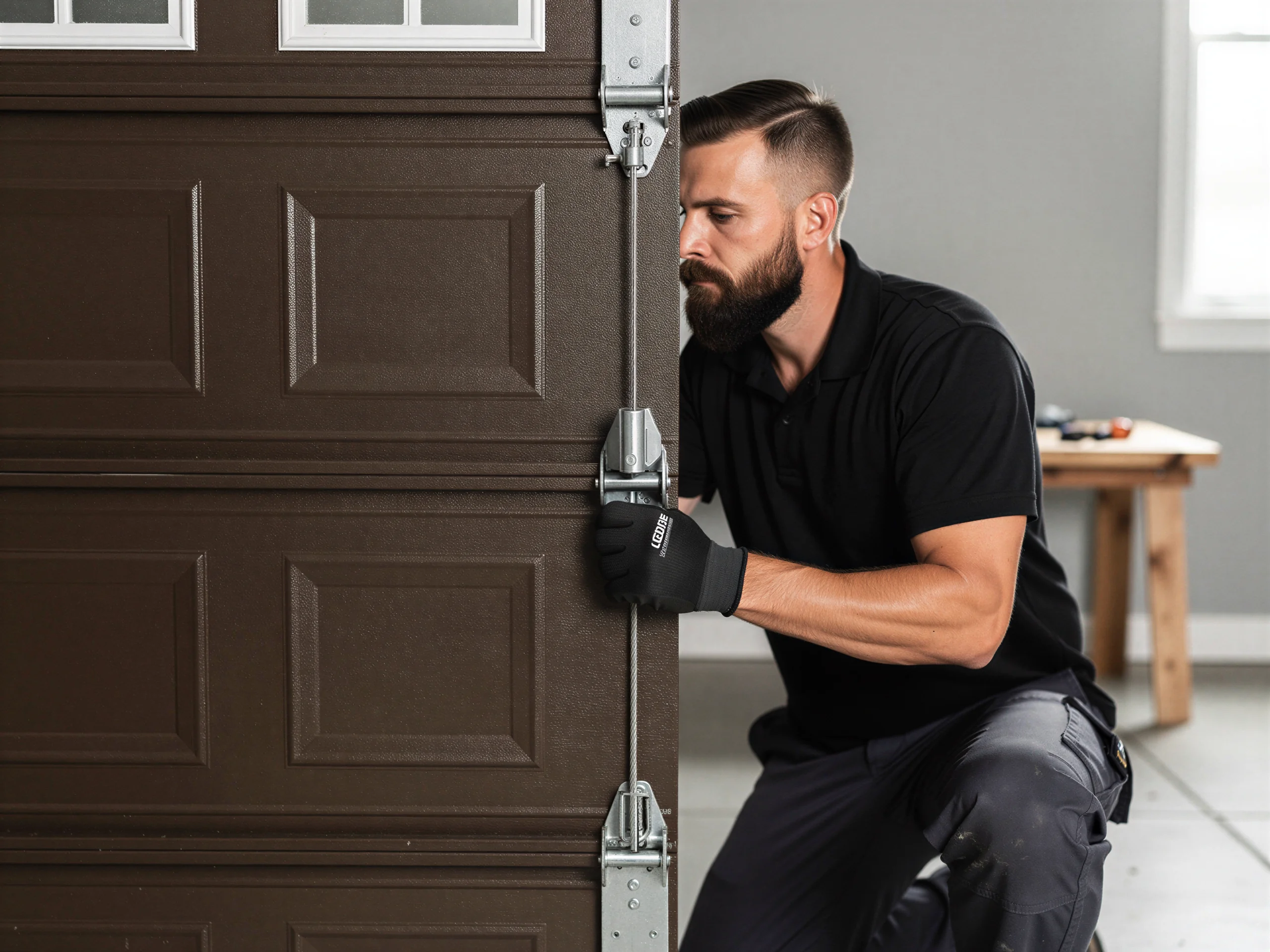
A straight cable swap on a standard double or single door is a controlled job: release spring tension, pull the old cable off the drum and bottom bracket, run new galvanized aircraid cable sized to the door, reset drum tension, and cycle the door a few times to check travel.
Replace cables in pairs
We always replace both cables in a pair, not just the broken one - if one side frayed from age, the other side is the same age and about to do the same thing. Where it gets longer is when the cable failure has taken something with it. A cable that jumps the drum under tension can bend the drum shaft bearing plate or chew up the bottom bracket it's anchored to.
Unstocked original drum hardware
On torsion systems from the 1960s and 70s, which is what we find behind a lot of these doors, the bracket and drum hardware are often the original parts - not something a parts house stocks on the shelf. If a bracket needs replacing and it isn't a stock size, that can mean a short wait on the part rather than a same-visit fix.
Track or panel damage limit
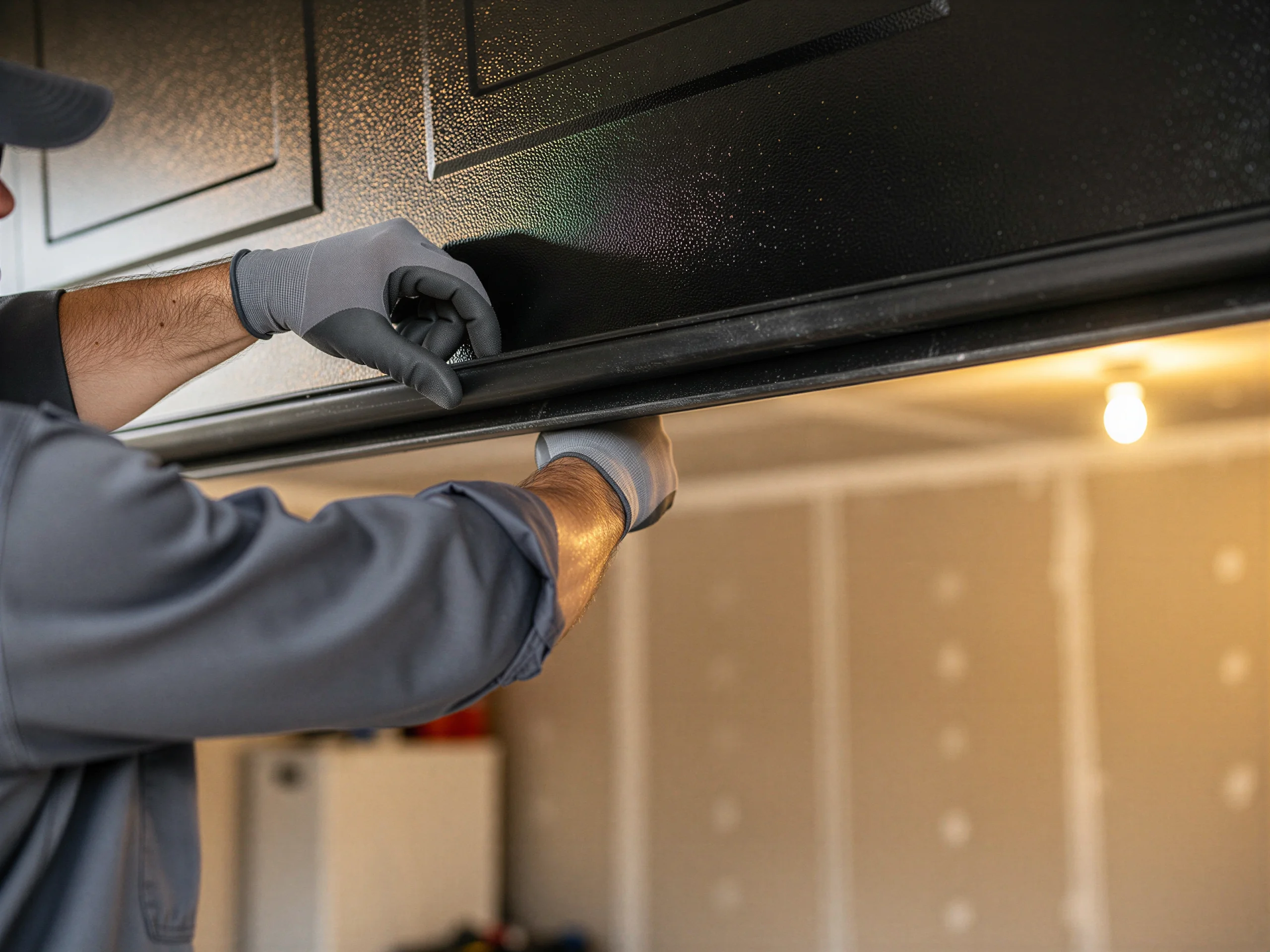
One honest limitation: if the door has also come off its track, or the panel bottom corner is bent from the sudden drop, cable replacement alone doesn't finish the job - that's a second repair on top of the first, and we'll tell you that up front rather than quote around it.
What You Are Seeing
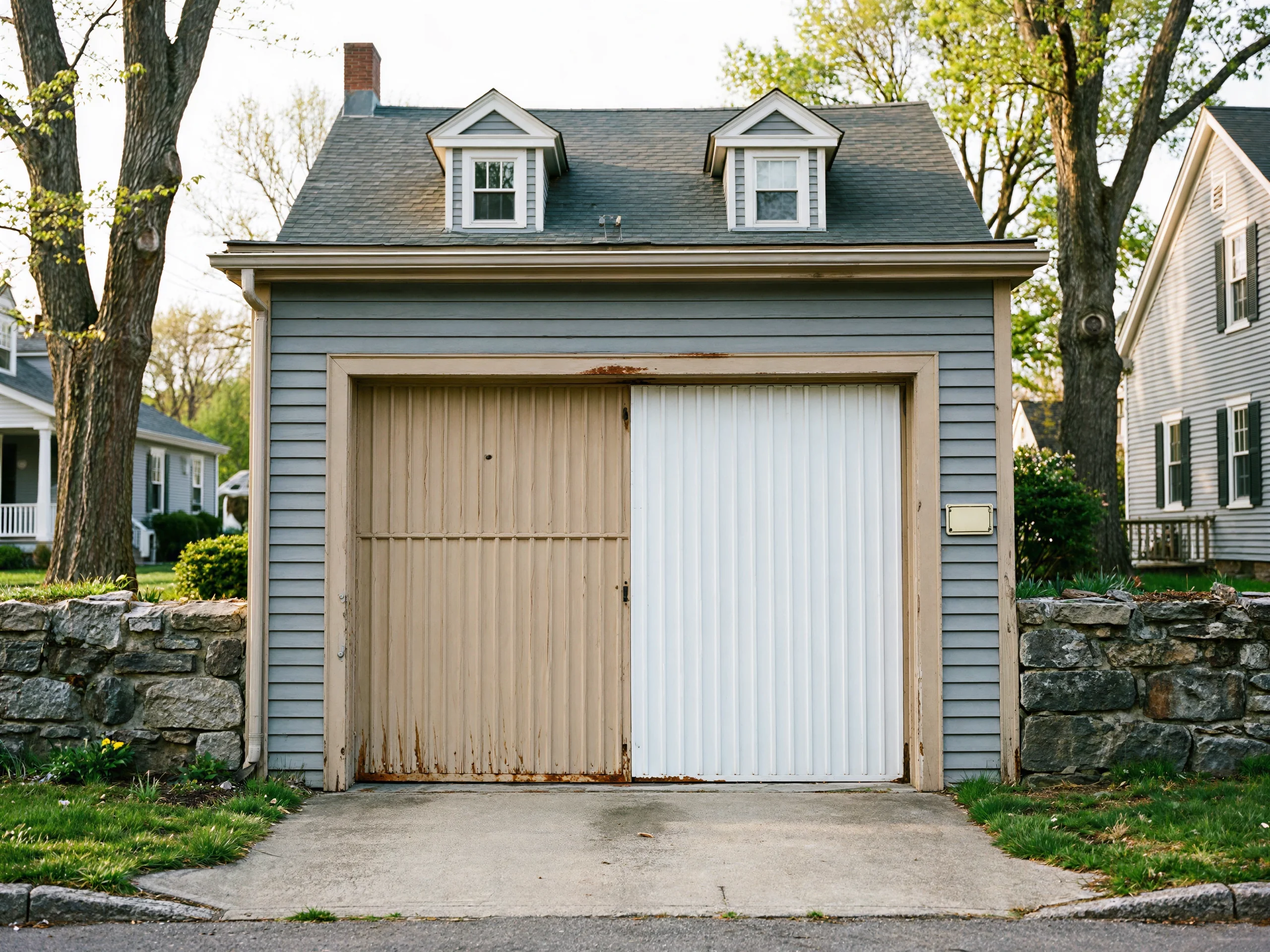
If you're searching for cable repair, you're probably looking at one of a few things. A door that sits crooked in the opening, higher on one side than the other, with a visible gap or sag at one bottom corner - that's a snapped or slipped cable on that side.
Bunched cable binds travel
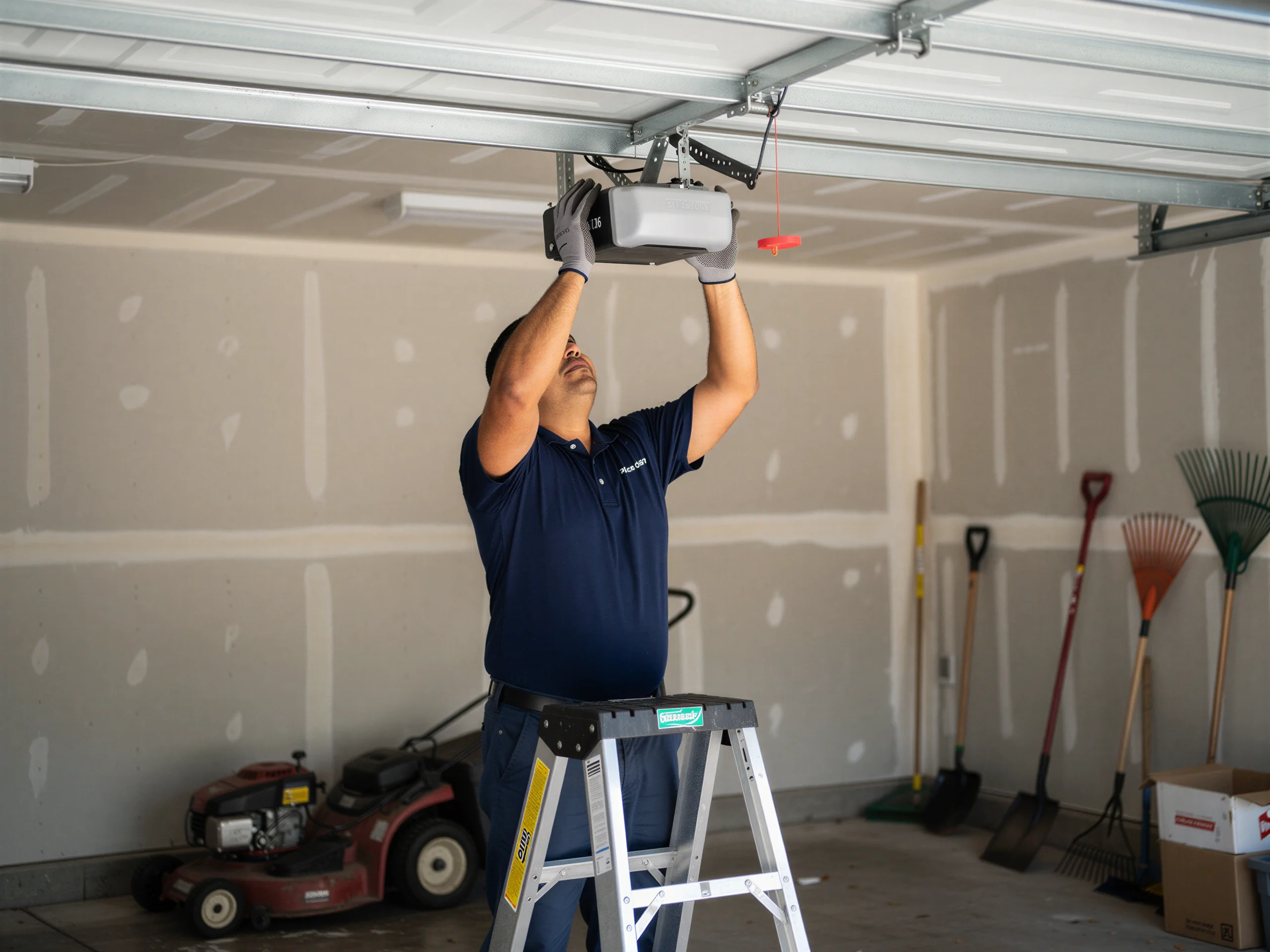
A door that moves a few inches and stops, with the opener motor straining or clicking off on its own, often means a cable has bunched off the drum and is binding the travel before the opener's safety cutoff kicks in.
Slack or frayed strands
You might also see the cable itself: frayed strands poking out near the drum at the top of the track, or a cable that's gone slack and is hanging loose instead of running taut along the track edge. That slack cable is often the clearest warning sign you'll get before a full snap, and it's worth a call before it fails completely and takes you by surprise on your way out the door in the morning.
Hands off broken cable
What you should not see, and should not try to produce yourself, is the door moving at all with a visibly broken cable on one side. The opener may still try to run the door even with one cable gone, and that's exactly when the remaining spring tension does damage to the track or the panel.
What Causes It Around Here
Three things line up in this part of Connecticut to make cable failure a regular call rather than a rare one. First, the housing stock: across the 26 towns and villages we cover, median year built sits around 1966, with most construction clustered in the 1960s and 70s. That's fifty-plus years of cable life on hardware that was never meant to last that long without a swap.
Second, the climate. This is a cold-weather region with real seasonal swings, and galvanized steel cable gets brittle at the strand level faster in a hard winter than it does somewhere mild. The cable doesn't fail because of one cold night - it fails because fifty winters of contraction have already worn down the strands, and one more cold morning with a heavy door is what finishes it.
Third, use patterns. Across the service area - which runs from towns like Southport and Greens Farms close by out to Westport, Weston, Stratford, and the farther towns like Ridgefield, Monroe, and Newtown - a two-car household with a daily-use double door puts a lot more cycles on a cable over fifty years than a single door used twice a week. More cycles on old steel is the simplest explanation for why this call comes in as often as it does.
Talk to a local pro
Garage door service in Fairfield?
Same-day service with honest, upfront quotes.