What Can Go Wrong
Most of the calls we get in Fairfield trace back to the same handful of parts, and the reason is the age of the housing stock.
Torsion hardware past life
Homes here were built mostly between 1954 and 1984, with the median landing around 1966, so a lot of doors are still running on torsion hardware that's decades past its design life.
Springs wound too often
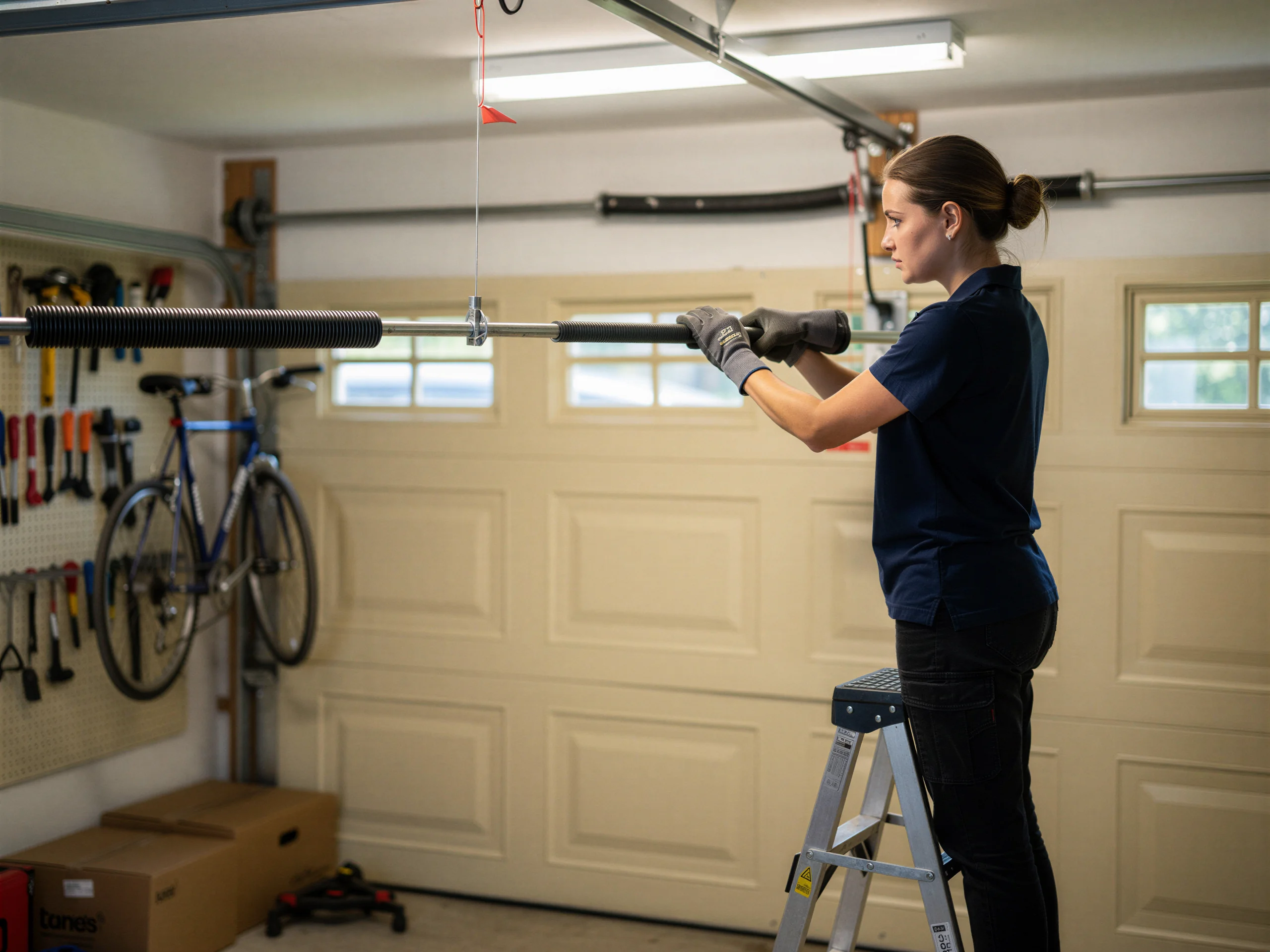
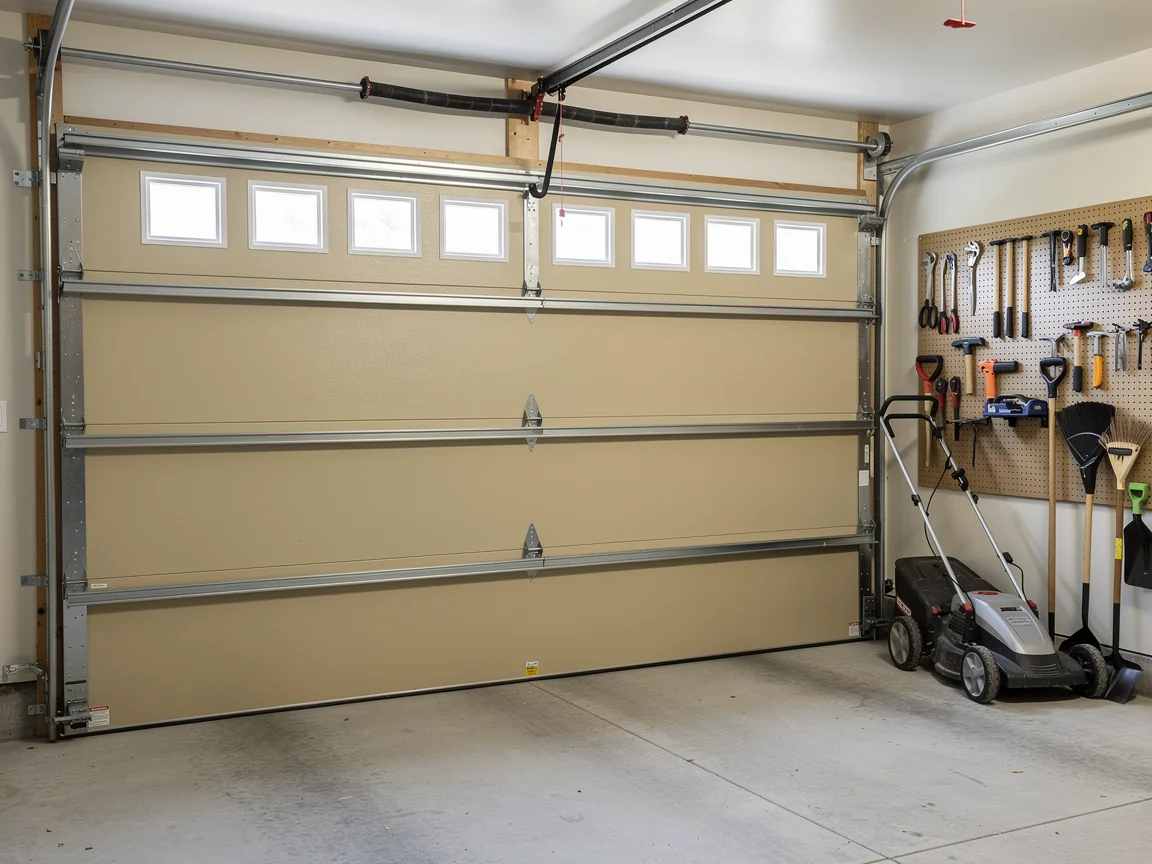
A torsion spring on a standard double door is rated for a set number of cycles, and once a house crosses the 50-year mark, that spring has usually been wound and unwound tens of thousands of times. When it goes, it goes without warning - a loud bang, then a door that won't budge or that drops hard when you try to lift it by hand.
Rollers and cables wear
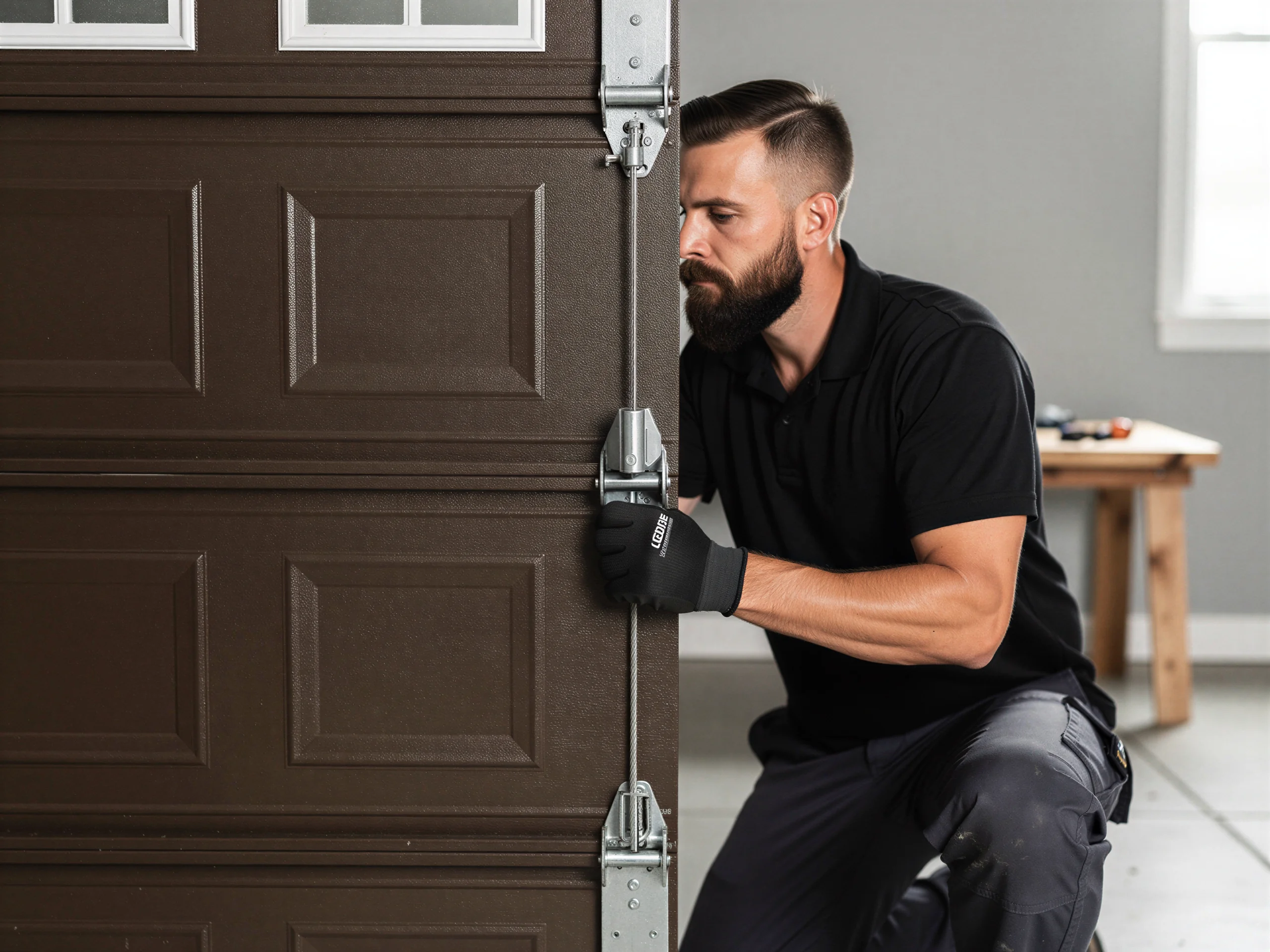
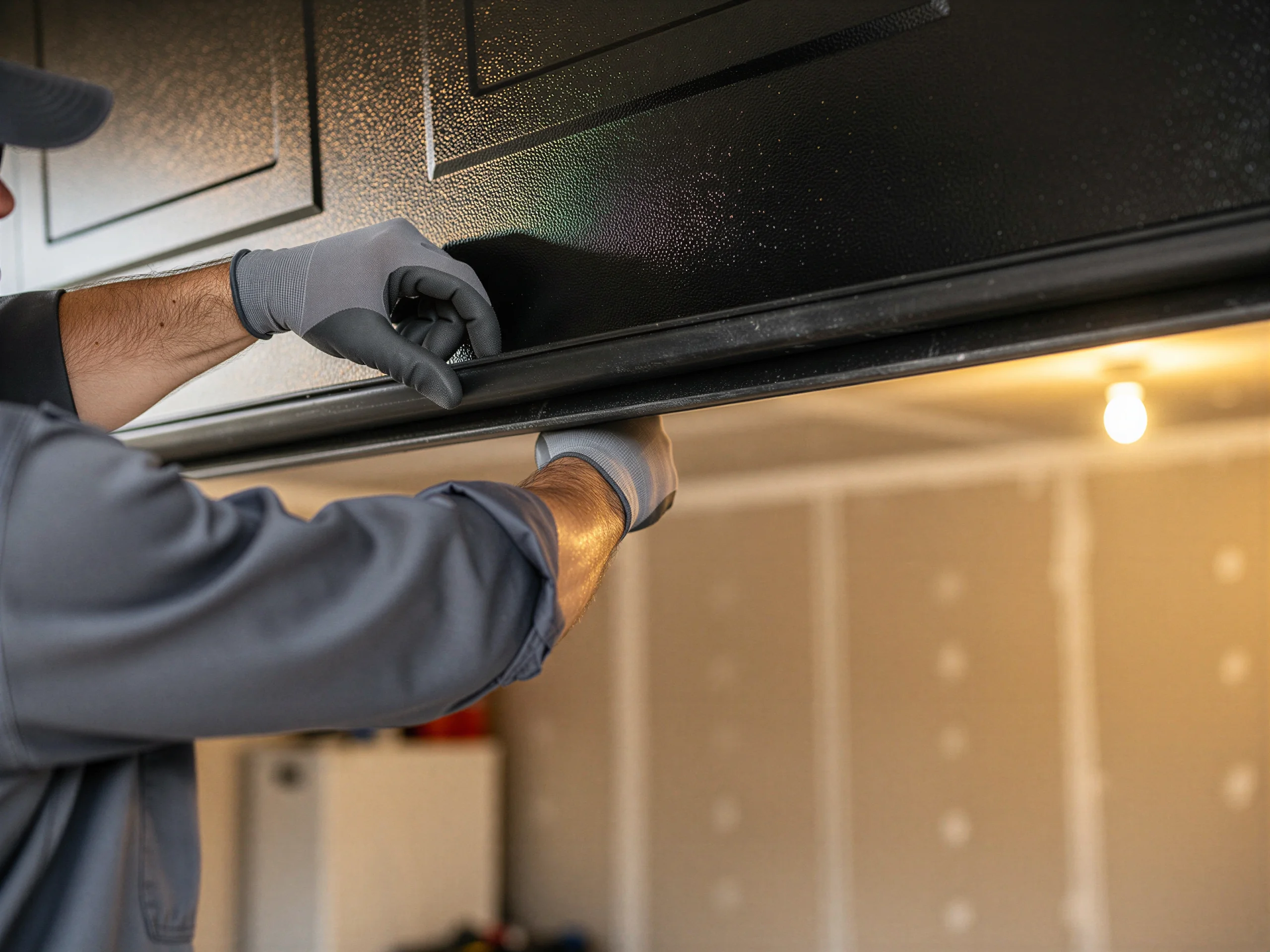
Rollers and cables fail for the same reason: age plus use. Steel rollers on original 1960s track wear grooves into the track itself over the years, which means you're not just replacing a roller, you're sometimes replacing the track section too.
Chain drives strip gears
Openers from that era, where they haven't already been swapped once, are chain-drive units with drive gears that strip quietly over a season or two before they quit outright. None of this is unique to one house - it's the pattern across Fairfield's older neighborhoods, because the houses themselves are old enough to have outlived their original hardware.
What the Repair Takes
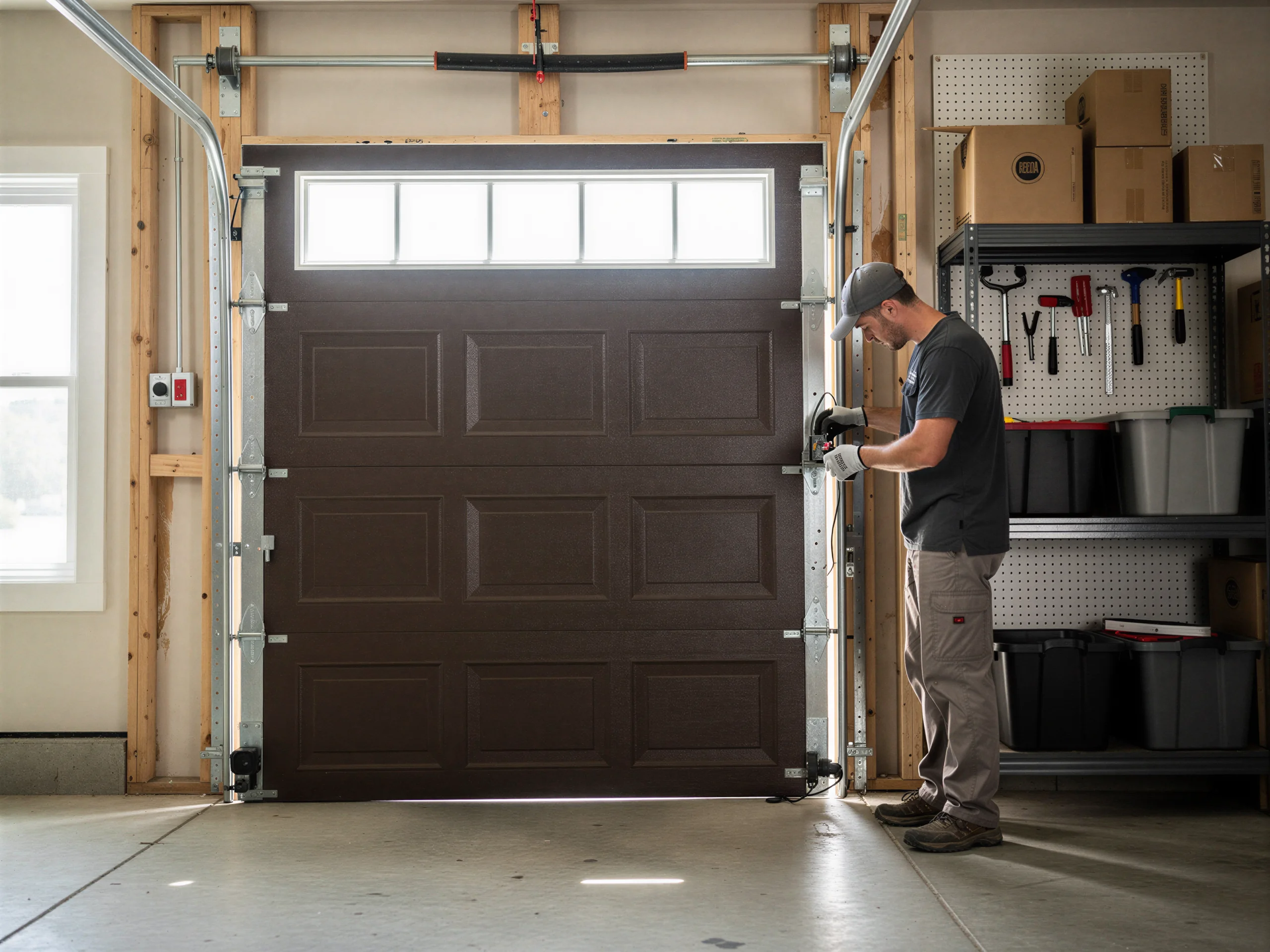
A torsion spring swap on a standard door is a same-visit job once we're on site - we match the spring to the door weight and wind it to the right tension, not a universal size.
Unstocked old track dimensions
Cable and roller replacement is similarly quick. Where it slows down is original 1960s and 70s track and hardware: some of those side-mounted torsion setups used dimensions nobody stocks anymore, so a repair on a house from that era sometimes means custom-fitting a modern spring and drum assembly to an old track rather than finding an exact replacement part off a shelf.
Rusted single-layer steel
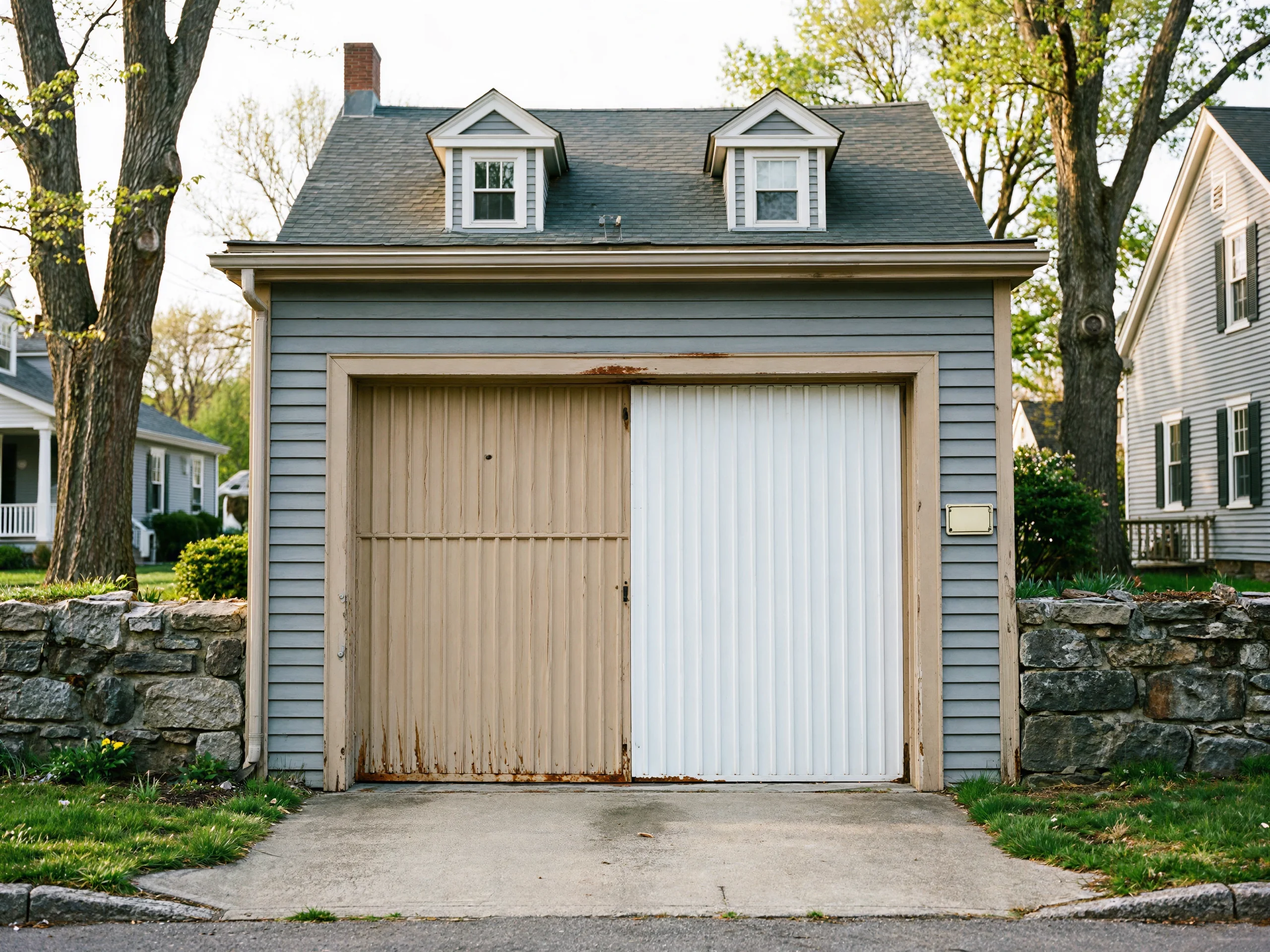
Here's the honest limit: if the door itself is a single-layer steel panel from the original build with rust-through at the bottom section, we'll tell you straight that a new door is the better spend over patching old steel - especially once you add up the labor on hardware that's fighting you at every step.
Gear kit versus swap
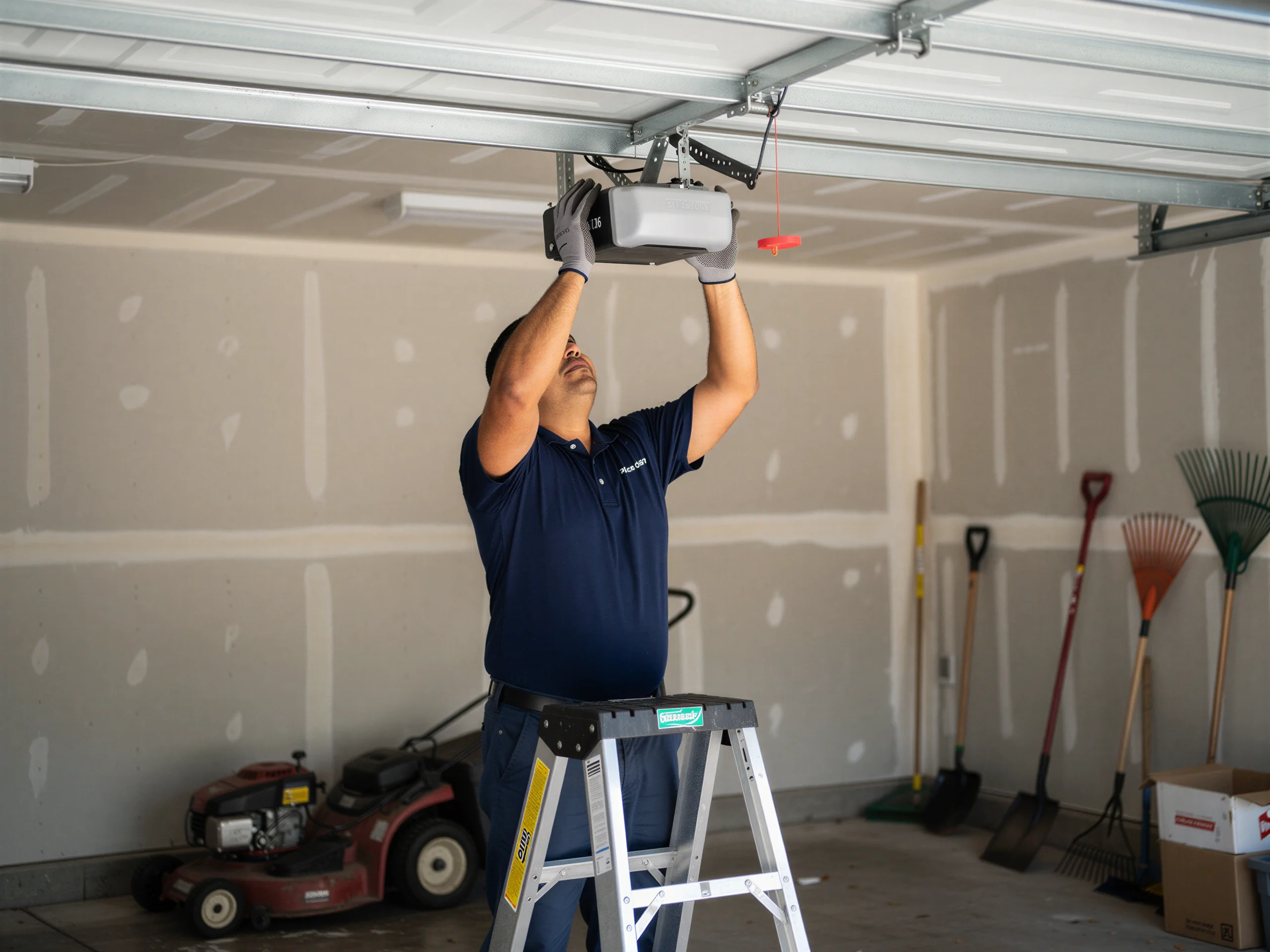
We'd rather lose that repair than sell you a fix that fails again next winter. For openers, if the unit is an older chain-drive model, we'll check whether the gear and sprocket kit is still worth the money versus swapping to a new opener outright. We'll give you both numbers before we touch anything.
What You Are Seeing
If your door slams down hard on the last foot of travel, that's almost always spring tension, not the opener - the opener is just along for the ride on a door that's no longer balanced.
Stiff manual lift
A door that's hard to lift by hand when the power's out points the same direction. Grinding or popping noises on the way up usually mean a roller that's worn flat on one side, dragging instead of rolling in track that's picked up decades of dirt and rust.
Winter worsens old hardware
Fairfield's winters matter here too - this is a cold-climate area, and cold makes every one of these problems worse before it makes them better. Steel springs and cables contract in low temperatures, and a spring that's already near the end of its life is far more likely to snap on a sub-freezing morning than in August.
Opener stalls coldest days
If your opener struggles or stalls on the coldest days of the year and runs fine the rest of the time, that's not a coincidence - it's old hardware meeting winter stress at the same time.
What Causes It Around Here
Fairfield's housing didn't go up all at once - F2 shows the bulk of it landing in the 1960s and 70s, spread across the roughly 26 named areas that make up the town and its surrounding service area, from Southport a mile off to Greens Farms and Westport a few miles out. That means a huge share of the doors we service are original or close to it, installed when a house in this area was first built and never upgraded since. Across the wider service area there are over 83,000 owner-occupied houses among 141,171 households, which is a lot of garages running on hardware from the same build era.
The cold climate here does the rest of the work. Severe cold-weather cycling - freeze, thaw, freeze again - is harder on steel springs and cables than a mild climate would be, and it's part of why a door that seems fine in September can fail in January. None of this is about income or home value; a $162,079 median household income doesn't change what a 1966-built torsion spring does after 55 years of winters. Age and weather wear hardware down the same way regardless of what the house is worth.
Talk to a local pro
Garage door service in Fairfield?
Same-day service with honest, upfront quotes.