What Can Go Wrong
A garage door panel fails in a handful of predictable ways. A car backs into the bottom section and buckles it. A windstorm pushes a door off its track and a panel bows under the strain.
Bottom edge rust
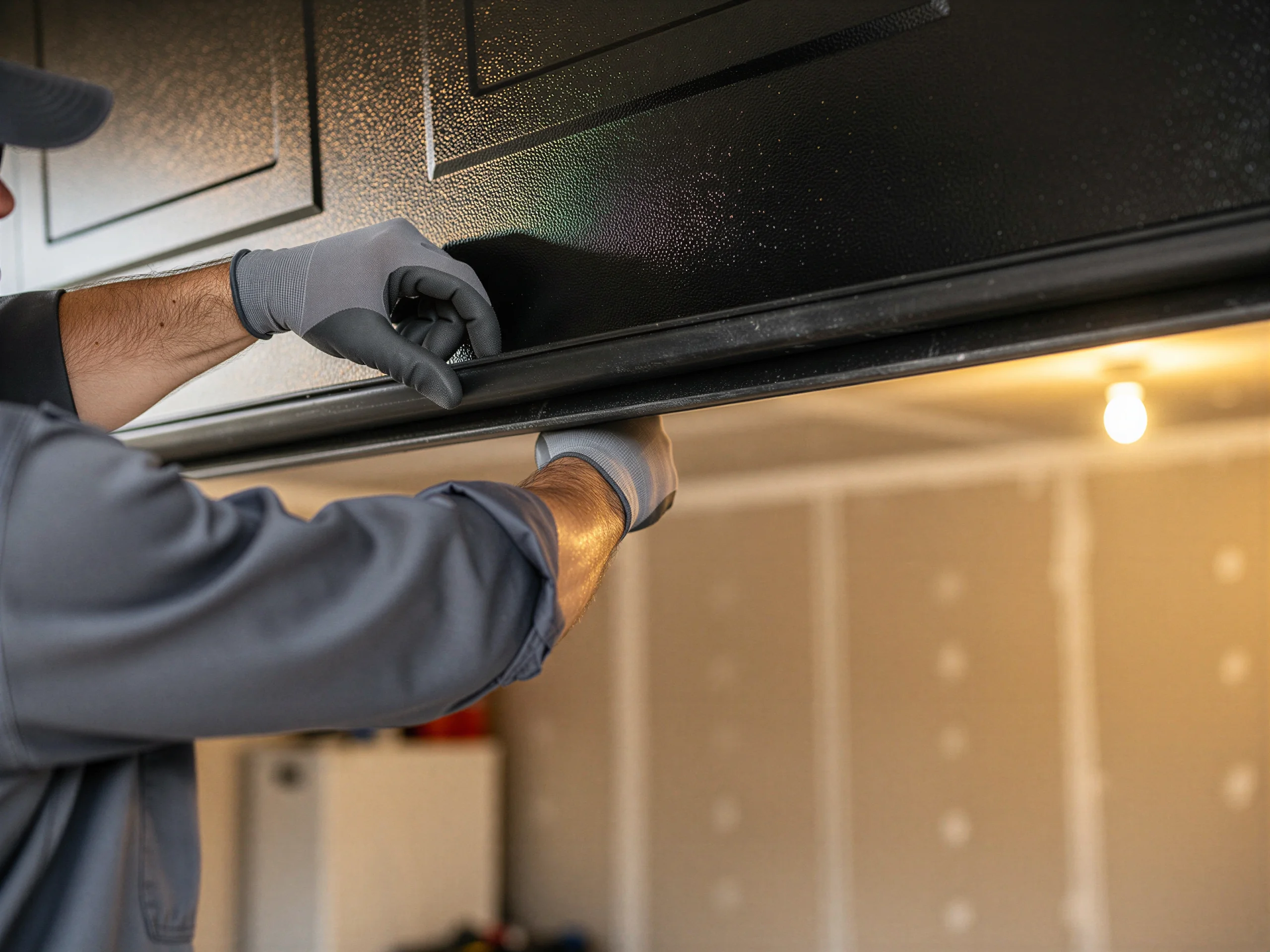
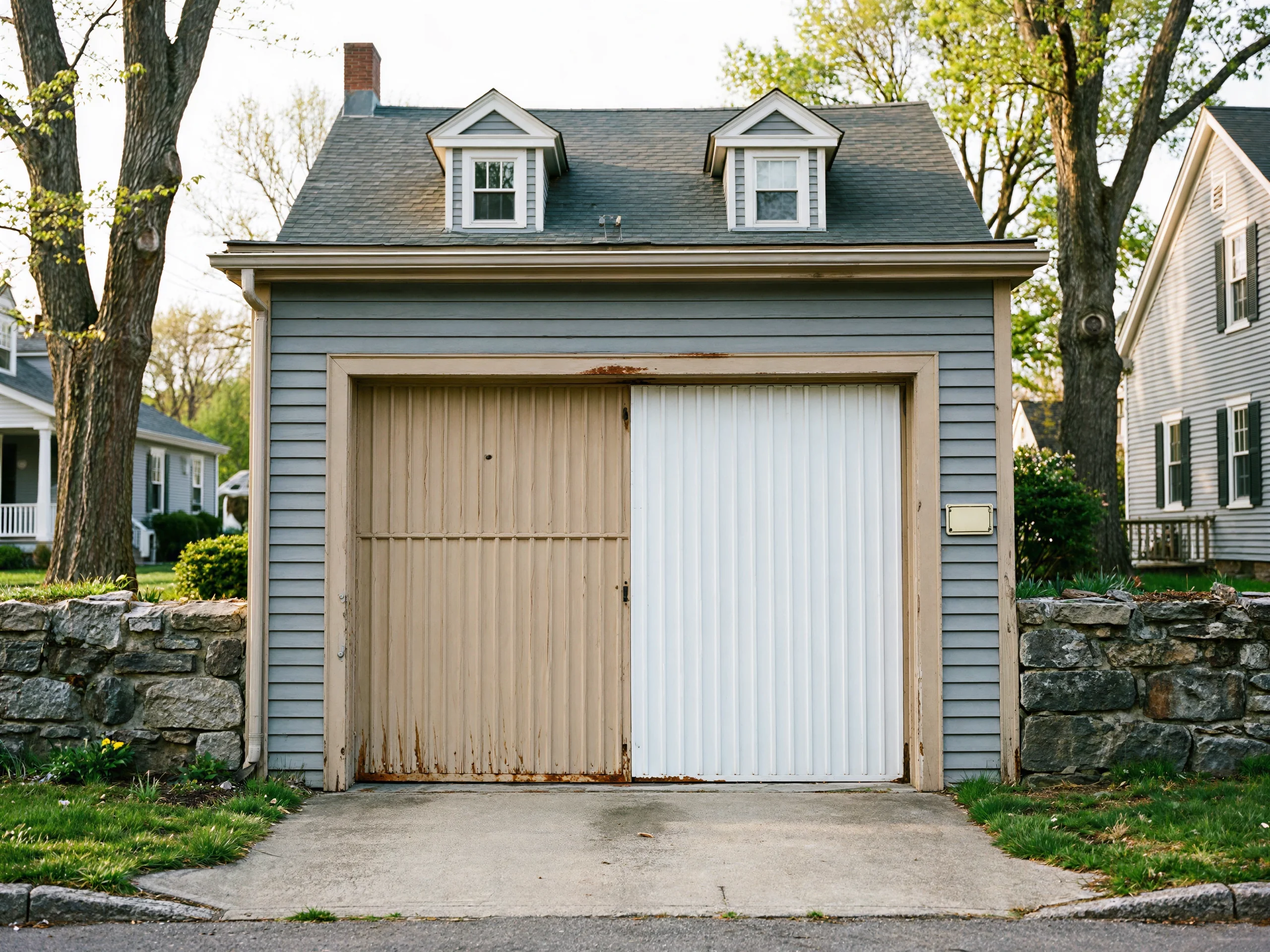
Steel panels rust through from the bottom edge where snow melt and road salt sit against the metal all winter. On the older sectional doors common through this part of the state, the panel seams and hinge points are where the trouble starts, not the middle of the section.
Panel damage as symptom
On a lot of the doors we see, one bad panel is a symptom, not the whole story. If the track is bent at the point of impact, or a cable jumped its drum when the door got knocked off square, the panel is the visible damage but not the only damage.
Check rollers before panel
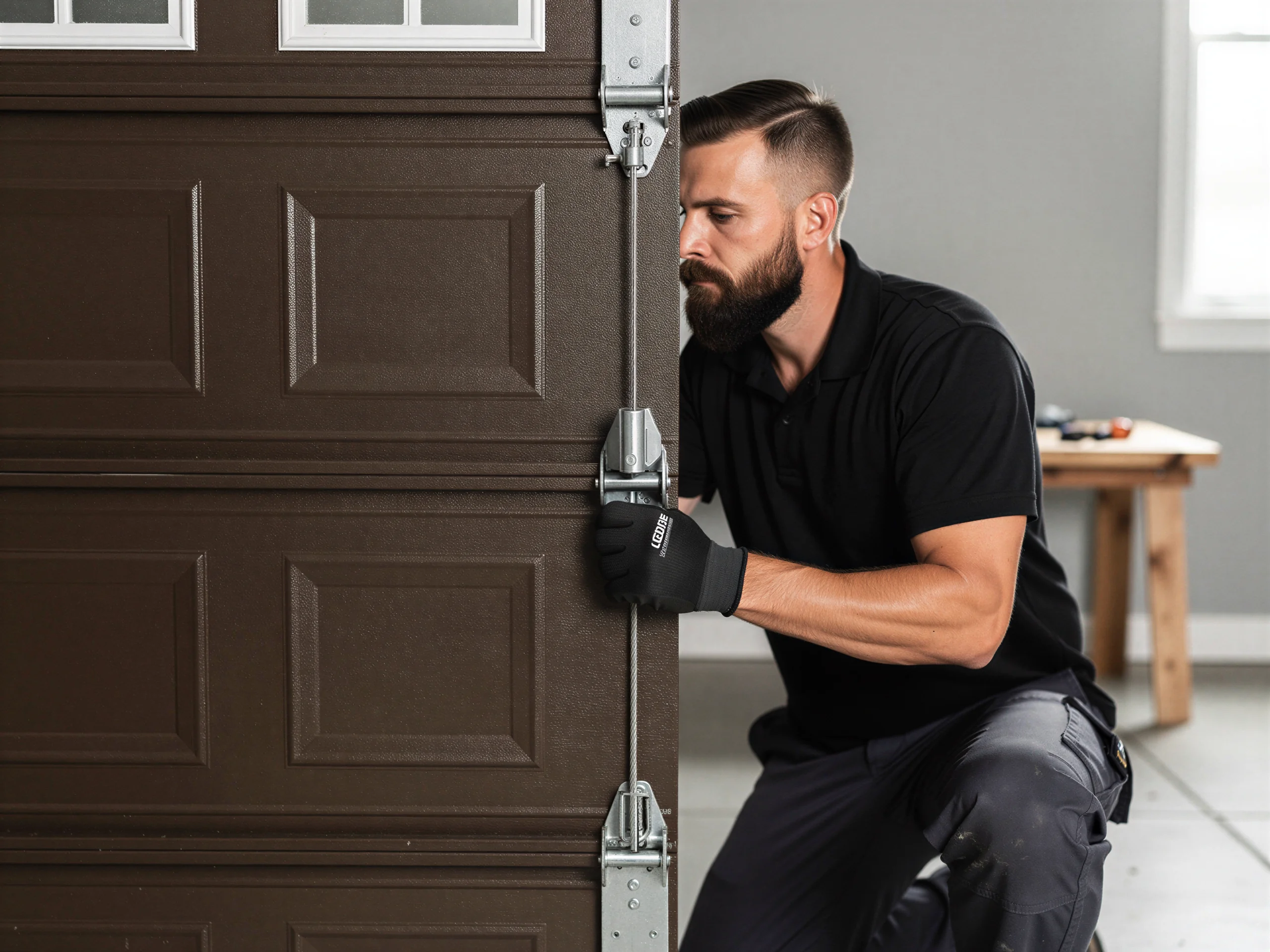
We check the rollers, hinges, and track alignment on either side of a damaged section before we quote panel work alone, because replacing one panel on a door that's still racked will just bend the new one too.
Full replacement threshold
The honest limit here: if more than two or three panels on a double-wide door are dented or rusted through, replacing section by section stops making financial sense. At that point a full door replacement usually costs less than piecing together four or five individual panels, especially if the original run has been discontinued.
What the Repair Takes
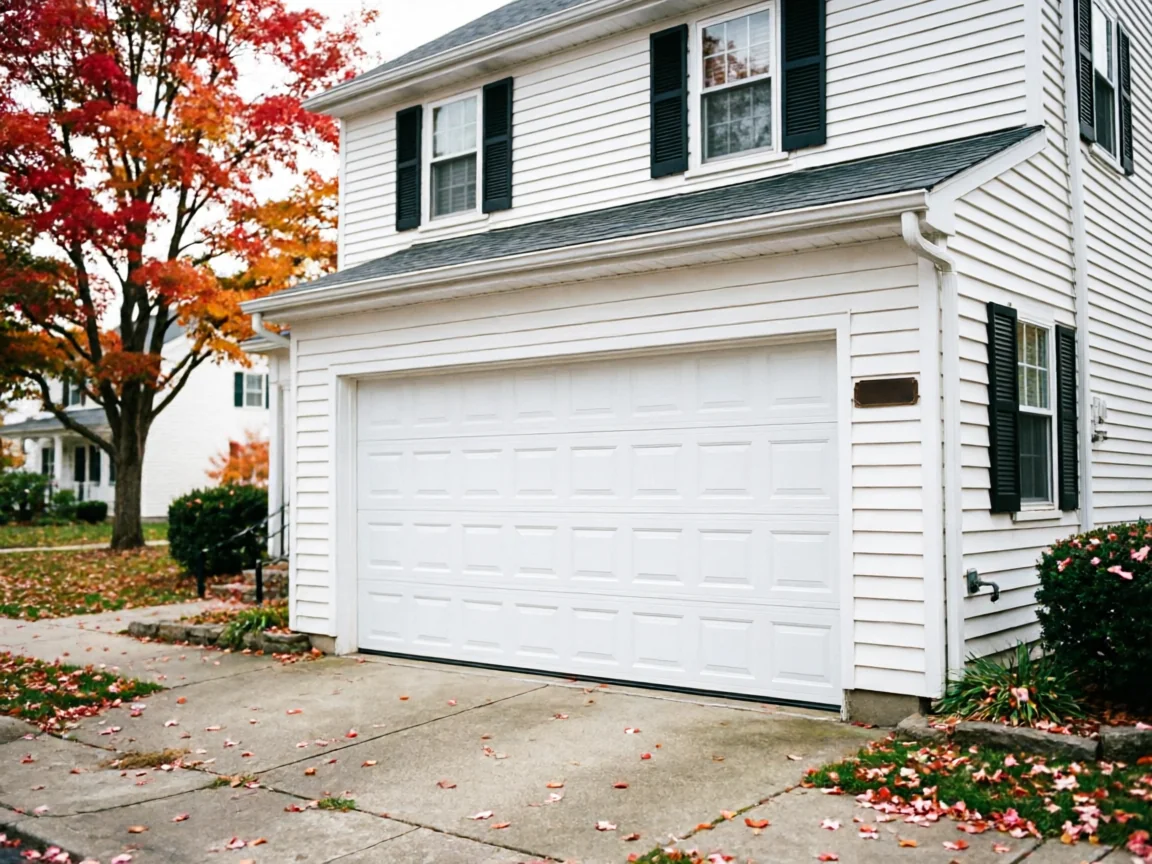
Panel replacement starts with matching the section - width, height, and the groove or raised-panel profile - to what's already on the door. Doors built in this area mostly date to the 1960s and 70s, and plenty of those runs are long out of production, so matching color and panel design sometimes means ordering from the few suppliers who still stock older sectional profiles, or accepting a close match rather than an identical one.
Mechanical panel swap steps
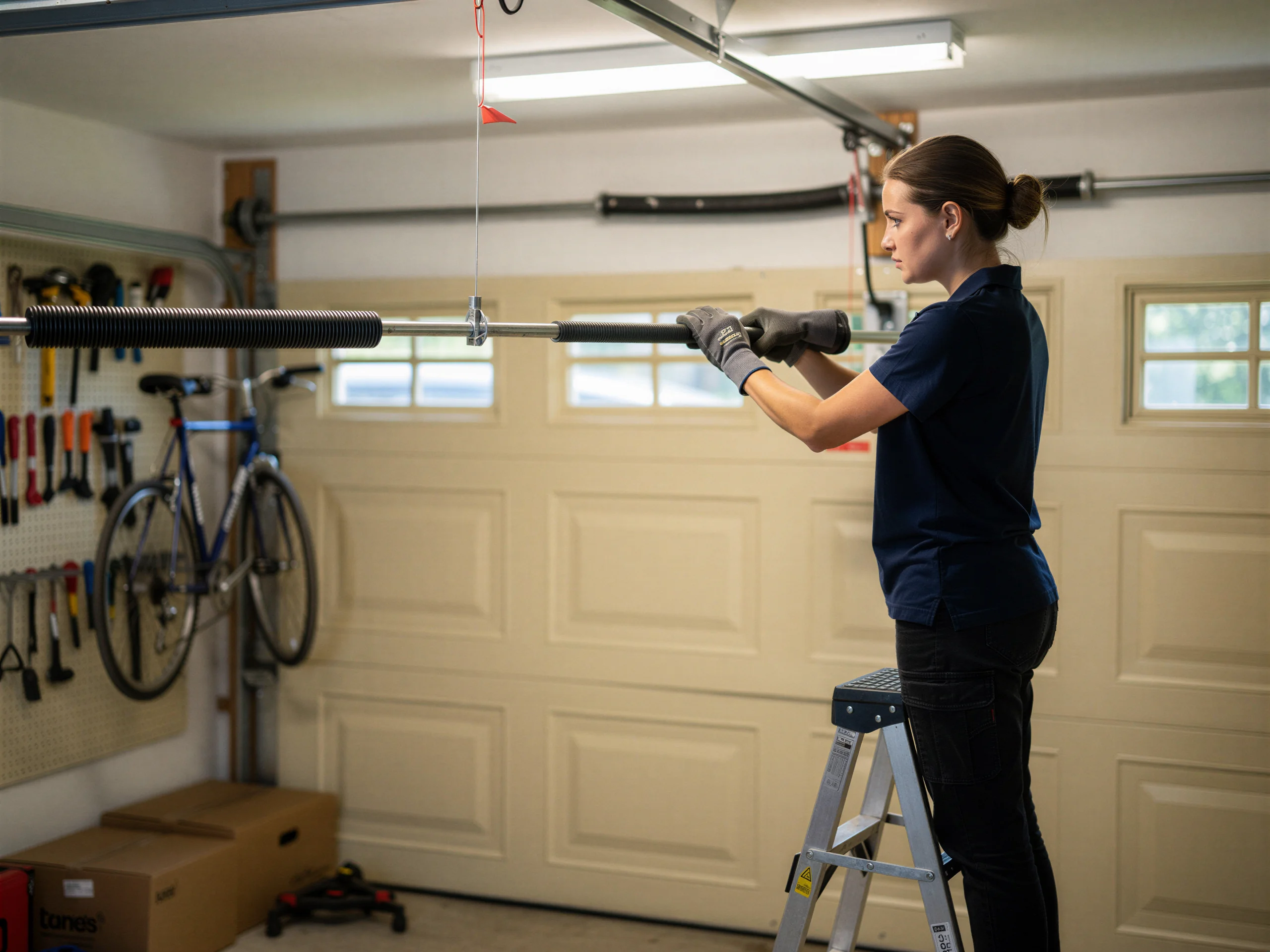
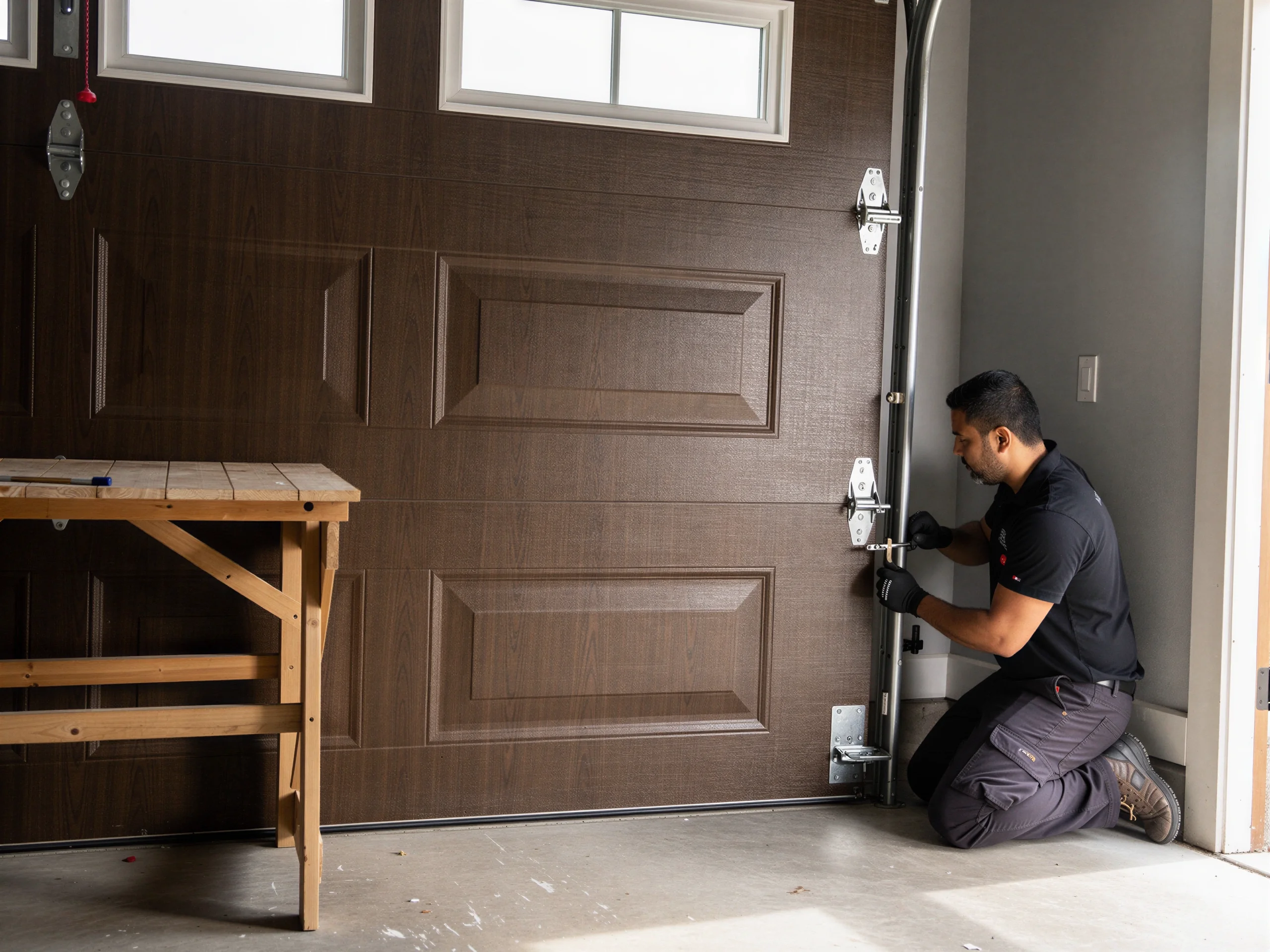
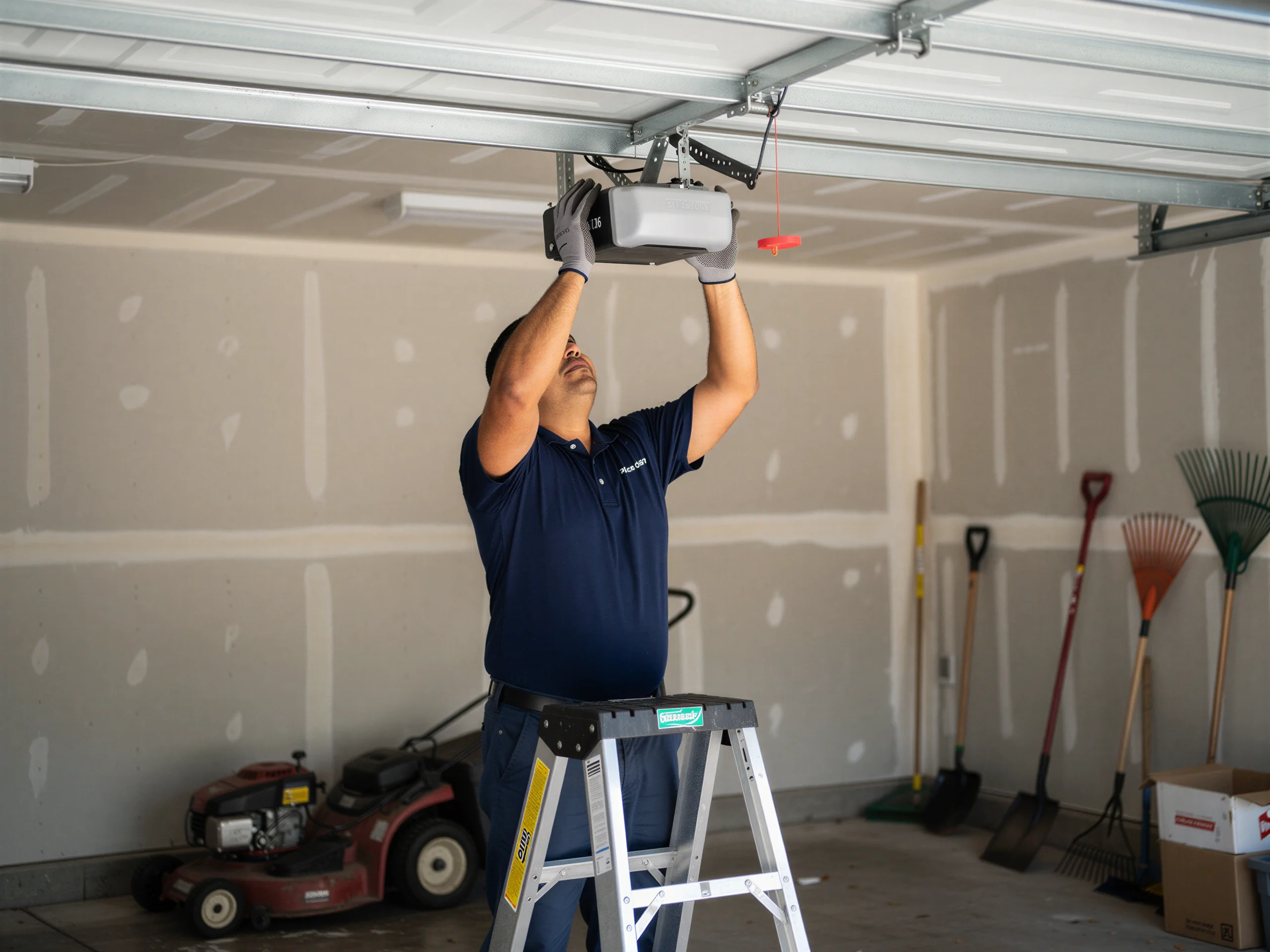
Once the panel is in hand, the job is mechanical: unbolt the hinges on either side of the damaged section, support the door on its track so the remaining sections don't drop, swap the panel, and rehang the hinges and rollers.
Rebalance after panel
On a torsion-spring door we check spring tension afterward, since a panel swap can shift the balance point slightly if the new section doesn't weigh exactly what the old one did. Most single-panel jobs run in a few hours once the part is on the truck.
Panel lead time varies
The real variable is lead time on the panel itself - a common white or almond steel section might be available quickly, but a wood-grain composite panel or a discontinued color can take longer to source. We tell you that lead time up front rather than guessing at a date.
What You Are Seeing
If you're looking at this page, you've probably already spotted one of a few things: a dent from a bumper or a basketball that's deep enough to catch the track, a bottom panel gone soft and rust-streaked where it sits closest to the driveway, or a crack running along a seam after a cold snap.
Daylight and grinding signs
Panels don't usually fail quietly - you'll notice a gap of daylight along one edge, a section that doesn't sit flush when the door closes, or a grinding sound as a bent panel drags against the track.
Long-term off-track wear
Sometimes what looks like one bad panel is actually a door that's been running slightly off-track for months, and the panel finally gave out at its weakest point.
Level versus crooked door
If the damage is on the bottom section and the door still closes level, that's usually a straightforward swap. If the door sits crooked or won't seal against the slab anymore, we're probably talking about more than a panel.
What Causes It Around Here
Fairfield and the towns we work in share the same housing story: most of the stock here went up between 1954 and 1984, median year 1966, and that means a lot of original or first-replacement garage doors built for a climate assumption that's held up worse than the framing. This is a cold-climate service area with real freeze-thaw cycling, and steel panels that sit low to a concrete slab take the brunt of it - road salt tracked in off driveways, snowmelt refreezing against the bottom seam, and decades of that cycle eating through paint and then metal from the inside of the panel out.
Across the roughly 141,000 households and 83,000 owner-occupied houses in this service area, the panel failures we get called for cluster hard on bottom sections and on doors from that same 1960s-70s building wave, because that's when a huge share of these garages were framed and first fitted. Newer infill or recent remodels see far less of this - it's the original stock, and the doors that replaced them once already, that keep failing in the same spot for the same reason.
Talk to a local pro
Garage door service in Fairfield?
Same-day service with honest, upfront quotes.