A Service Call in Fairfield, CT: What Actually Gets Checked
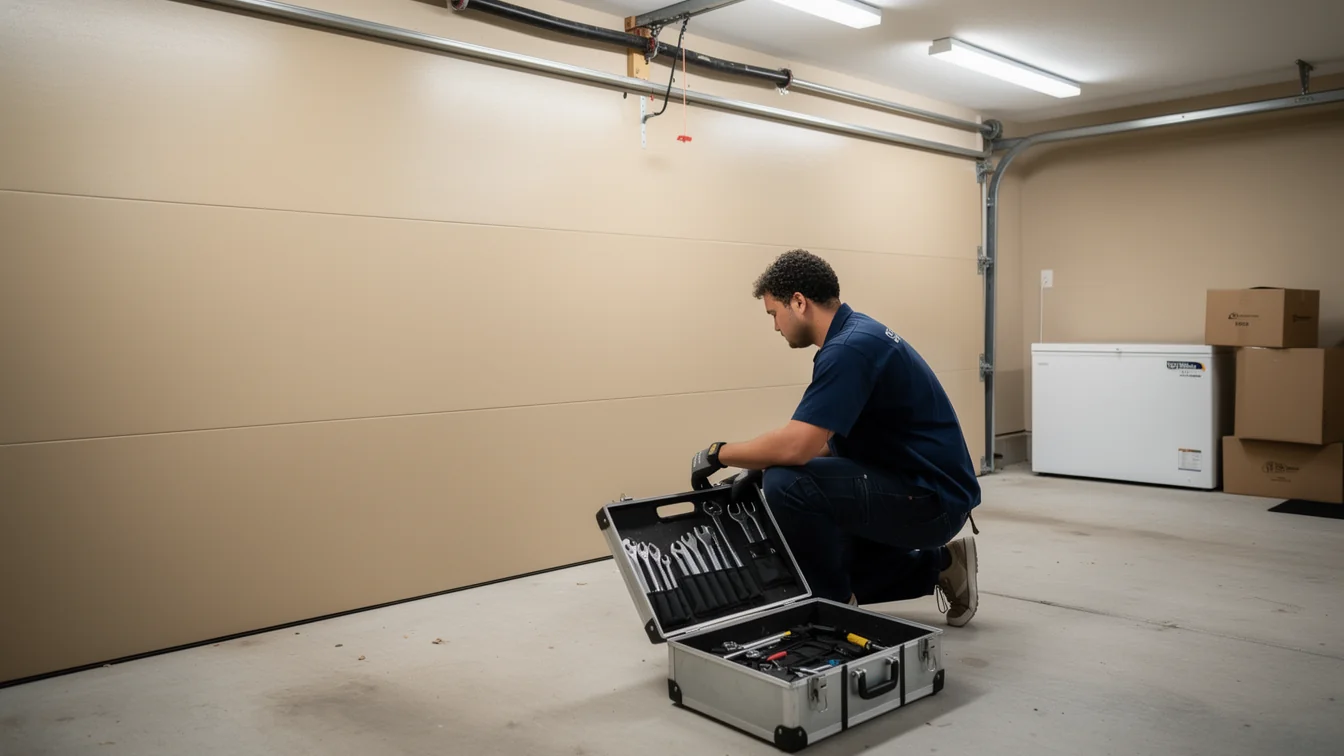
A Fairfield, CT garage door service call checks springs, cables, and opener hardware sized for homes built 1954-1984 and the area's cold, humid winters.
Read moreFairfield homes built mostly between 1954 and 1984 carry original torsion springs that snap hard when cold hits. Here's what that break actually looks like.
Local detail
Most homeowners figure a spring breaks because it's worn out from use, the same way a tire wears thin. That's only half the story. Steel doesn't just fatigue from opening and closing the door - it fatigues faster when it's cold, because cold steel is less flexible and takes the torque of a closed door harder than warm steel does.
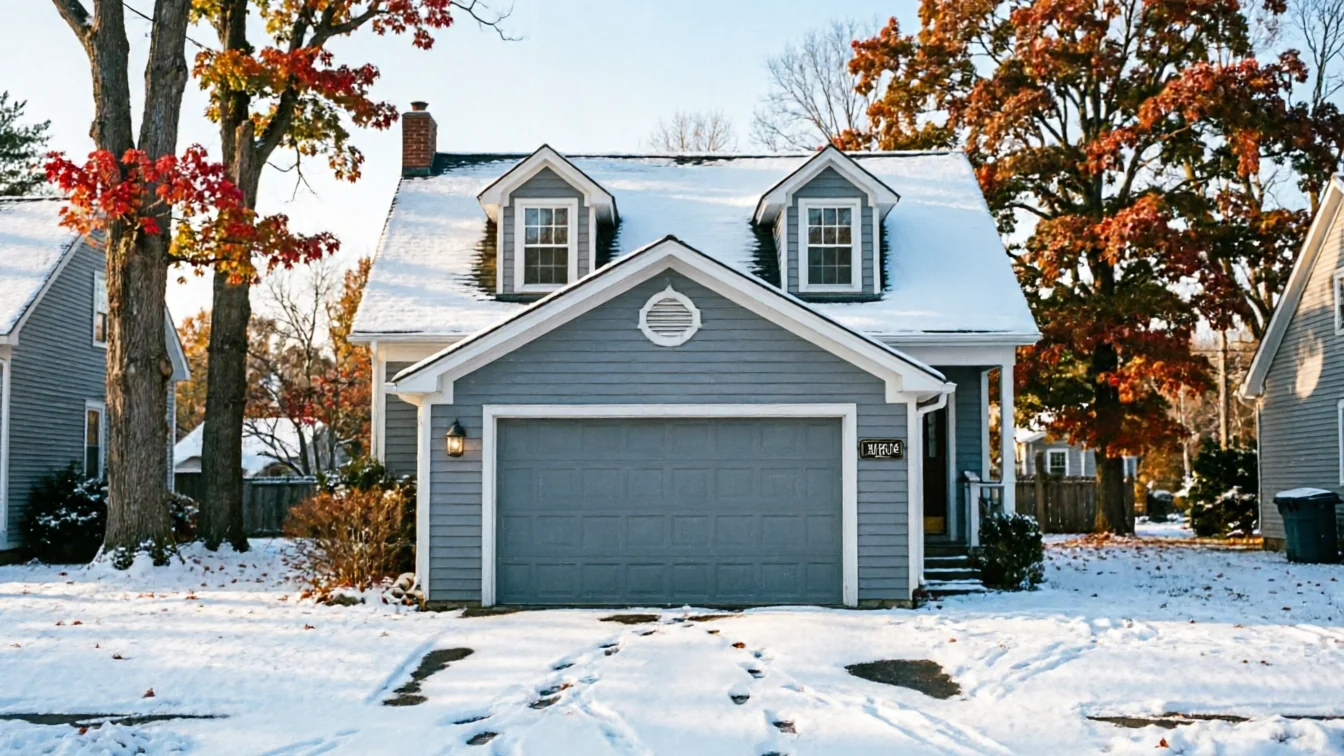
The other thing people miss: a lot of them are working with the original spring. Housing across Fairfield mostly went up between 1954 and 1984, with the typical build year sitting around 1966, and plenty of those garages still carry the hardware that came with the house. Nobody's replaced it because it never looked broken - until the morning it is.
So the common assumption - "it just wore out" - skips the part that actually matters here: a spring rated for a mid-1960s door, run through decades of New England winters, isn't the same piece of steel it was when it was installed. Age and cold compound each other. Neither one alone tells the full story, and treating a broken spring as a random, isolated failure means missing the pattern that's sitting in half the garages on the street.
The area
A torsion spring holds enormous stored energy - it's doing the lifting work the door itself can't do. When that spring is original to a house built in the 1960s or '70s, which describes most of the stock across the 26 named areas in this service territory, the steel has been through roughly sixty winters of expansion and contraction. Each freeze-thaw cycle adds a little more fatigue to metal that was never designed to be serviced this long.
Cold makes this worse in a specific way: steel contracts and stiffens as temperature drops, which means the spring has less give right when the door's winding mechanism is asking the most of it. A spring that flexed fine in July can hit a cold morning in January already carrying decades of wear, and that combination is what turns a slow fatigue crack into a sudden snap - usually right as someone's backing out for work.
The honest limitation here: we can't tell you which specific spring is about to go, or when. Fatigue doesn't announce itself with a sound or a sag every time. What we can tell you is that age plus cold is the combination that matters, and in this area, both of those boxes get checked on a lot of doors.
What we find
Spring failures cluster in winter here for a reason tied to the climate, not to bad luck. Fairfield sits in a climate band classified as severe cold, and that classification isn't abstract - it means repeated stretches where overnight temperatures sit low enough to stiffen steel for hours before the sun does anything to warm the garage back up.
The failure pattern we see follows that: cold mornings, especially after a hard overnight drop, are when a fatigued spring is most likely to let go. The door gets asked to lift at the exact moment the spring has the least flex in it. It's not that cold weather causes damage overnight - it's that cold weather is when existing fatigue, built up over years, finally loses the fight.
This is also why a spring that seemed fine in October can fail in January without any new stress on the door. Nothing changed about how the household uses the garage. What changed is the temperature, and on a fifty-plus-year-old spring, that's sometimes all it takes. If your door is sticking, grinding, or sounding different as the weather turns, that's worth a look before, not after, it fully goes.
How we work
Severe cold does two things to a torsion spring beyond the obvious stiffness: it accelerates fatigue cracking in the coil, and it can make the galvanized or paint coating on older springs crack and flake, which exposes bare metal to moisture on a wet winter day. Both speed up failure, and both hit harder on a spring that's already decades past its original install date.
With 141,171 households across this service area and the bulk of homes still dating to that same 1954-1984 window, the odds that your garage is running on its original torsion spring are high, not low. A house built when the median year here was 1966 has had a lot of winters to work that spring toward the end of its life, and severe cold is the stress test that finds the weak ones.
We don't push replacement on a spring that's still sound just because it's old - some have plenty of life left, and a straightforward repair beats a full swap every time it's an option. But on a door that's original to a 1960s or '70s build in this climate, a spring showing noise, gaps in the coil, or visible rust is not a maintenance item to put off until spring.
Questions
Cold stiffens steel, which means a spring already weakened by years of use has less give right when the door's lift mechanism needs it most. Fairfield's severe cold climate means that stress hits repeatedly each winter, which is why failures cluster in the cold months rather than spreading evenly through the year.
It's possible. Housing across this area mostly dates from 1954 to 1984, with a lot of it 1960s and '70s construction, and many of those doors still run their original torsion springs. If yours has never been replaced, age alone is a reason to have it checked before a cold snap finds the weak point for you.
If both springs are the same age, which they usually are on an original installation, the second one has seen the same decades of cold and wear as the one that failed. We'll look at the actual spring, not just assume, but matched age is a real factor worth weighing.
Recommendation
More garage door guides for Fairfield homeowners.
A Fairfield, CT garage door service call checks springs, cables, and opener hardware sized for homes built 1954-1984 and the area's cold, humid winters.
Read more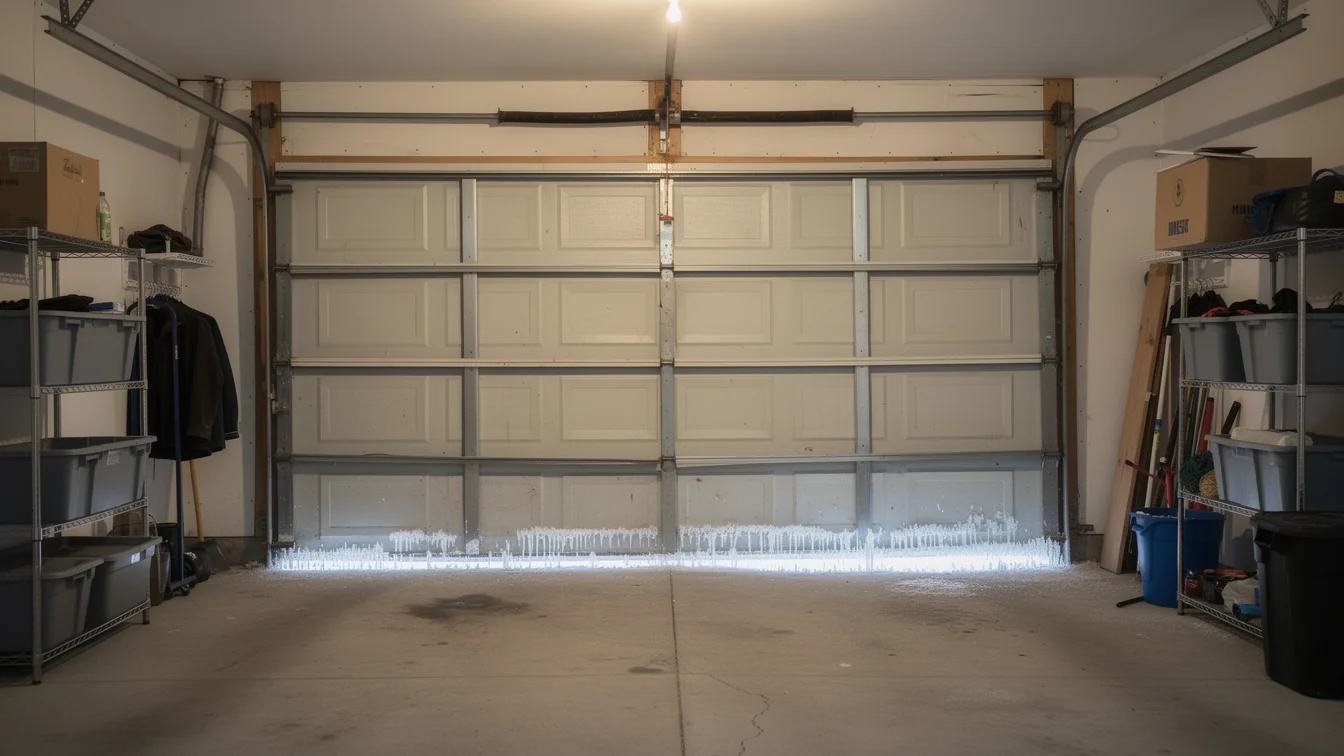
Fairfield's housing stock dates mostly to 1954-1984, built before insulated garage doors were required.
Read more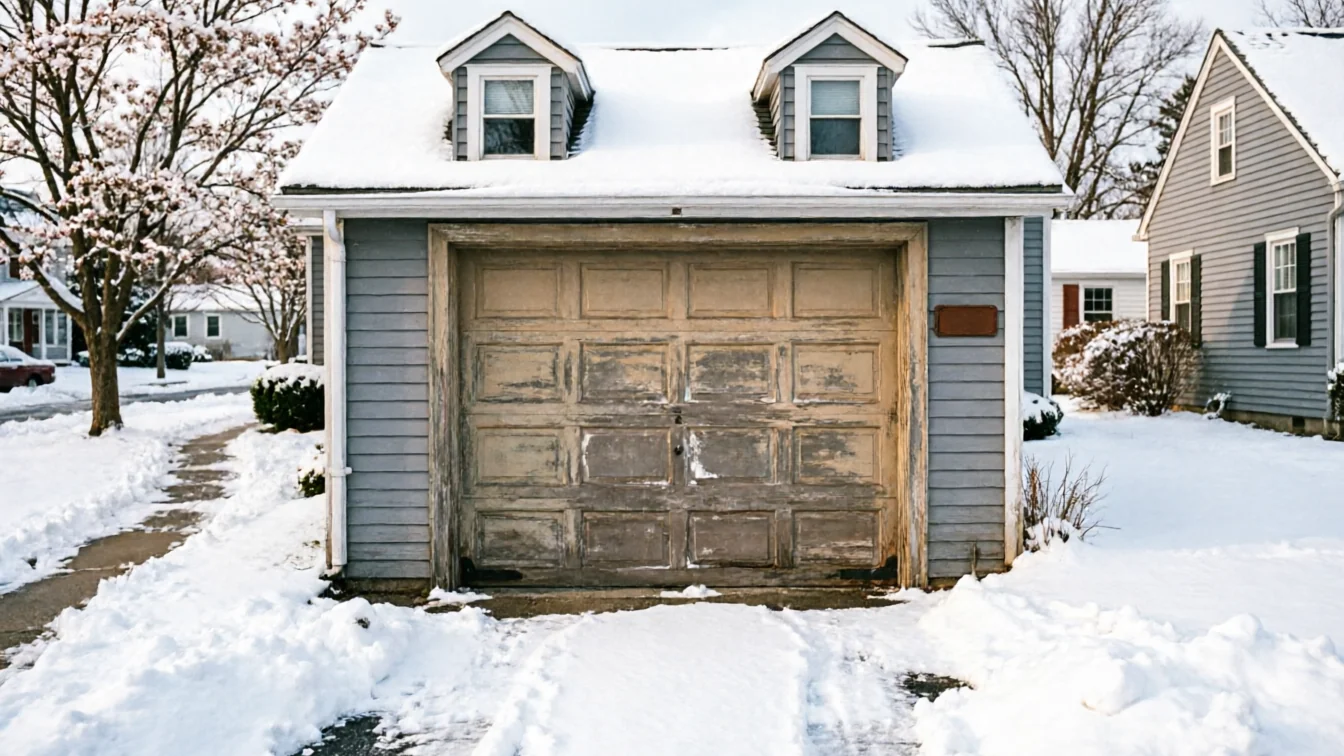
Fairfield's housing mostly dates to 1954-1984.
Read moreReady when you are
Fairfield Garage Door Pros repairs and installs garage doors, springs and openers in Fairfield, CT and the surrounding area.