What Can Go Wrong
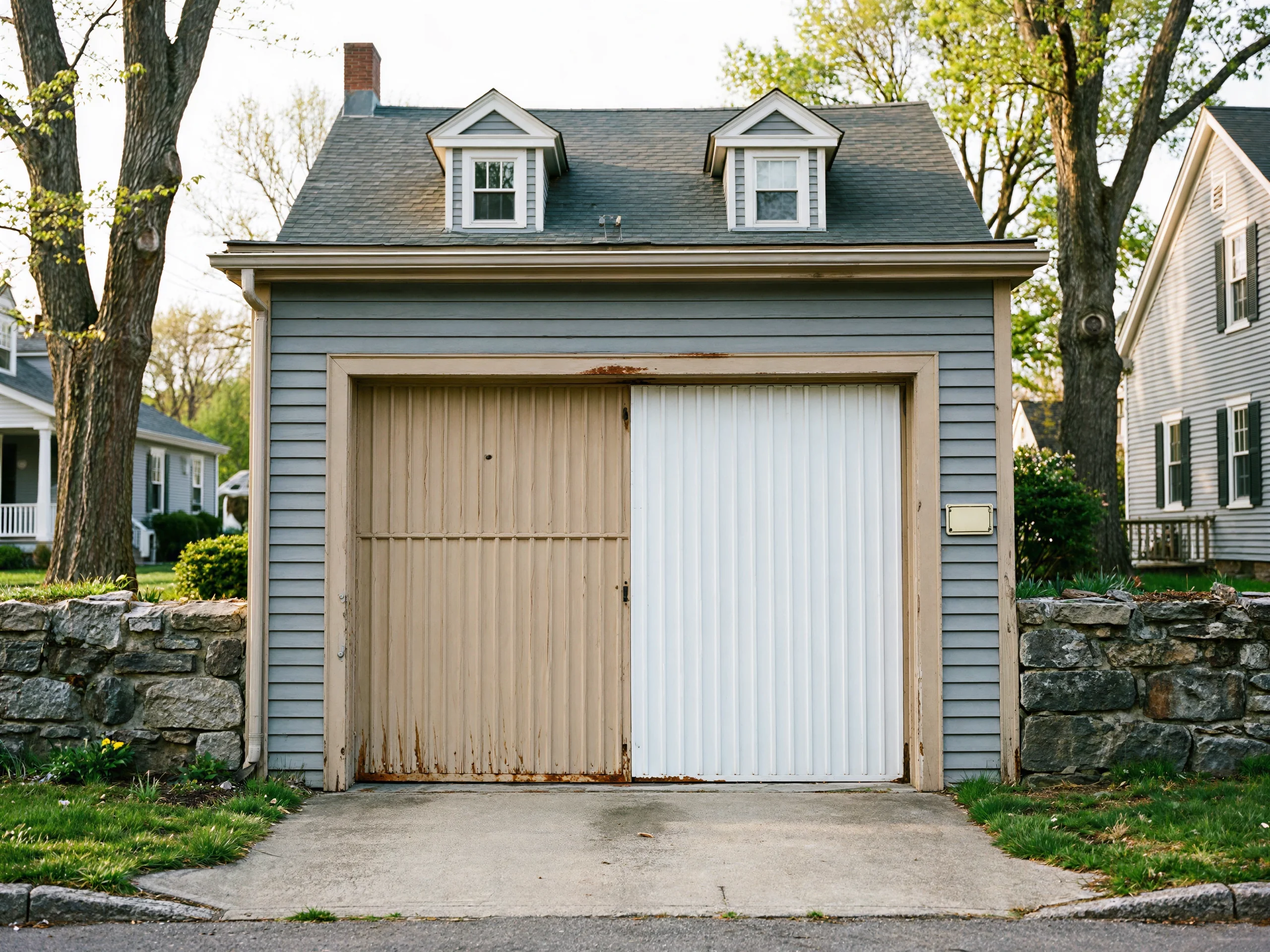
Most of the trouble on an install job in Fairfield doesn't start with the new door. It starts with what's already in the opening. Houses here went up mostly between 1954 and 1984, with the median landing around 1966, so the garage behind that door is often the original framing with the original track hardware bolted to it.
Header and jamb surprises
When we pull the old door, we sometimes find the header isn't square, the jambs have shifted a half inch over sixty years of settling, or the track was mounted for a door an inch thinner than anything sold now.
Tight headroom issues
The other common surprise is headroom. A lot of these mid-century garages were built with just enough clearance for a single-layer steel door and a short track radius - fine in 1966, tight for a modern insulated door with a thicker panel stack.
Mismatched opener brackets
If the opener is original equipment, the mounting bracket and the door's lift point often don't line up with new hardware either, so the brackets get swapped too. We won't quote a straight swap over the phone for a house we haven't measured, because guessing wrong means a second trip.
What the Repair Takes
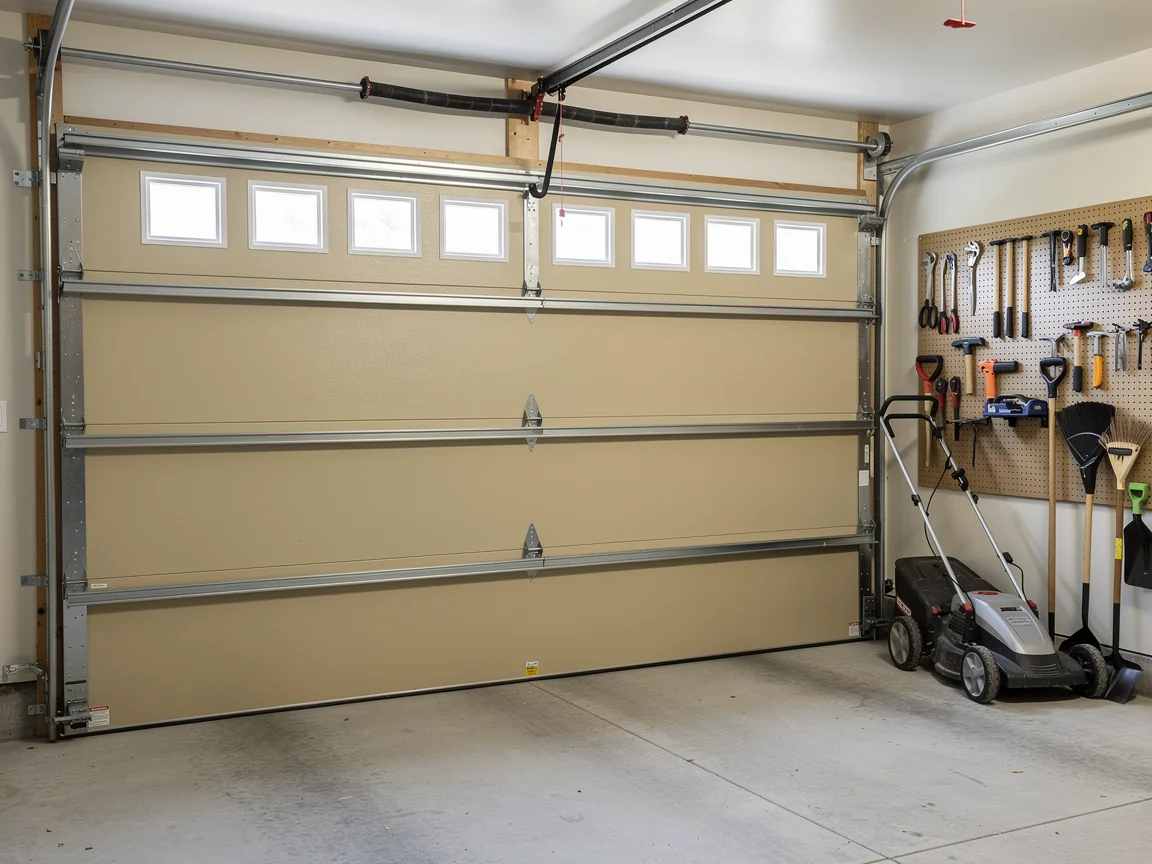
An install starts with measuring the opening, not the old door - width, height, headroom above the opening, and backroom depth behind it, because low-headroom track kits and standard-lift track kits are not interchangeable parts.
Headroom sets track choice
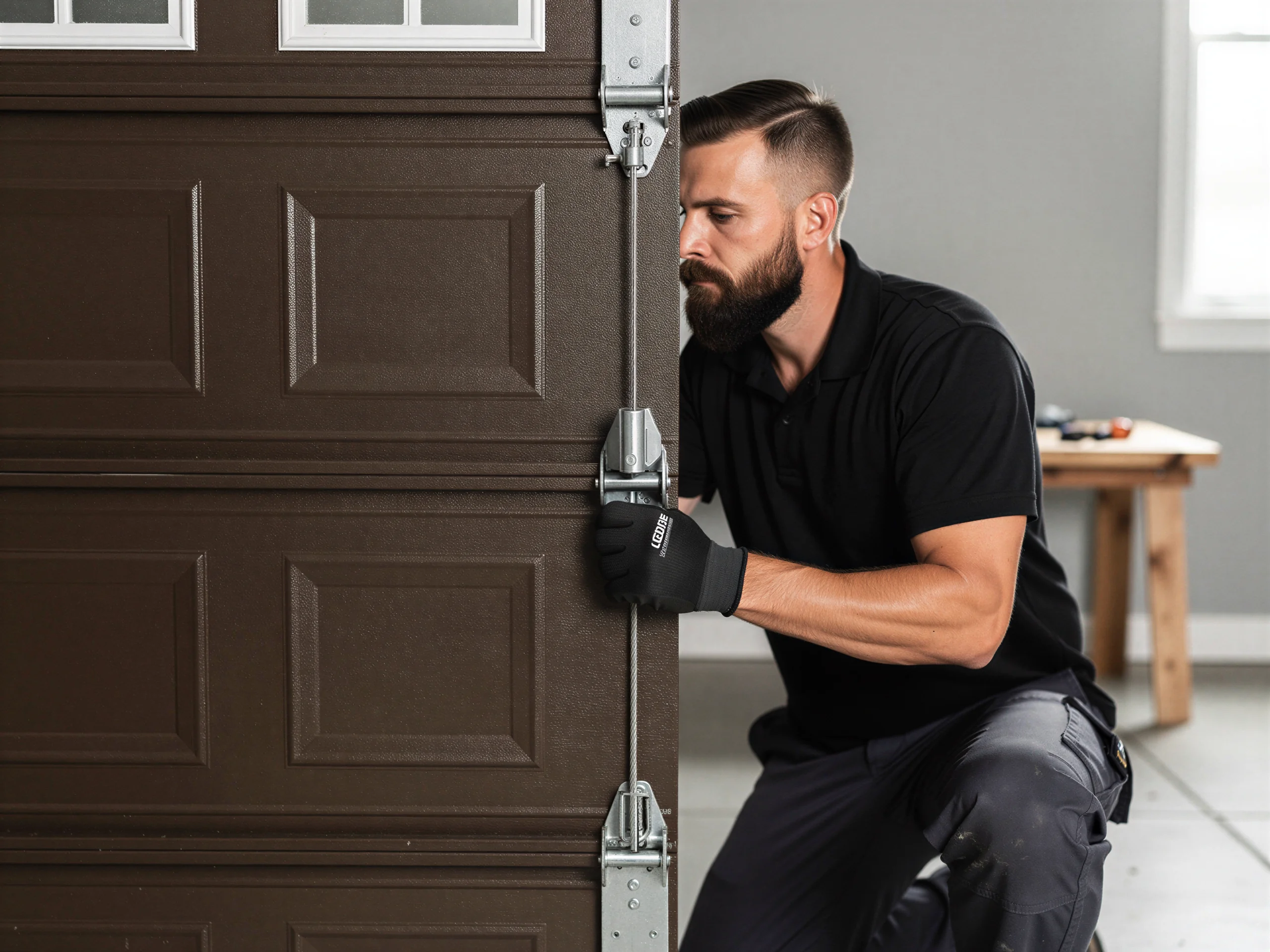
On a lot of Fairfield's older garages, that measurement decides whether a standard track system fits or whether the job needs a low-headroom kit, which changes both the price and the time on site. After that it's removing the old door and track, checking the jambs and header for square, and setting new track plumb before the panels go up.
Old torsion hardware retired
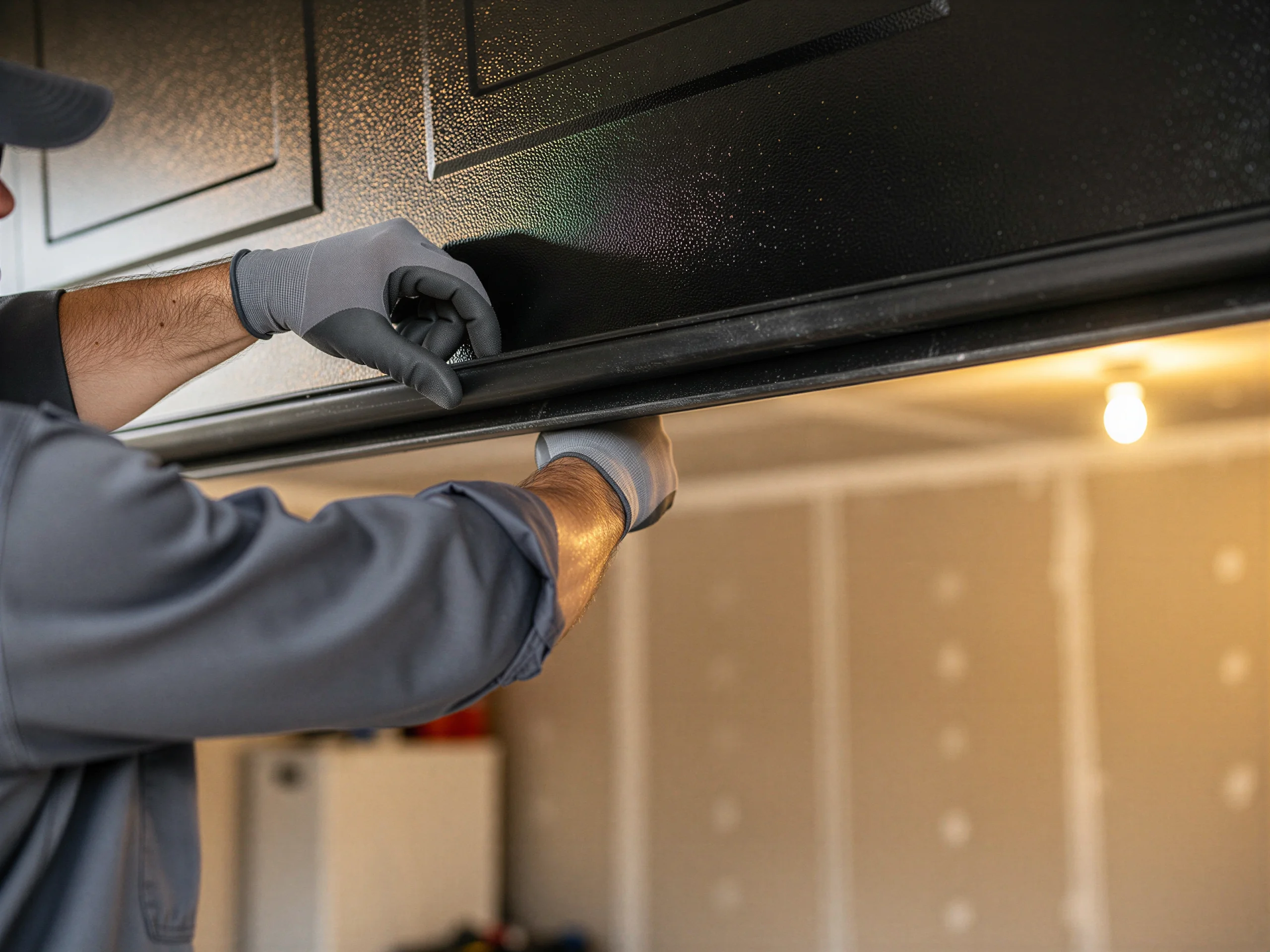
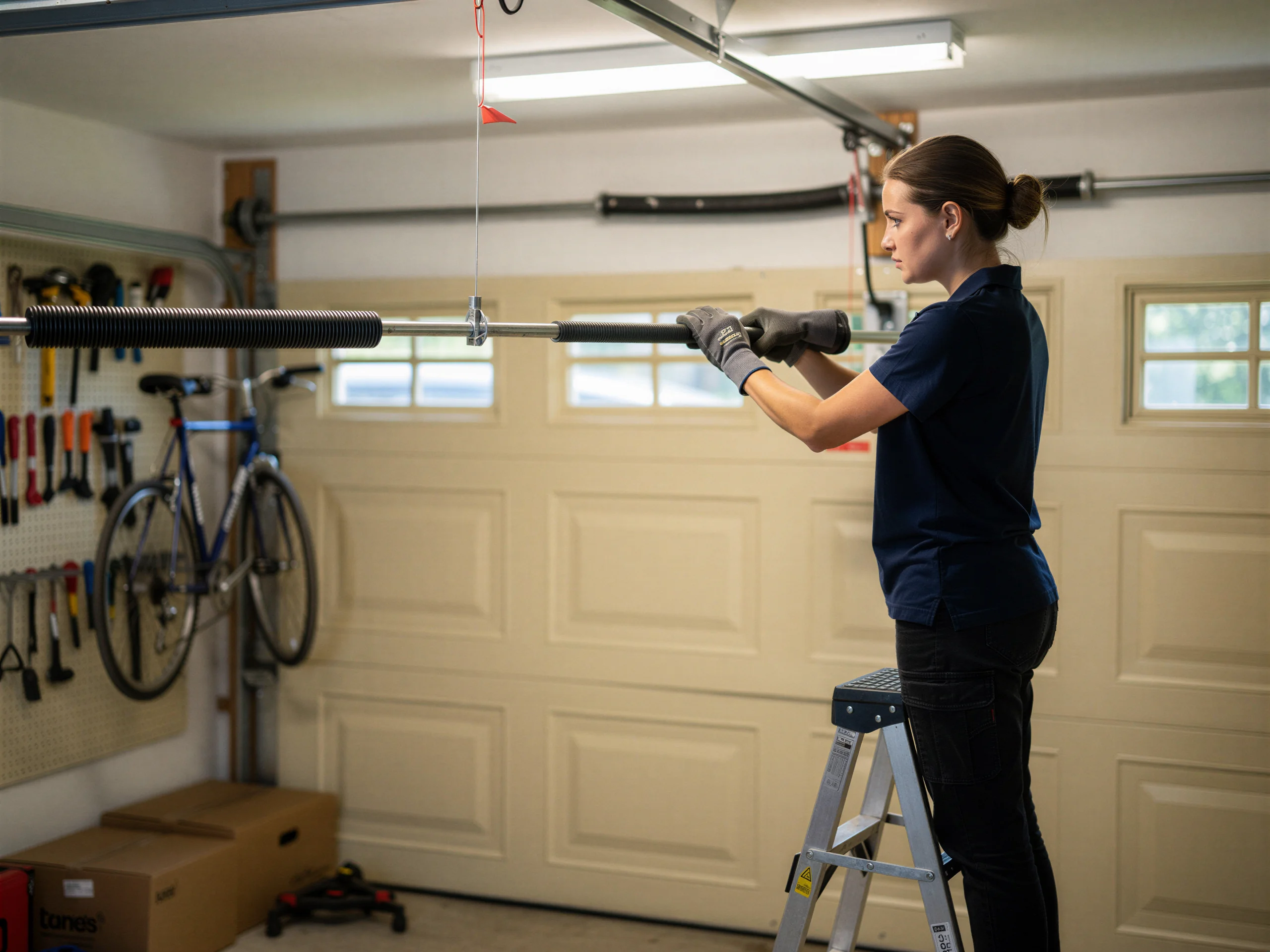
If the house has the original torsion hardware from the 1960s or 70s stock common across this area, that hardware usually comes down with the old door rather than getting reused - springs and shafts from that era aren't rated to current cycle counts and don't match new drum sizes anyway. Insulated panel doors get weatherstripped at the bottom, sides, and between sections, which matters more in a COLD severe climate than it would somewhere milder.
Opener limits set last
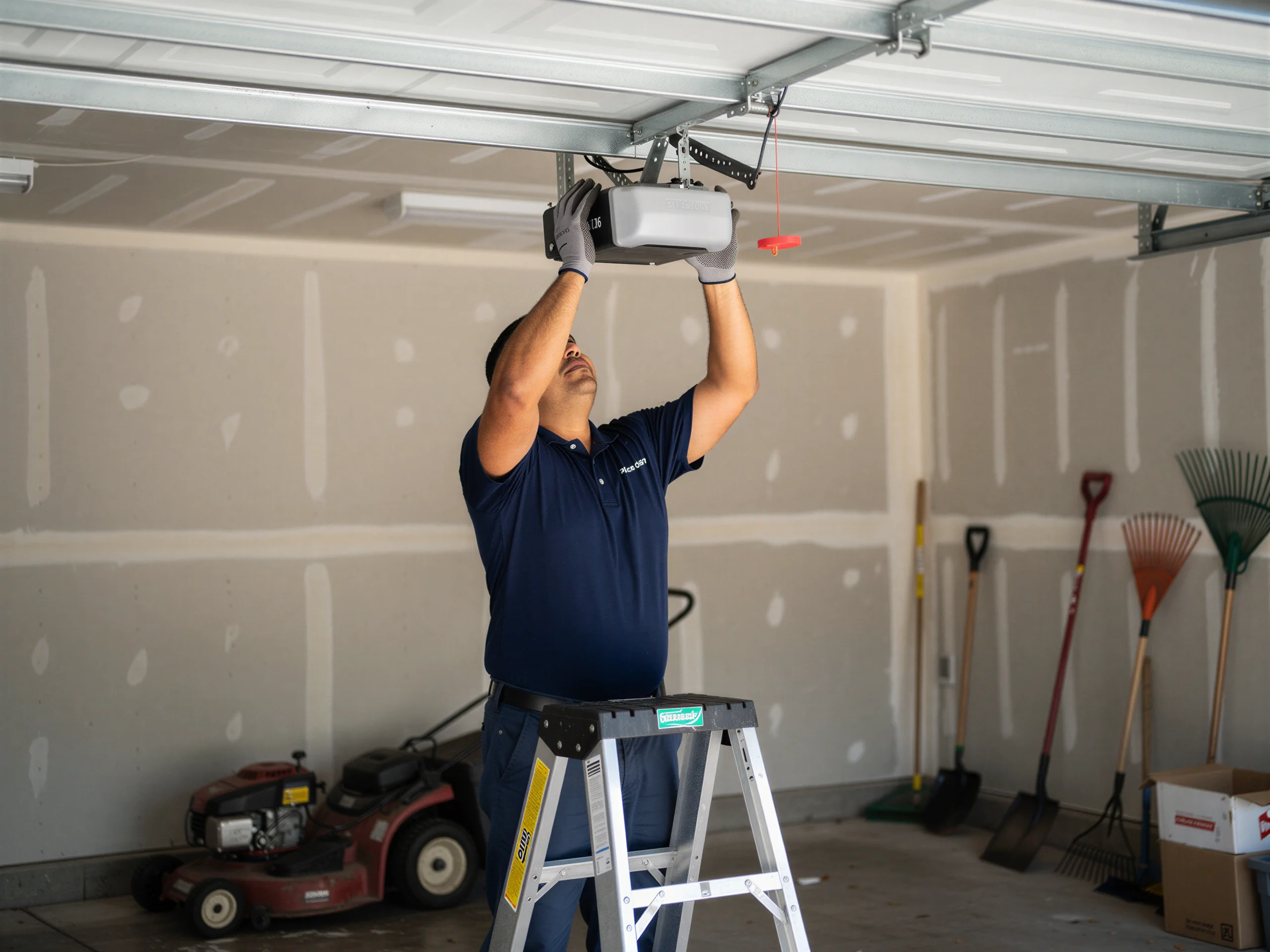
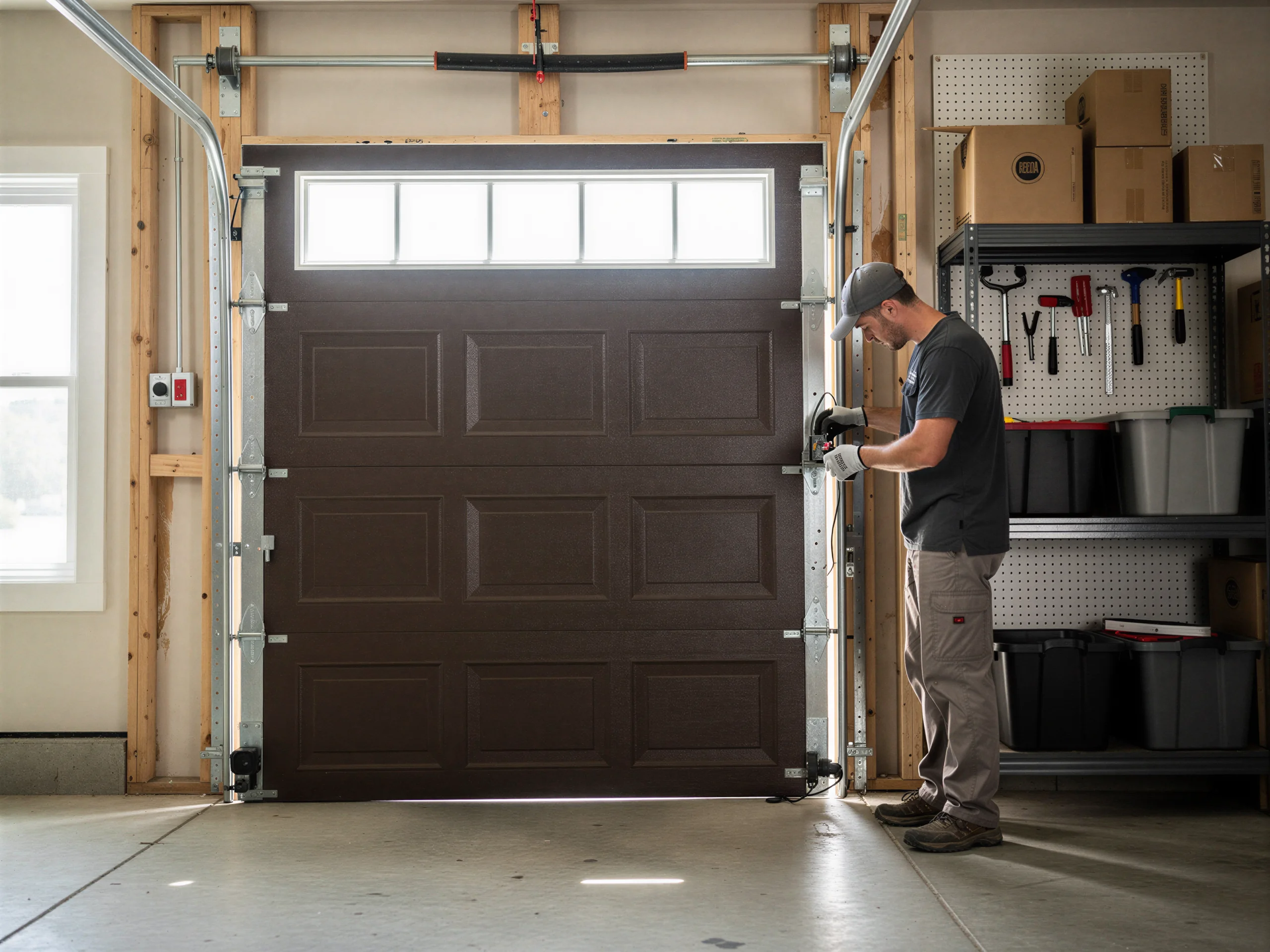
Last step is setting the opener bracket to the new door's lift point and running the travel limits. We don't leave a job with the opener just reattached and untested - if the safety reverse and force settings aren't right on a new door, that's a liability we're not willing to hand you.
What You Are Seeing
If you're looking at installation instead of repair, you're probably already seeing one of a few things. The door itself might still open and close, but it's the original steel panel from when the house was built, and it's cold to the touch from the inside in January - that's a single-layer door with no insulation doing exactly what it was built to do, which is nothing against the cold.
Daylight at bottom corners
Sometimes it's daylight at the bottom corners even when the door is fully down, which usually means the opening itself has moved slightly over the decades and the old door's frame doesn't match it anymore - not something weatherstripping fixes on its own.
Replace the full system
Other owners come to us because the opener is dying and they'd rather replace the whole system than patch a sixty-year-old door with a new motor on it. That's often the more honest call: an old low-insulation door paired with a new opener still leaves you with the same drafty panel you started with.
Opener-only fix option
If your door and track are in good shape and it's really just the opener struggling, that's a different job and a cheaper one - we'll tell you if that's what we're looking at instead of selling a full install you don't need.
What Causes It Around Here
The pattern we see across Fairfield comes straight from when the houses went up. With median construction around 1966 and most of the stock dating 1954 to 1984, a large share of garages were built to the door standards and track clearances of that era - narrower insulation allowances, shorter headroom, lighter-gauge steel. Across the 26 named areas in this part of the state, that 1960s-70s building pattern repeats enough that it's the default, not the exception.
The COLD severe climate band this area sits in is the other half of it. A single-layer door that was fine for a detached garage sixty years ago becomes the weak point in an attached garage's heat loss once winters bring sustained cold stretches - owners feel it in the room next to the garage, not just in the garage itself. That combination, old opening plus cold climate, is why installation calls here lean toward insulated doors and low-headroom kits rather than straight swaps.
Income and household data for the wider service area - a median around $162,079 across 141,171 households - also explains why a fair number of these jobs are owners upgrading ahead of a failure rather than replacing a door that's already broken down.
Talk to a local pro
Garage door service in Fairfield?
Same-day service with honest, upfront quotes.