Why Fairfield's Garage Doors Fail the Way They Do
Fairfield's housing stock dates mostly to 1954-1984, built before insulated garage doors were required.
Read moreFairfield's housing mostly dates to 1954-1984. Here's how to tell if your original door and hardware are worth repairing or replacing, given our cold winters.
Local detail
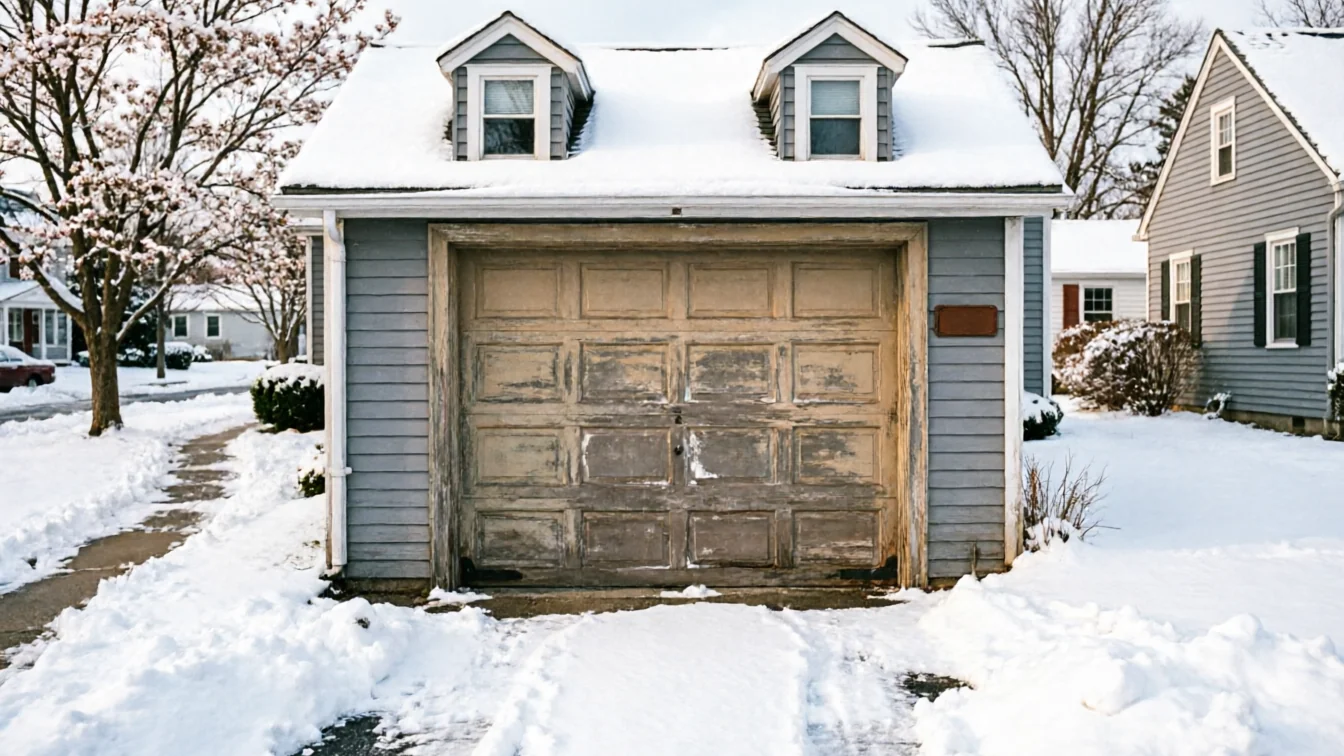
The common mistake we see in Fairfield is treating every garage door the same way, whether it's five years old or fifty. Most houses on this side of town went up between 1954 and 1984, with the median build year sitting around 1966. That means a huge share of the doors we're called out to aren't the doors that came with the house anymore, but they're often still running on the original torsion hardware - the springs, the drum, the shaft bearings - because nobody thinks to swap that out unless it breaks. People assume a door that still opens and closes is "fine." What they're missing is that hardware sized for a lighter, thinner panel decades ago is now holding up a heavier insulated replacement, or it's just worn past its rated cycle count and nobody's checked. The fix isn't always a new door. Sometimes it's new springs matched to the actual weight on the track. Sometimes the panel is the problem and the hardware is fine. Knowing which is which is the whole job, and it starts with age, not appearance.
The area
Across the 26 neighborhoods we work in - the housing stock is heavily concentrated in that 1960s-70s build window - we run into a specific pattern: original steel sectional doors with single-layer panels, minimal insulation, and torsion springs that were never upgraded when the opener got replaced. The opener is usually the newest part of the system. The spring and track are usually the oldest. When a spring that's been under tension since the Johnson administration finally lets go, it doesn't just need a new spring - it often reveals worn end bearings, a bent track, or a cable that was already fraying. Replacing one part on a door this old without checking the rest is how you end up back at the same house in six months. We'll tell you straight if the panel itself is still sound steel worth keeping, or if the door's age means every repair is just buying a short stretch of time before the next failure.
What we find
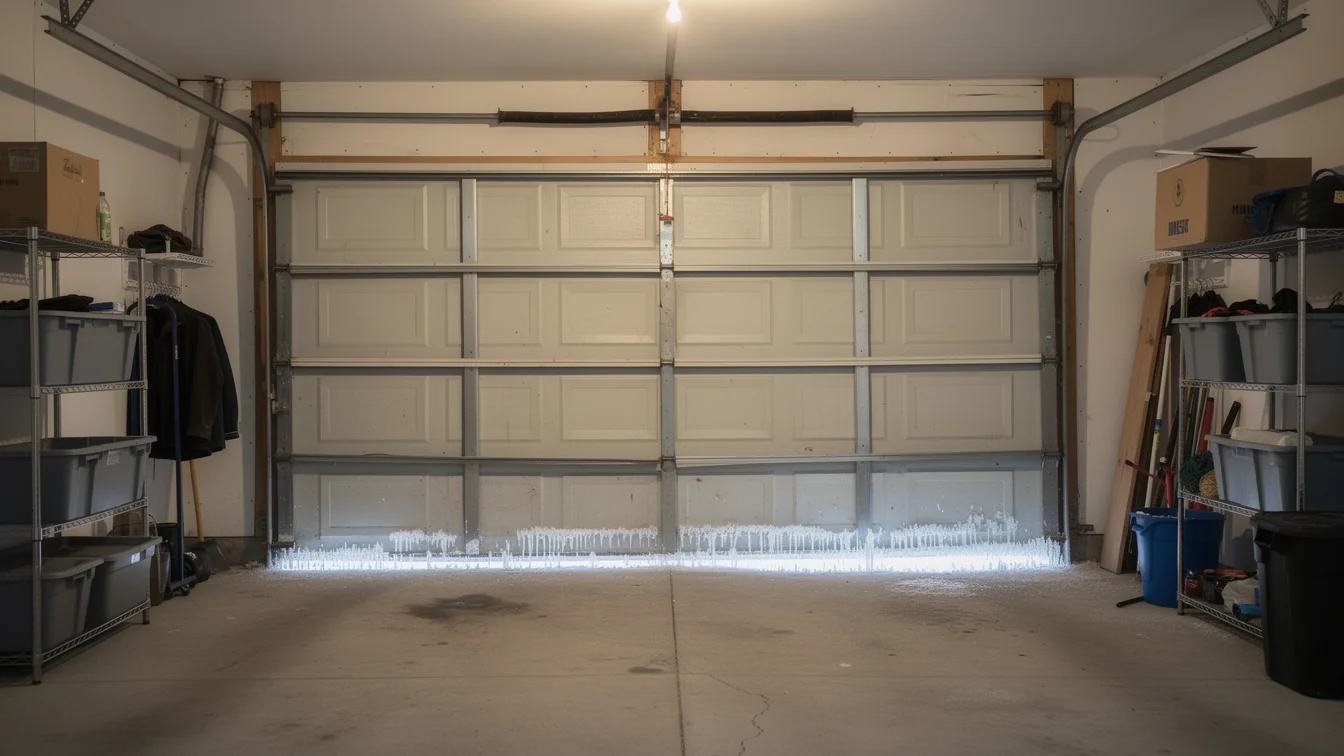
Fairfield sits in a climate band we classify as cold and severe, and that matters more for a door built in 1966 than one built last year. Older panels often have little to no insulation and steel skins that were never designed with a thermal break. Through a full winter, that uninsulated steel expands and contracts hard across the daily swing, and the seams, weatherstripping, and bottom seal take the brunt of it. On a newer insulated door this is a minor issue. On a 1960s or 70s panel it's often the thing that finally cracks a weld or splits a seam that's already brittle from forty-plus winters. If your door is from that era and you're noticing daylight around the edges in January, that's not a weatherstrip problem you can fix with a $20 seal kit - it's the panel telling you its service life is close to done.
How we work
Cold and severe winters put a specific kind of stress on garage door hardware that doesn't show up in warmer regions: metal contracts, lubricant stiffens, and torsion springs that are already near the end of their cycle life tend to fail in the cold rather than in July. We see this most on doors tied to that 1954-1984 housing wave, where the spring has never been replaced and the garage itself is unheated. A spring under full tension in a 10-degree garage is working harder than the same spring at 70 degrees, and metal fatigue doesn't wait for a convenient season. One honest limitation here: we can't tell you over the phone whether your spring has another winter left in it. That's a judgment call that needs someone looking at the coil wear, the winding cone, and the cable condition in person, not a guess based on the house's age alone.
Questions
Often the panel itself is still sound steel and worth keeping, but the torsion hardware usually isn't original-spec anymore for safety reasons. We'd check spring tension, track alignment, and cable wear before deciding. If the panel's cracked or the insulation's gone, replacement usually makes more financial sense than another round of patch repairs.
Cold makes metal more brittle and lubricant stiffer, so a spring that's already near the end of its cycle life is more likely to fail when temperatures drop. Fairfield's winters fall into a cold, severe climate band, which puts extra strain on older torsion springs that haven't been replaced.
Depends on the door's age and what's failing. If it's from the 1960s-70s wave common in this area and the panel has no insulation, cracked seams, or rust through the steel, replacement often costs less over time than repeated hardware repairs on a worn-out shell.
Recommendation
More garage door guides for Fairfield homeowners.
Fairfield's housing stock dates mostly to 1954-1984, built before insulated garage doors were required.
Read more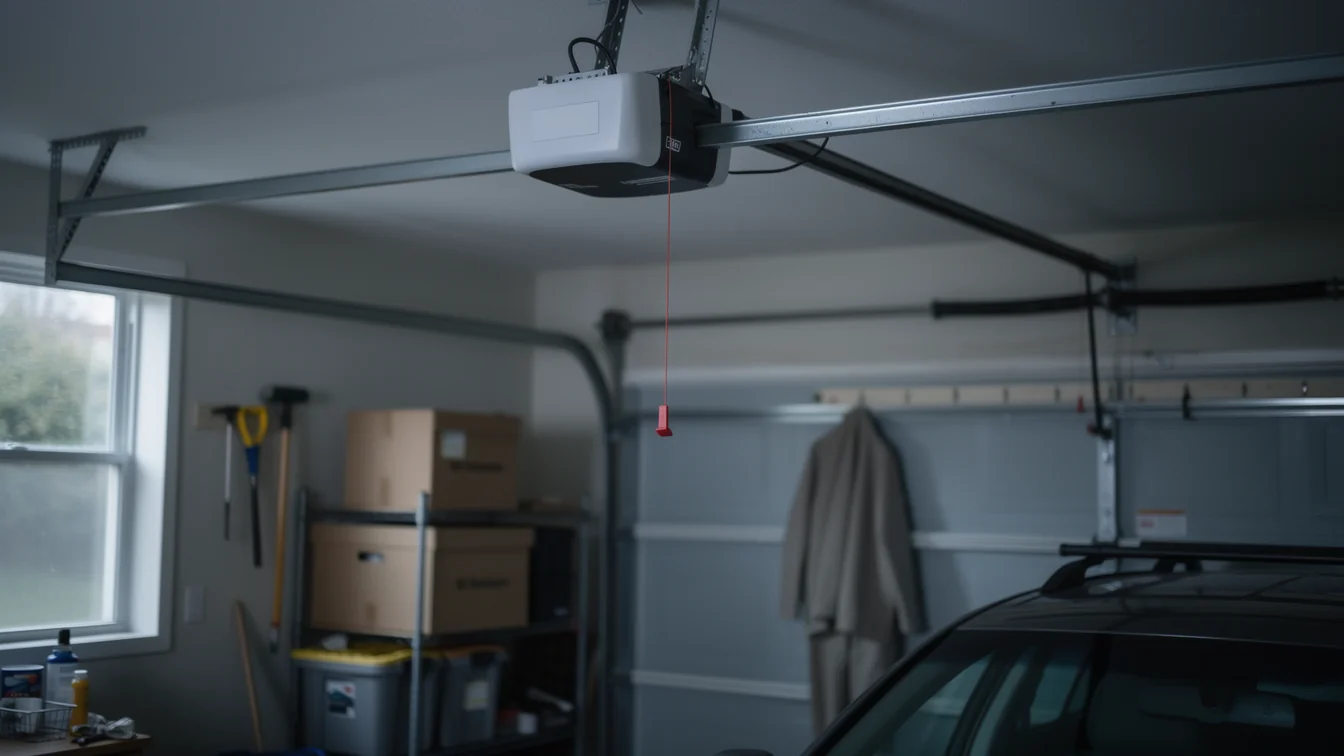
Fairfield's 1954-1984 housing stock and severe cold winters mean garage door openers fail at outage time more than most owners expect.
Read more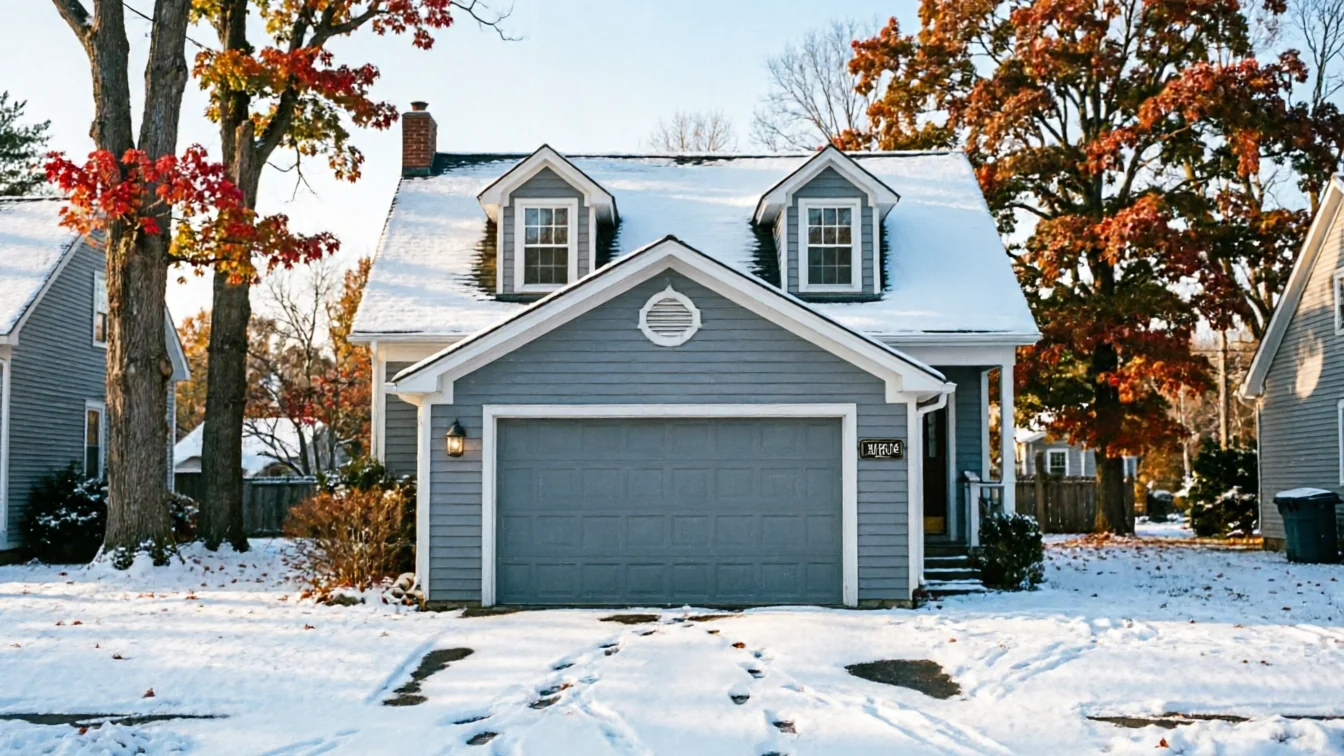
Fairfield homes built mostly between 1954 and 1984 carry original torsion springs that snap hard when cold hits.
Read moreReady when you are
Fairfield Garage Door Pros repairs and installs garage doors, springs and openers in Fairfield, CT and the surrounding area.