When the Power Goes Out, Your Opener Goes With It
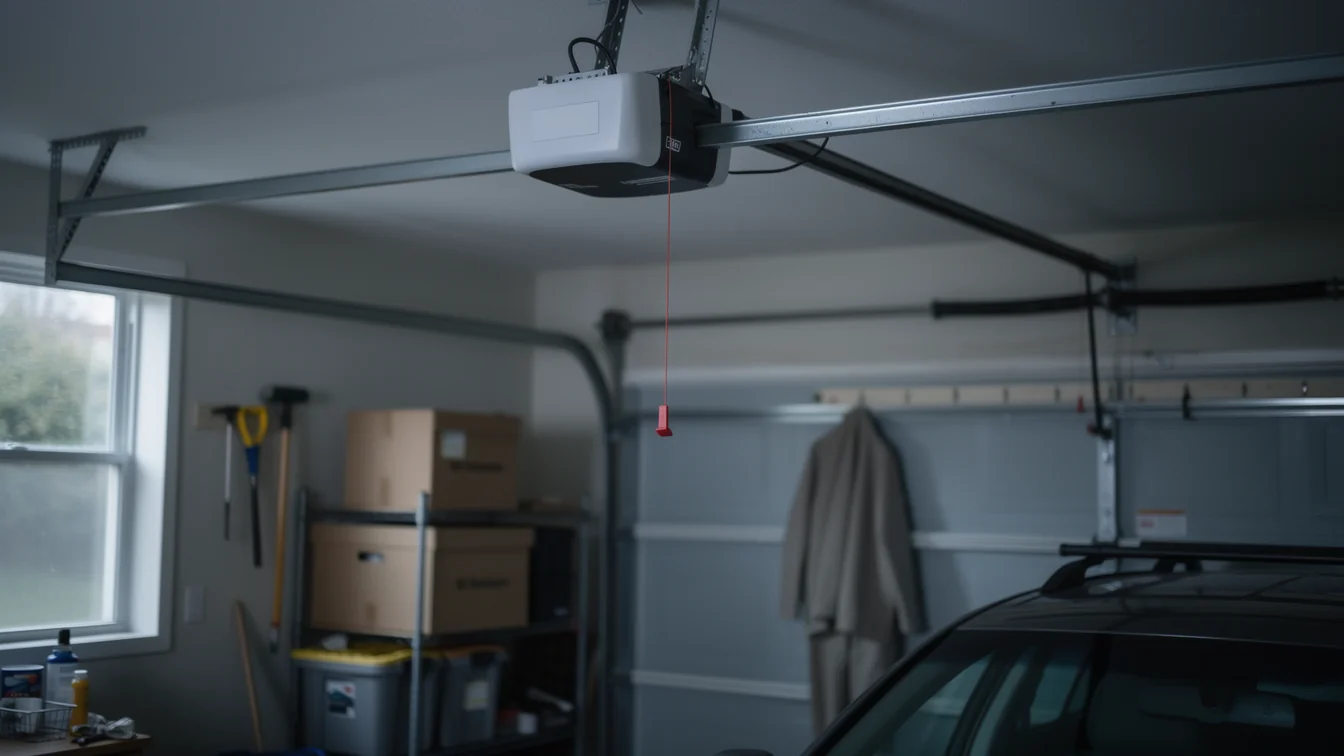
Fairfield's 1954-1984 housing stock and severe cold winters mean garage door openers fail at outage time more than most owners expect.
Read moreFairfield's housing stock dates mostly to 1954-1984, built before insulated garage doors were required. Here's what that means for your door in a cold-climate town.
Local detail
Most homeowners here assume a noisy or sluggish door just needs oil or a new remote battery. That's rarely the real story in Fairfield. The typical house in this service area went up between 1954 and 1984, with the median landing around 1966 - well before any state energy code asked for an insulated garage door. That means a lot of original or early-replacement doors are single-layer steel or even older wood panel, hung on hardware sized for a lighter, uninsulated slab. When people add an opener to one of these doors without upgrading the springs or track to handle the extra cycling, the door starts binding, the opener strains, and everyone blames the opener instead of the door it's lifting. Across the 26 named neighborhoods in this part of the county, the construction pattern repeats itself - 1960s and 70s ranches and colonials with garages built to a spec nobody updated since. The fix usually isn't a smarter opener. It's matching the door, spring weight, and track to a structure that was never built with thermal performance in mind.
The area
An uninsulated door from the 1960s or 70s moves differently than a modern one. The steel skin has no foam backing to stiffen it, so it flexes more at the bottom panel, which stresses the bottom bracket and rollers faster than a sandwich-construction door would. On houses built before insulation rules, that flex is the actual mechanical problem, not just a comfort issue. We also see a lot of these original doors still running on the torsion spring that came with the house, decades past its cycle life, because nothing visibly broke yet. A spring from a 1966-built garage wasn't engineered for today's heavier insulated replacement panels if a prior owner swapped the door but kept the old spring - that mismatch is one of the more common jobs we get called out for. The honest limitation here: we don't always recommend full replacement. If the frame and track are square and the only issue is a worn spring or a bent panel, repair is the right call. Replacement only makes sense when the door itself is the bottleneck, not just a part on it.
What we find
Fairfield sits in a cold, severe climate band, and that matters more for a 1960s-era door than people expect. Steel contracts in the cold, and on a door with no insulation layer to buffer the swing, the gap between panel and track widens just enough for rollers to ride rough through January and February. On these older single-layer doors, that's often when a cable that's been fraying quietly all year finally lets go - not from one dramatic event, but from months of a slightly wider swing wearing at a weak point. Houses nearer the water side of town, down toward Southport, take a bit more of that temperature swing day to day than homes further inland, though the underlying hardware issue is the same across the service area. None of this is exotic. It's just what happens when 60-year-old steel and springs meet a real New England winter, repeatedly, without anyone replacing the parts that were only ever rated for milder cycling.
How we work
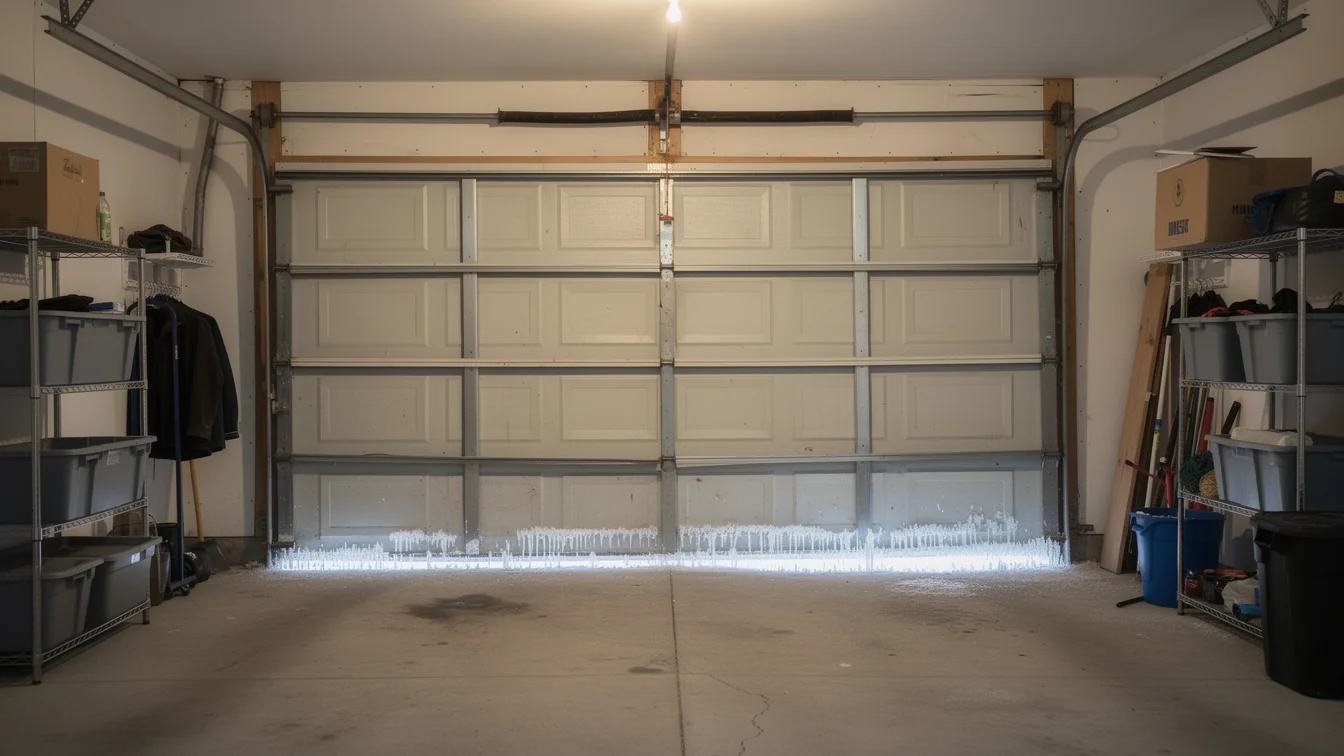
Cold-severe winters don't just stiffen hardware, they also shrink and swell the wood jambs that a lot of these older garage openings were framed with, since most of this housing predates vinyl or composite trim being standard. That shift pulls weatherstripping away from the door edge by a few millimeters, just enough to let wind-driven snow in under a door that was never sealed with an insulated bottom seal in the first place. We see this most on original doors that have never been touched - the seal still looks intact, but it's no longer actually meeting the slab square. Summer humidity does the reverse, swelling the jamb back and sometimes binding the door at the top corners for a few weeks each year. It's a cycle specific to houses of this age and this climate, and it's one reason a door that worked fine for forty years can suddenly start sticking without anything having obviously broken.
Questions
On a lot of Fairfield's older doors, steel without an insulation layer contracts in cold weather and widens the gap between the panel and track. Rollers start riding rough, and a cable that's been wearing quietly all year is more likely to finally snap during a hard cold stretch than in summer.
Depends on the door. If the panels, track, and springs are sound, an insulated retrofit kit can help with temperature swings. If the door is original to a house built in the 50s through 70s, the spring and hardware are often undersized for the extra weight an insulation kit adds, so it's worth having someone check the spring rating first.
That's usually the wood jamb around the opening swelling with humidity, common on houses from this era that weren't framed with weather-resistant trim. It pushes the opening slightly out of square at the top corners. Weatherstripping issues tend to show the opposite way, worse in winter.
Recommendation
More garage door guides for Fairfield homeowners.
Fairfield's 1954-1984 housing stock and severe cold winters mean garage door openers fail at outage time more than most owners expect.
Read more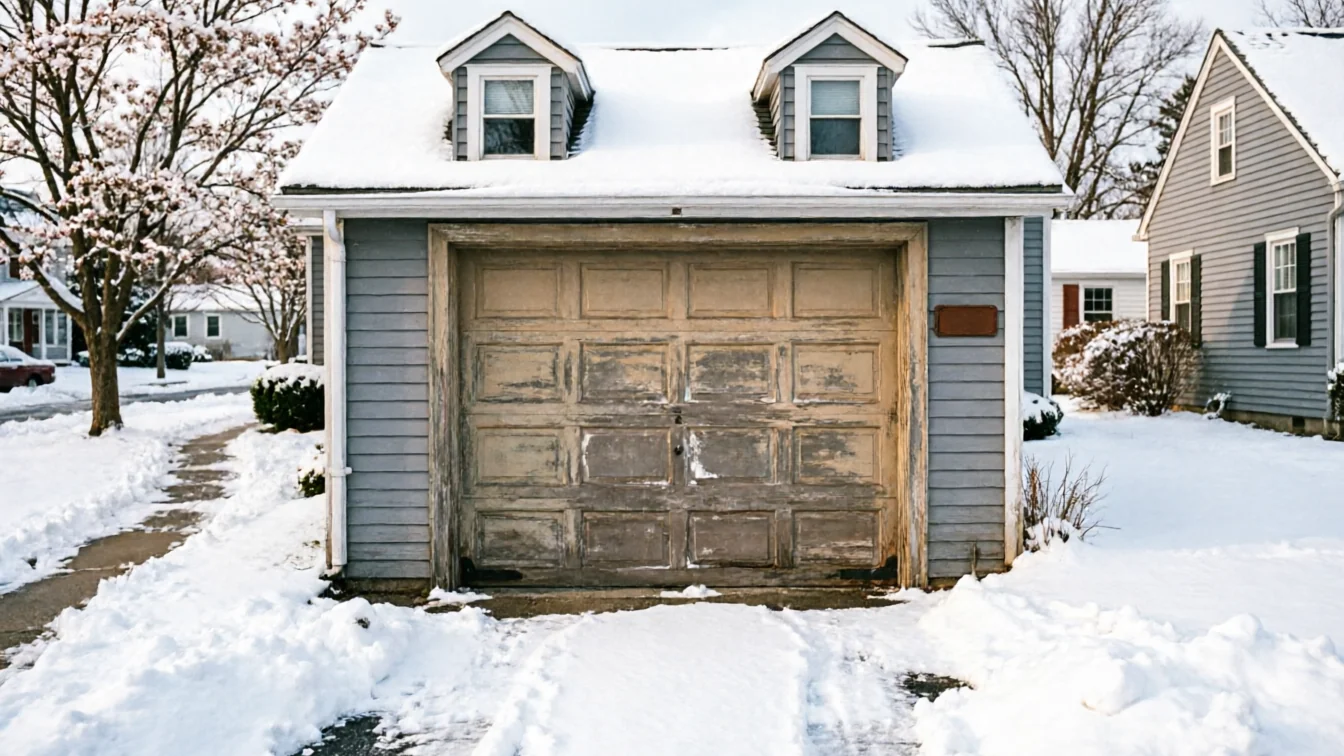
Fairfield's housing mostly dates to 1954-1984.
Read more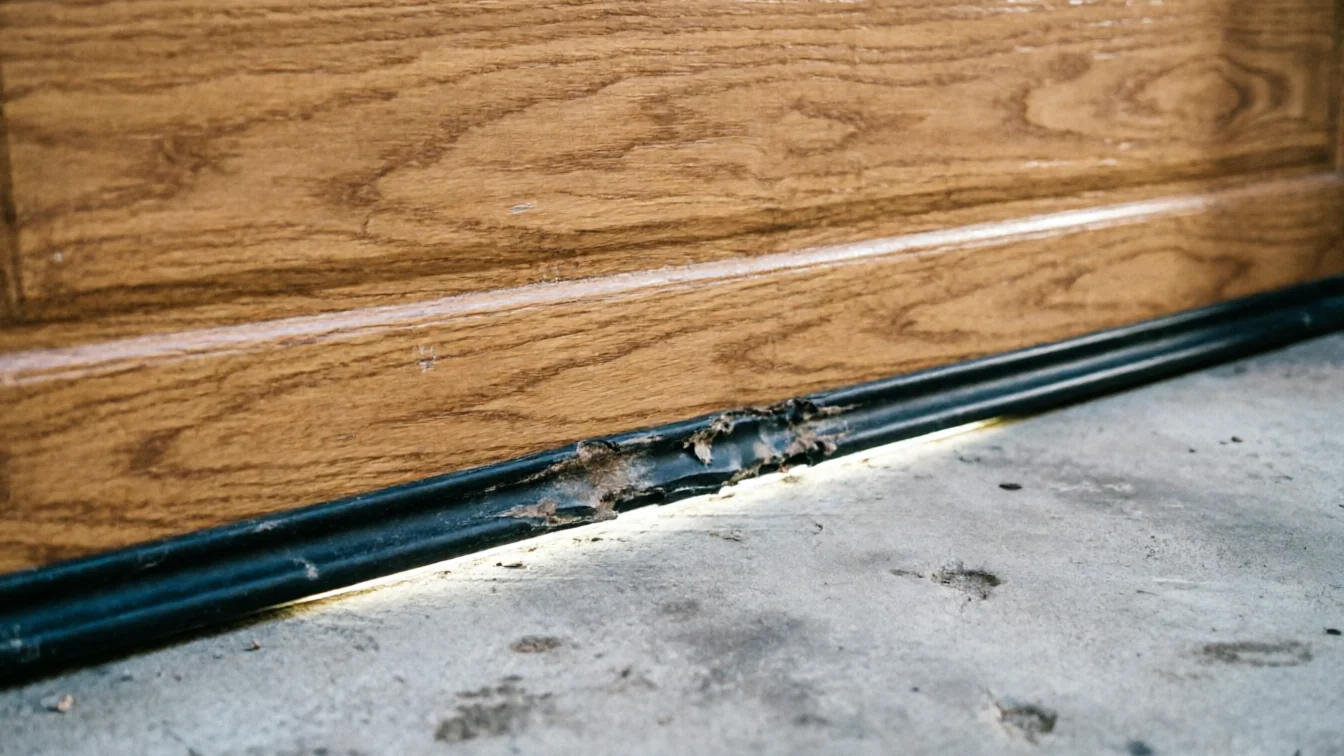
Why 1960s-era Fairfield garage doors leak cold air and how the original seals on this housing stock hold up against a severe cold climate band.
Read moreReady when you are
Fairfield Garage Door Pros repairs and installs garage doors, springs and openers in Fairfield, CT and the surrounding area.