Time on the Job
The call we get most from Wilton isn't a door that won't open at all - it's a door that slams down the last foot of track, or one side that drops faster than the other.
Uneven tension failure pattern
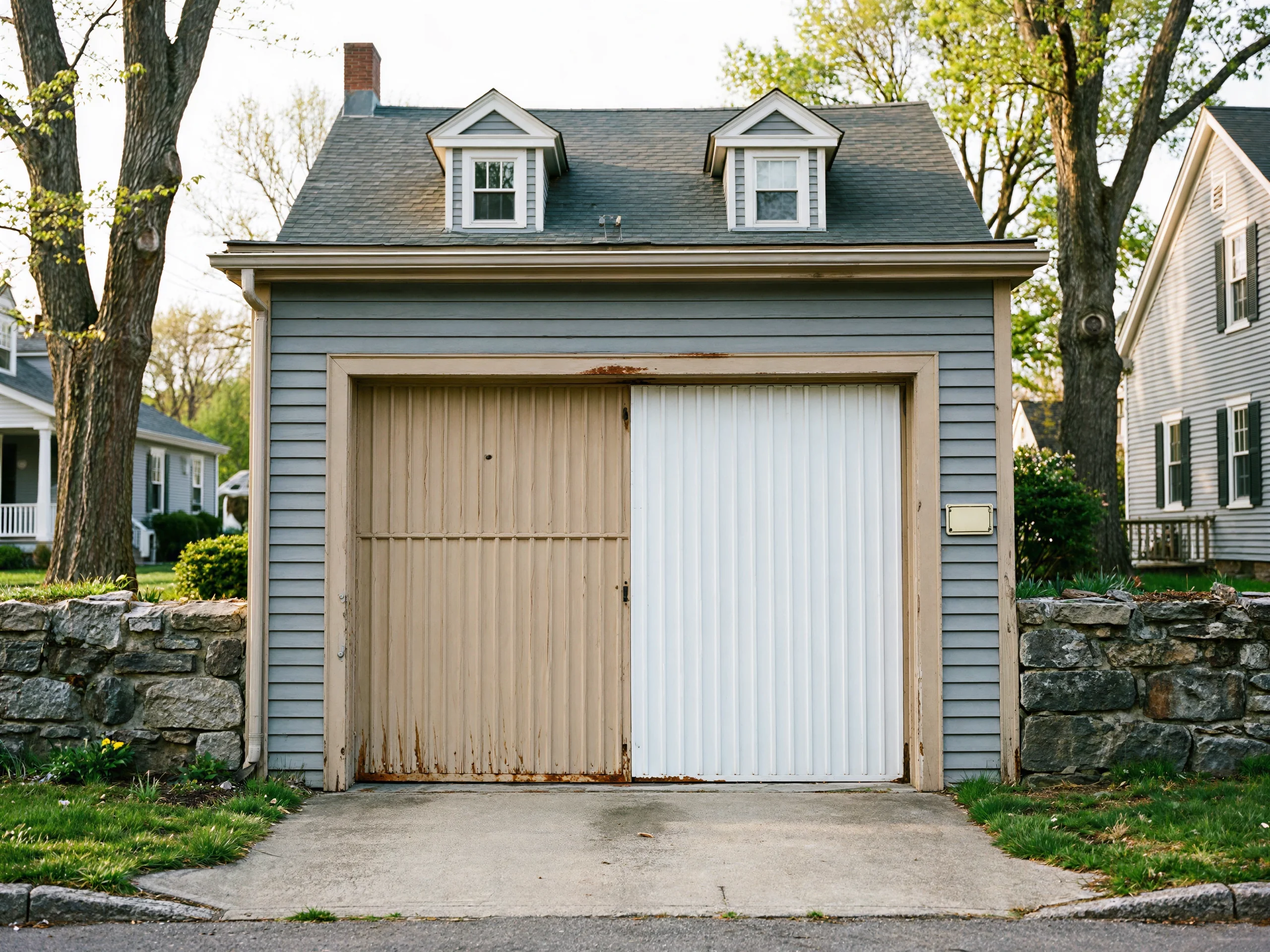
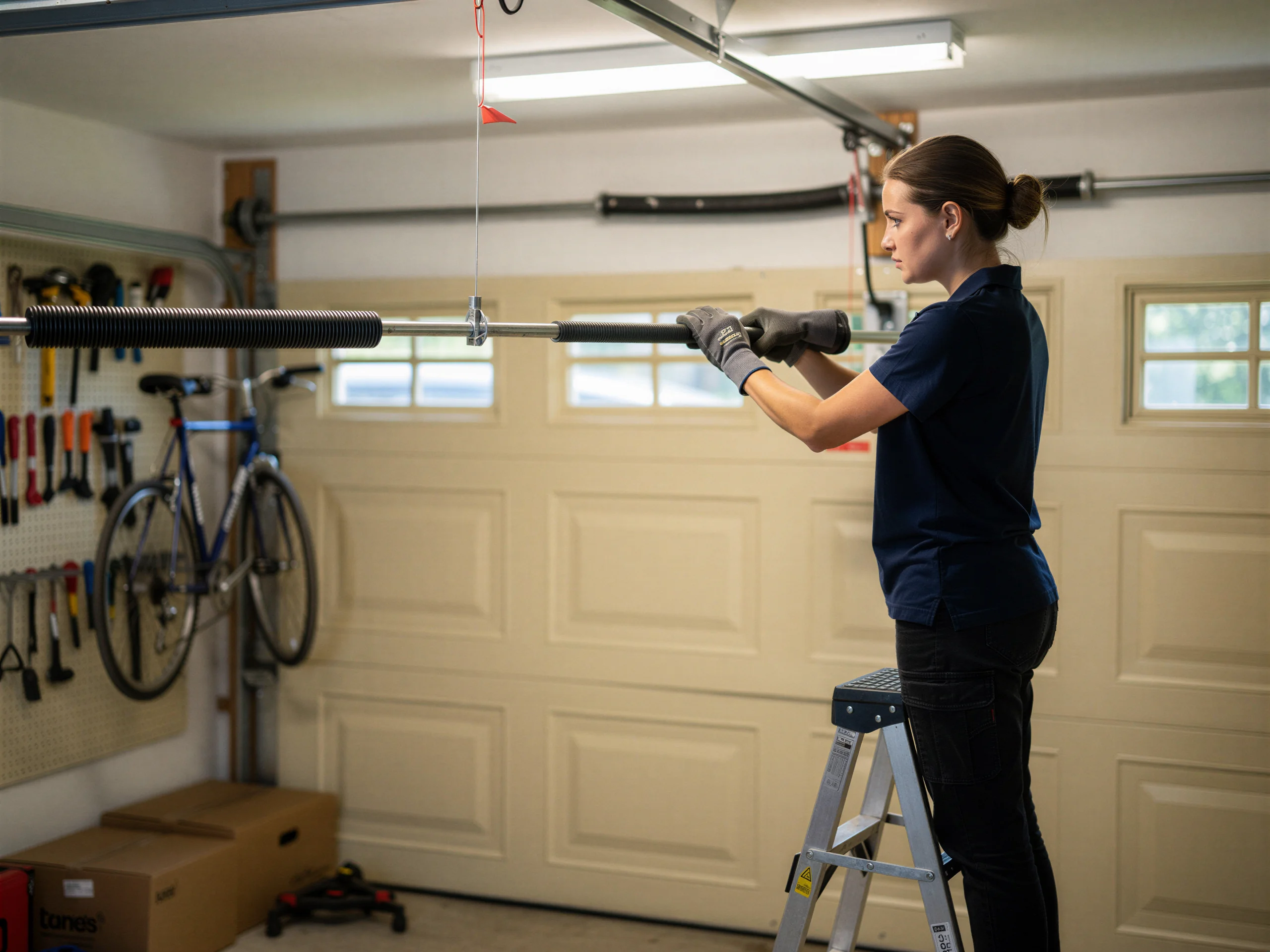
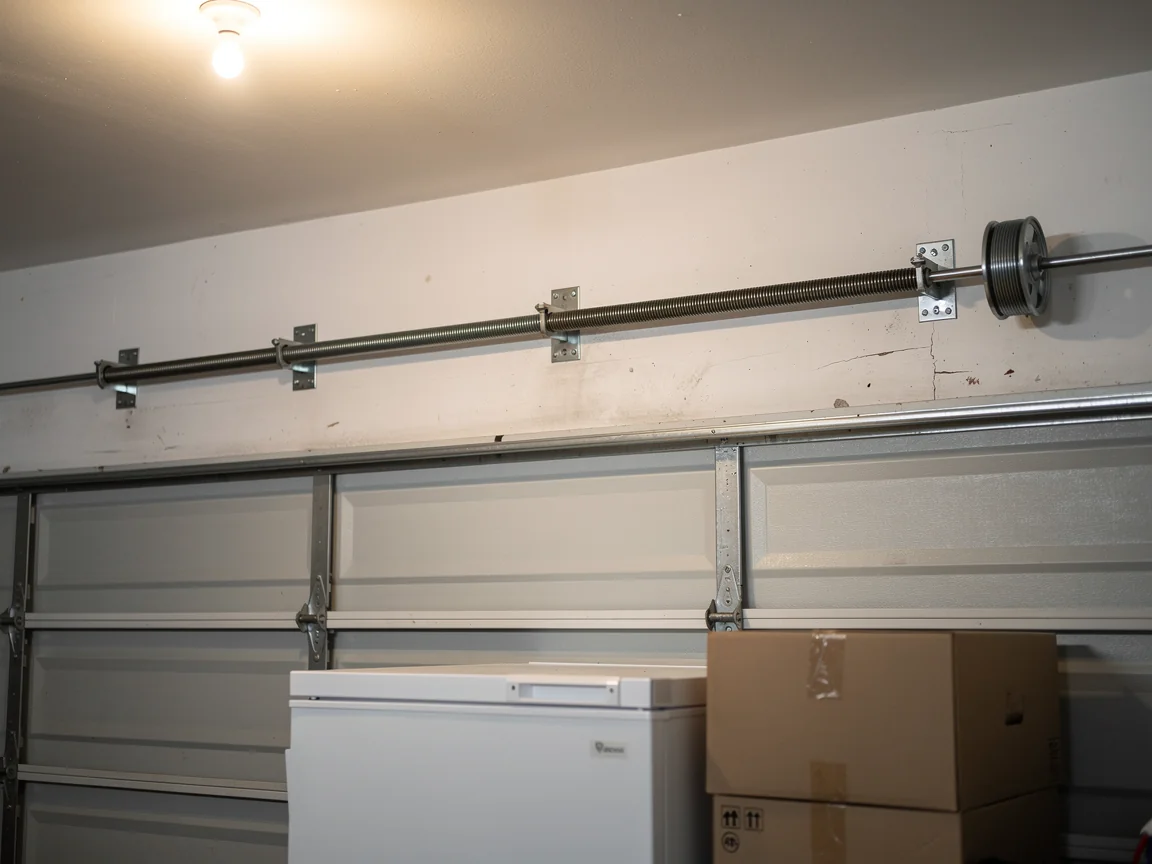
That's a torsion spring losing tension unevenly, and it's the single most common spring failure we see on this side of the coverage area. It tracks with the build dates. Wilton's housing stock centers on 1971, putting most garage doors and their original spring sets squarely in the 1954-1984 window that covers this part of the region.
Five decades of cycles
A spring rated for 10,000 cycles doesn't care what decade it is, but a house built in '71 has had five decades to run that count up, and a lot of those original torsion bars are still hanging over driveways that have never had them swapped.
No install date record
We're not guessing at an install date for your specific door - we don't have a record of your house. What we do know is that a door this old on a torsion system this old is well past the point where "it's been fine so far" tells you anything about tomorrow morning.
What Causes It Around Here
Two things do most of the damage: age and cold. The region sits in a severe cold climate band, and steel contracts in the cold. A spring that's already fatigued from thirty-plus years of cycling loses what little give it had left right when the temperature drops, which is why a lot of these calls come in on the first hard freeze of the season rather than in July.
The other factor is just math. Houses built in the 1971 range were built with single torsion springs sized for the doors of that era - lighter doors, lighter springs. If a door's been swapped for a heavier insulated panel since then and the spring never got upgraded to match, you've got a spring working harder than it was built for, every single cycle, for years.
We can't tell you which of your neighbors has had a spring go this winter - we don't track that by street. What we can tell you is that a 50-year-old torsion spring on a door that's been opened twice a day for that long has had roughly 36,000 cycles put on it, and most springs are rated well under that.
Booking a Visit
We run out of Fairfield, about 10 miles south, and Wilton is inside our regular coverage - see the Wilton coverage page for what else that includes.
Remote visit, no crew
We don't keep a branch or a yard in Wilton itself, so a visit means a truck coming up from Fairfield, not a local crew already around the corner.
Broken versus noisy door
When you call, tell us whether it's a broken spring (door won't budge, or one side is visibly lower) or just a door that's gotten noisy and slow - the two calls get scheduled differently, since a fully broken spring usually means the door is stuck and unsafe to force open.
Broader repair scope page
If you're after general garage door work beyond spring repair, that's covered on our Fairfield spring repair page, which handles the broader service list rather than repeating it here.
What You Pay
We don't have a Wilton-specific price list to publish here, and we're not going to make one up just to fill the section. Spring jobs vary by whether it's one spring or a matched pair, the size and weight of the door, and whether the drums or cables show wear once we're up on the ladder looking at it.
What we can say is that a matched pair almost always costs less in the long run than replacing one spring at a time. If one side of a torsion set has gone, the other side has usually logged the same cycle count and is close behind it - paying for a second truck trip a few months later costs more than doing both now.
Get a number by calling and describing the door, or having us take a look. We'd rather quote your actual door than guess at a town-wide average that doesn't mean much once we're standing in your driveway.
Doing It Yourself
Here's the honest limit: don't take on the spring itself. A torsion spring under tension can put someone in the hospital, and that's true whether the house was built in 1971 or last year. This isn't a scare line - it's why we don't sell spring kits for self-install.
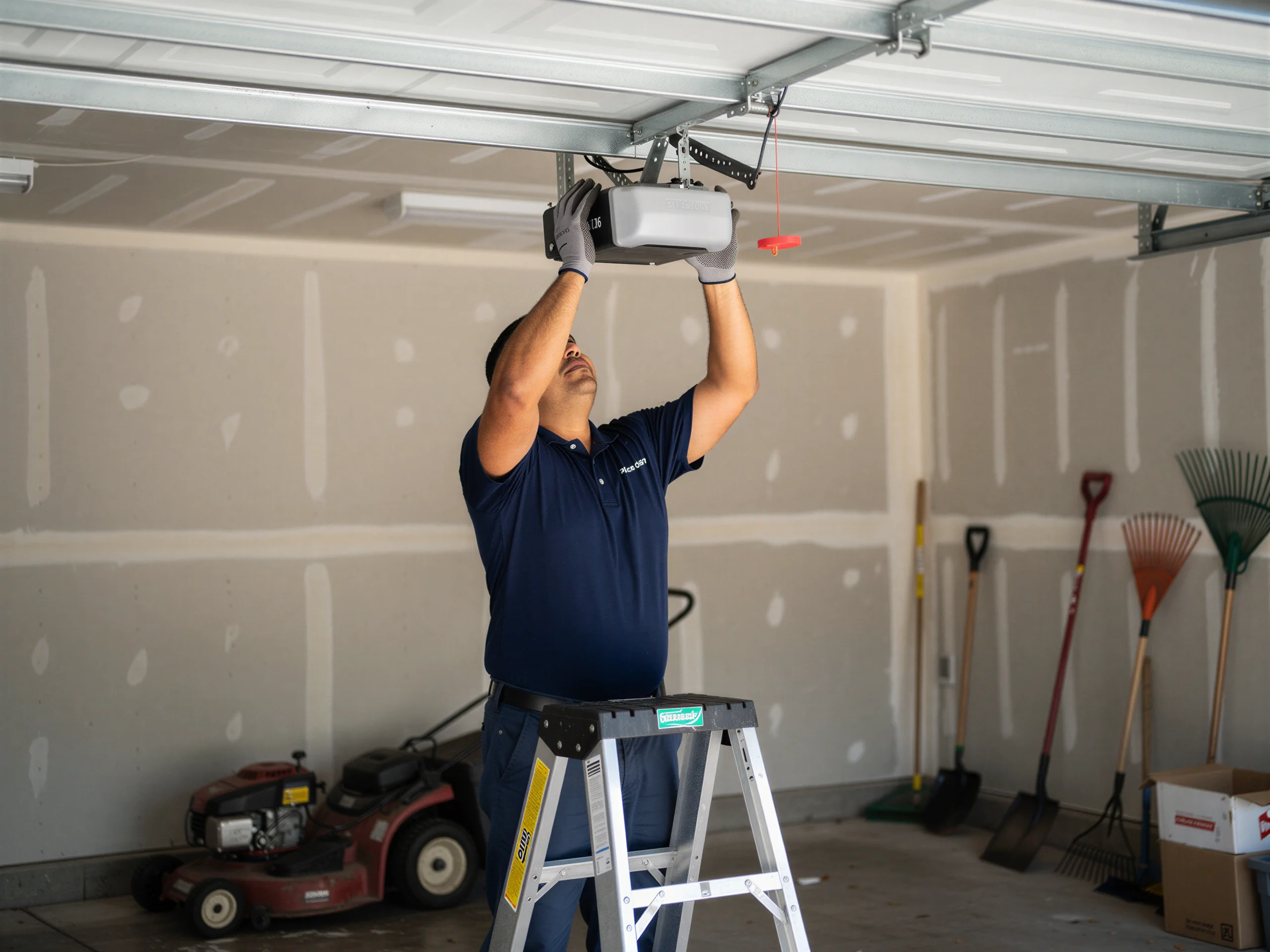
What you can handle yourself: listen for the door. A grinding or popping sound on the way up, a door that's started drifting off level, or a garage door opener that strains and reverses partway through the cycle are all early warnings. Catching it there means a planned spring swap instead of a door stuck down with the car trapped inside on a cold morning.
You can also check your own cables and rollers by eye from the ground - rust streaks on a cable or a roller sitting crooked in its track are things a homeowner can spot without touching the spring at all. If you see either, that's worth a call before the spring itself goes.
Talk to a local pro
Garage door service in Fairfield?
Same-day service with honest, upfront quotes.