What the Repair Takes
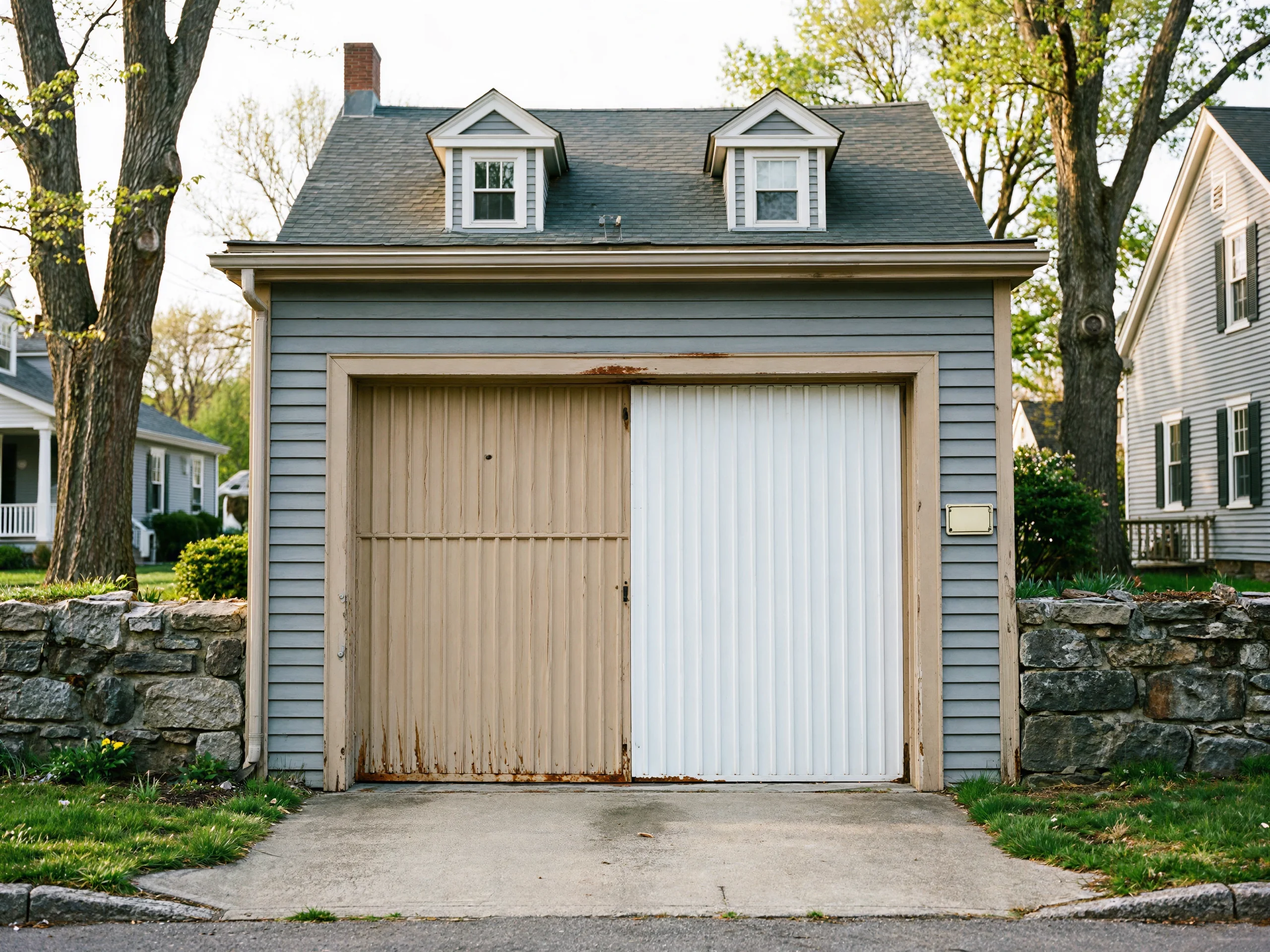
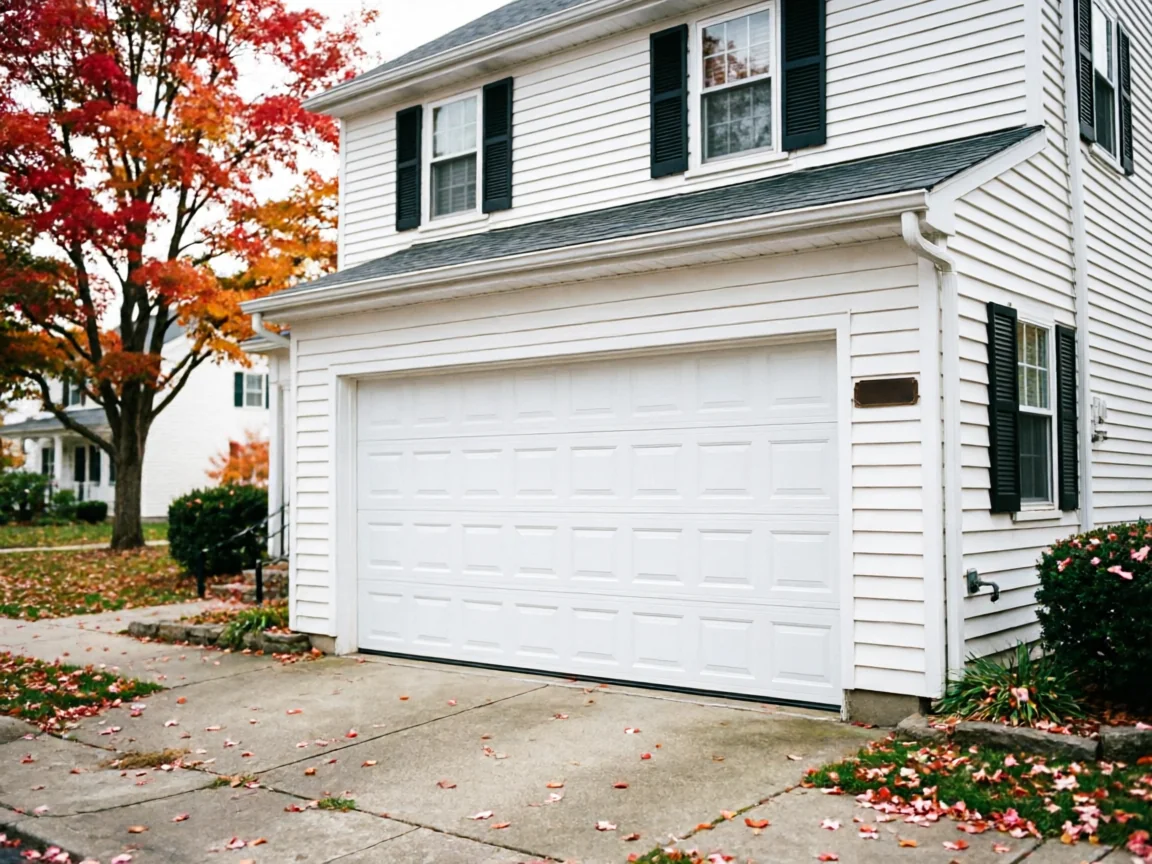
Most of the garage doors we see in Darien are original to houses built around 1957 - single doors, 8 or 9 feet wide, often wood panel over a wood frame, or early steel skins bolted to hardware that predates anything you'd find in a box store today.
Nonstandard track and drums
A repair on one of these isn't a parts-counter swap. The track gauge, the drum size, even the bolt pattern on the hinges can be nonstandard compared to what ships on a door built in the last twenty years.
Measuring mid-century spacing
Before we touch a spring or a cable, we're figuring out whether the replacement part needs to match 1950s spacing or whether the whole section needs to come off the track so we can measure it properly.
No sight-unseen quotes
That adds time to a job that would take twenty minutes on a newer door. It's also why a quote over the phone, sight unseen, isn't something we do for a house this age - we need eyes on the actual hardware first.
What Causes It Around Here
With a median build year of 1957, the garage doors in this part of town are closing in on seventy years of service life, and most of the springs, rollers, and cable on them were never built to last that long without being touched. Add a cold-climate winter - the kind this region gets, with hard freezes that stiffen steel cable and shrink wood jambs - and you get the two most common calls: a torsion spring that finally lets go after one freeze too many, and a wood panel door that's swollen or cracked along the bottom where decades of snowmelt have sat against it. Houses with original steel doors tend to show rust at the bottom corners first, where condensation collects and doesn't dry out fast between storms. None of this is damage from one bad week - it's the slow math of a 1957 door meeting its sixth or seventh decade of Connecticut winters.
Doing It Yourself
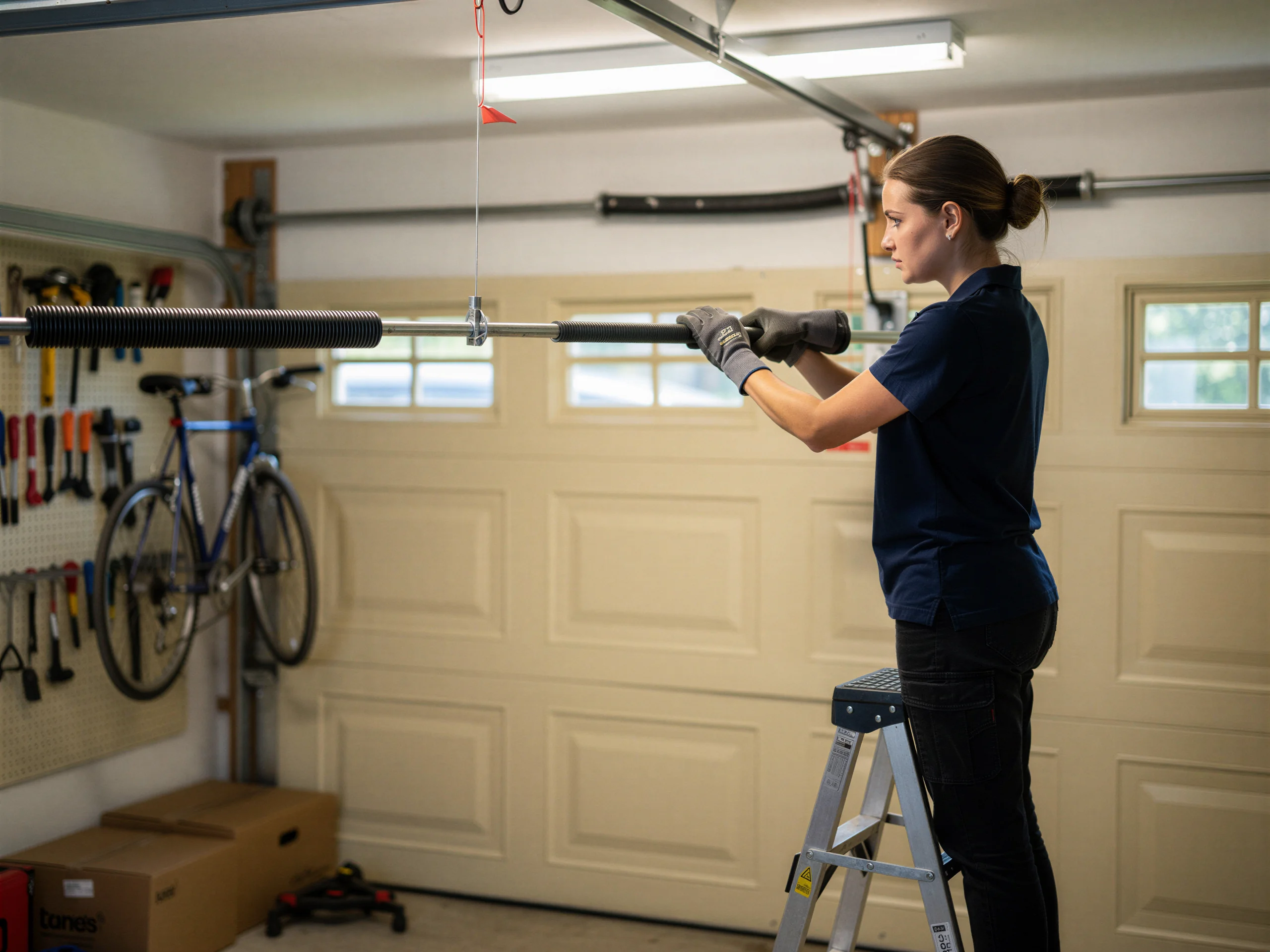
A torsion spring on a door this old carries real tension, and the drums, cones, and winding bars on 1950s hardware don't always match what's sold today - guessing at the wrong part under load is how people get hurt.
Reasonable owner maintenance
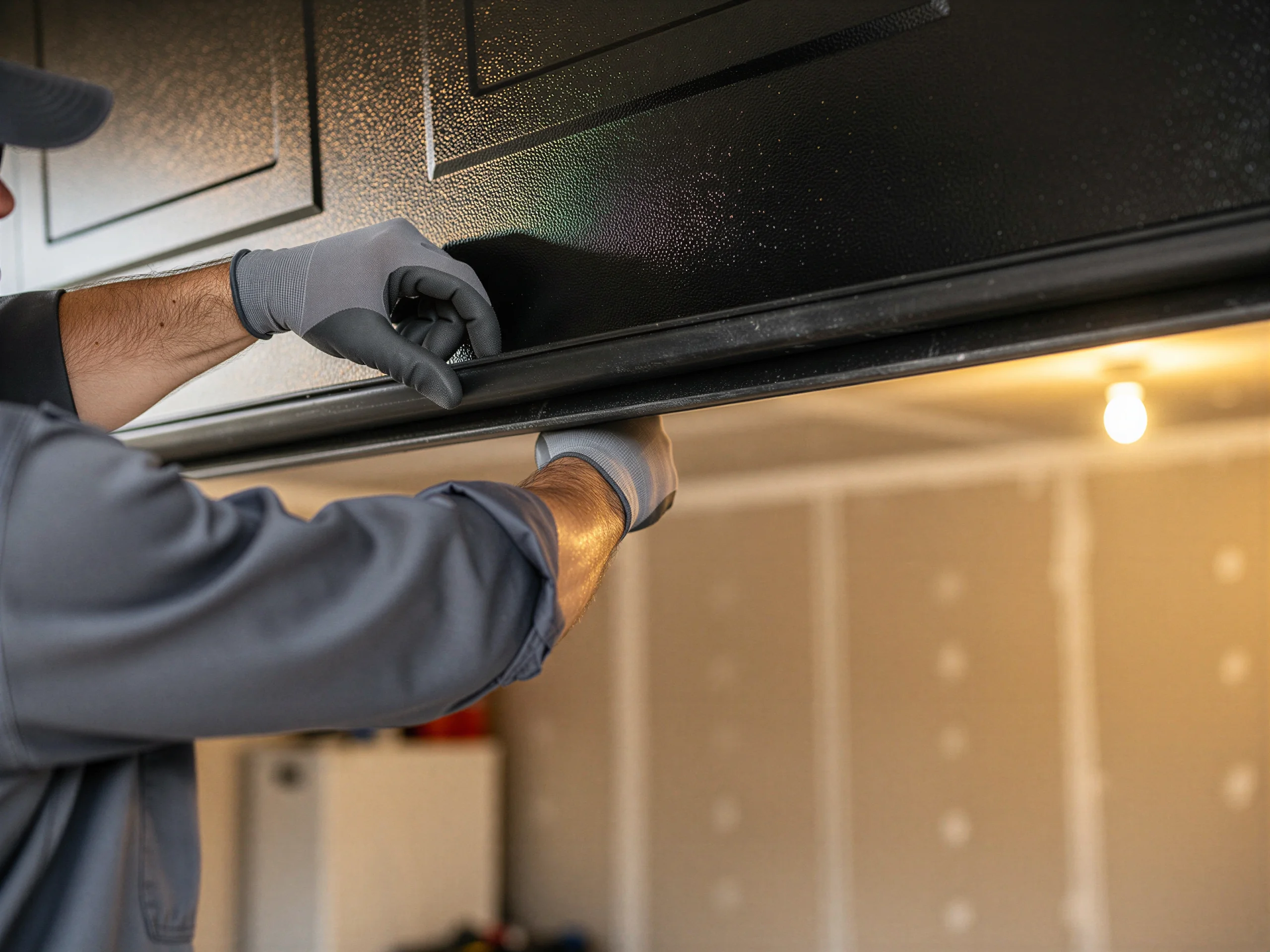
Lubricating hinges and rollers, tightening visible bolts, and checking the weatherstrip at the bottom are reasonable owner jobs on any door, any era. Replacing a spring, a cable, or re-squaring a wood panel door that's racked in its frame is not something to learn on, especially when the hardware predates most of what a DIY guide assumes you're working with.
Leave off-track doors alone
If a door won't open, won't stay open, or has come off track, the safest move is to leave it alone and call rather than force it.
What Can Go Wrong
Here's the honest part: not every original 1957 door is worth saving. If the wood frame has rotted at the base, or the panel is cracked through rather than just swollen, patching it buys a season, not a decade - replacement ends up cheaper than repeated repair. We'll tell you that straight rather than keep billing small fixes on a door that's past the point. On the hardware side, an old torsion spring that's been wound to a non-standard tension by a prior owner or handyman is a real risk - if we find that, we rebuild it to spec before doing anything else, even if that wasn't what the call was for. We also don't stock every obsolete part for 1950s hardware on the truck; some pieces for original wood-panel doors have to be ordered, which can add a few days to a job that would otherwise be same-week.
What You Are Seeing
If your door is dragging at the bottom track, that's often a wood jamb that's shifted slightly out of square over the decades - common in a house from this era, rare in anything built after 1990.
Bang and refusal
A loud bang followed by the door refusing to open is almost always the torsion spring giving out, and on a door this old it's rarely a surprise if you look back at how long it's been since the hardware was serviced.
Rust streaks after winter
Rust streaks at the base of a steel door, especially after a wet winter, point to the metal skin finally failing where moisture has been sitting for years. None of these are emergencies that get worse by the hour, but none of them improve by waiting either.
Booking a Visit
We cover Darien from our base in Fairfield, about 13 miles out, along with the rest of this part of the shoreline. Because we're traveling in rather than working from a depot in town, we ask for a description of the door - age, material, what it's doing - so we bring the right hardware on the truck rather than making a return trip. You can see the towns we cover from Fairfield on our coverage page, and if you're after a service we handle more broadly across the area, our Fairfield garage door service page covers that in full.
Talk to a local pro
Garage door service in Fairfield?
Same-day service with honest, upfront quotes.