What the Repair Takes
Darien is a small town by household count - about 7,111 of them, against roughly 141,171 across the whole area we cover out of Fairfield.
Compact single-era town
That size matters more than it sounds like it should. A town this compact means fewer total doors, but a tighter concentration of a single building era: most of Darien went up around 1957, well inside the 1954-1984 window that defines a lot of this region's housing. A maintenance visit here is rarely about explaining what's wrong from scratch.
Era-matched service tools
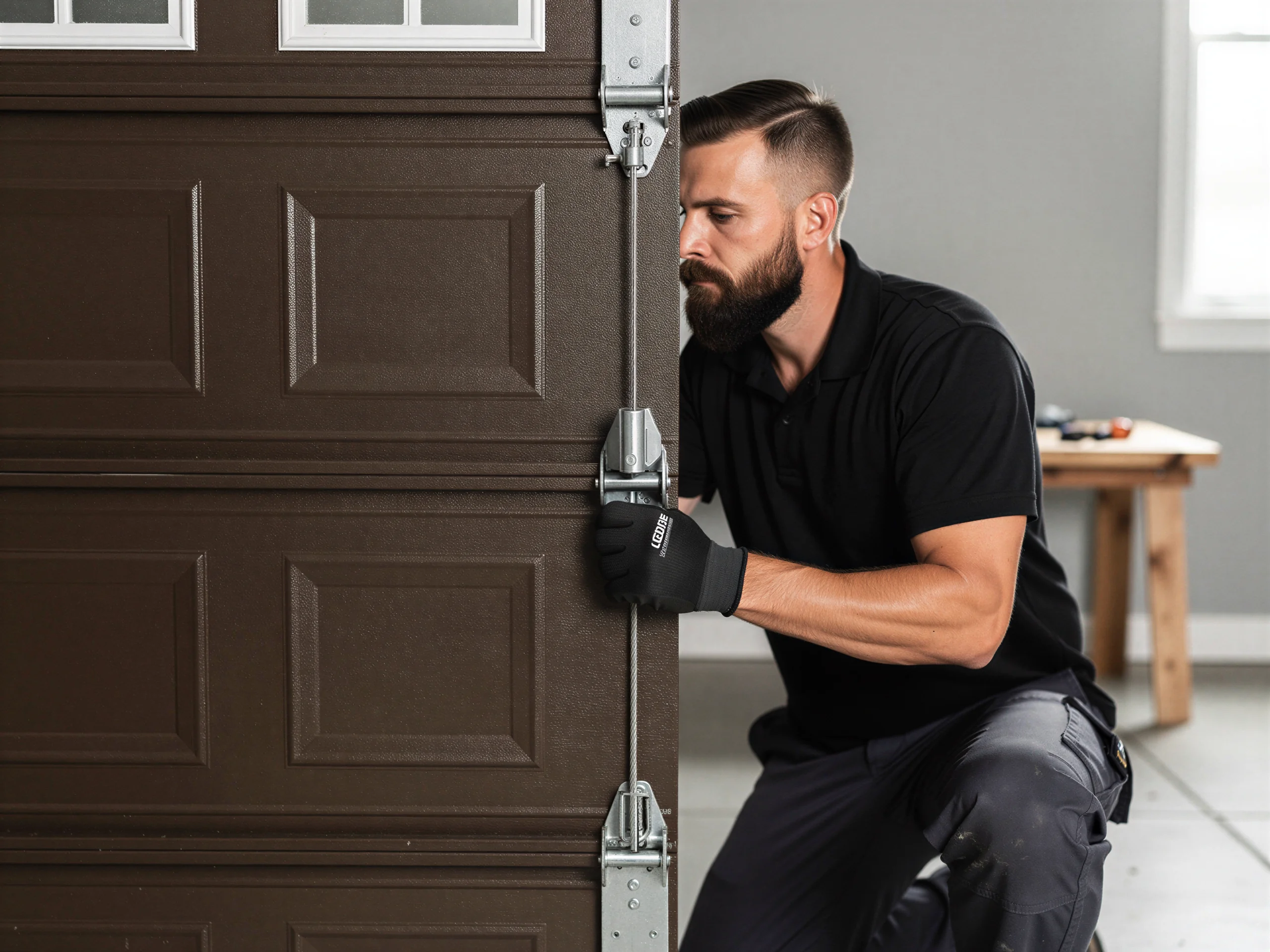
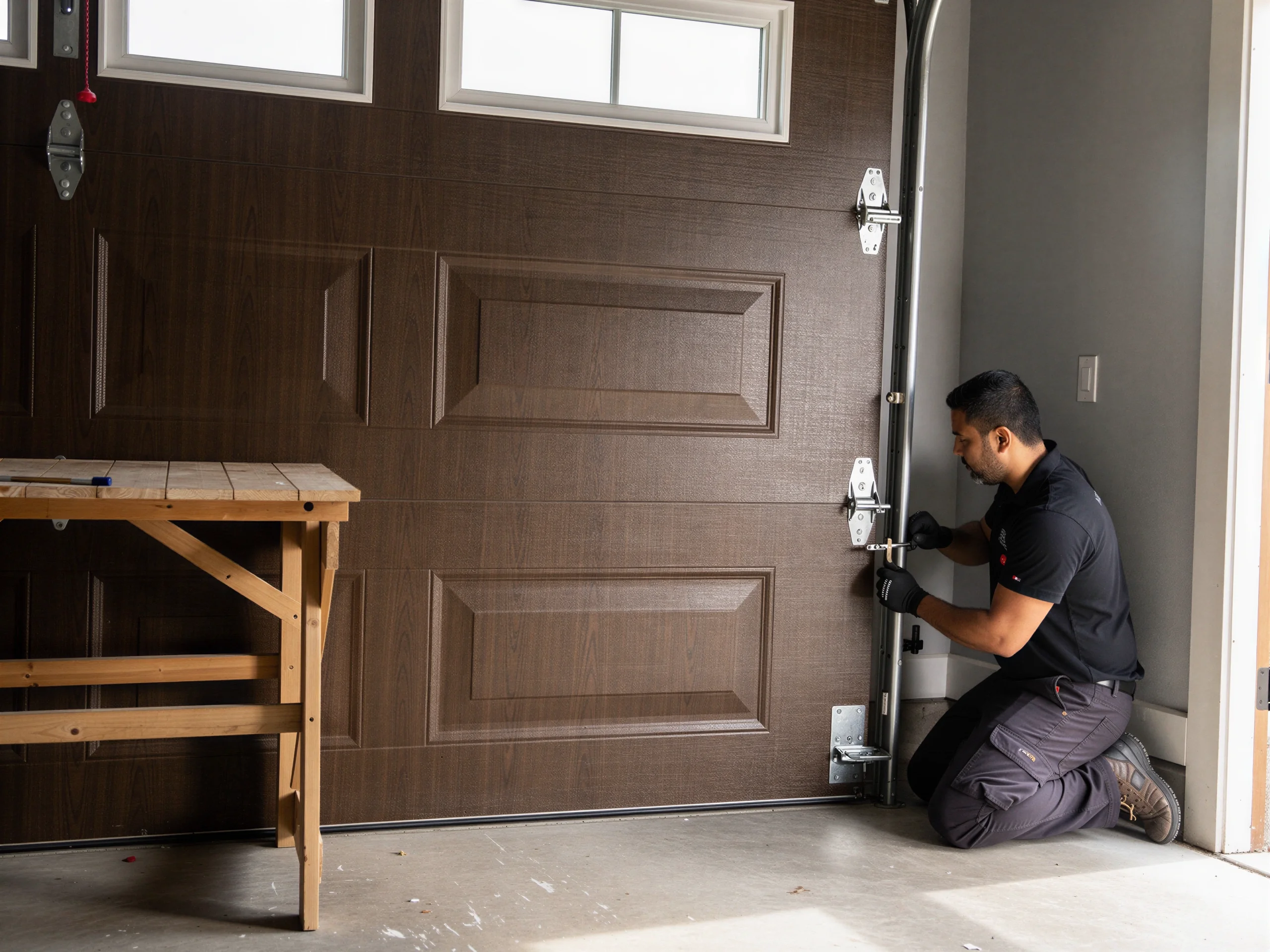
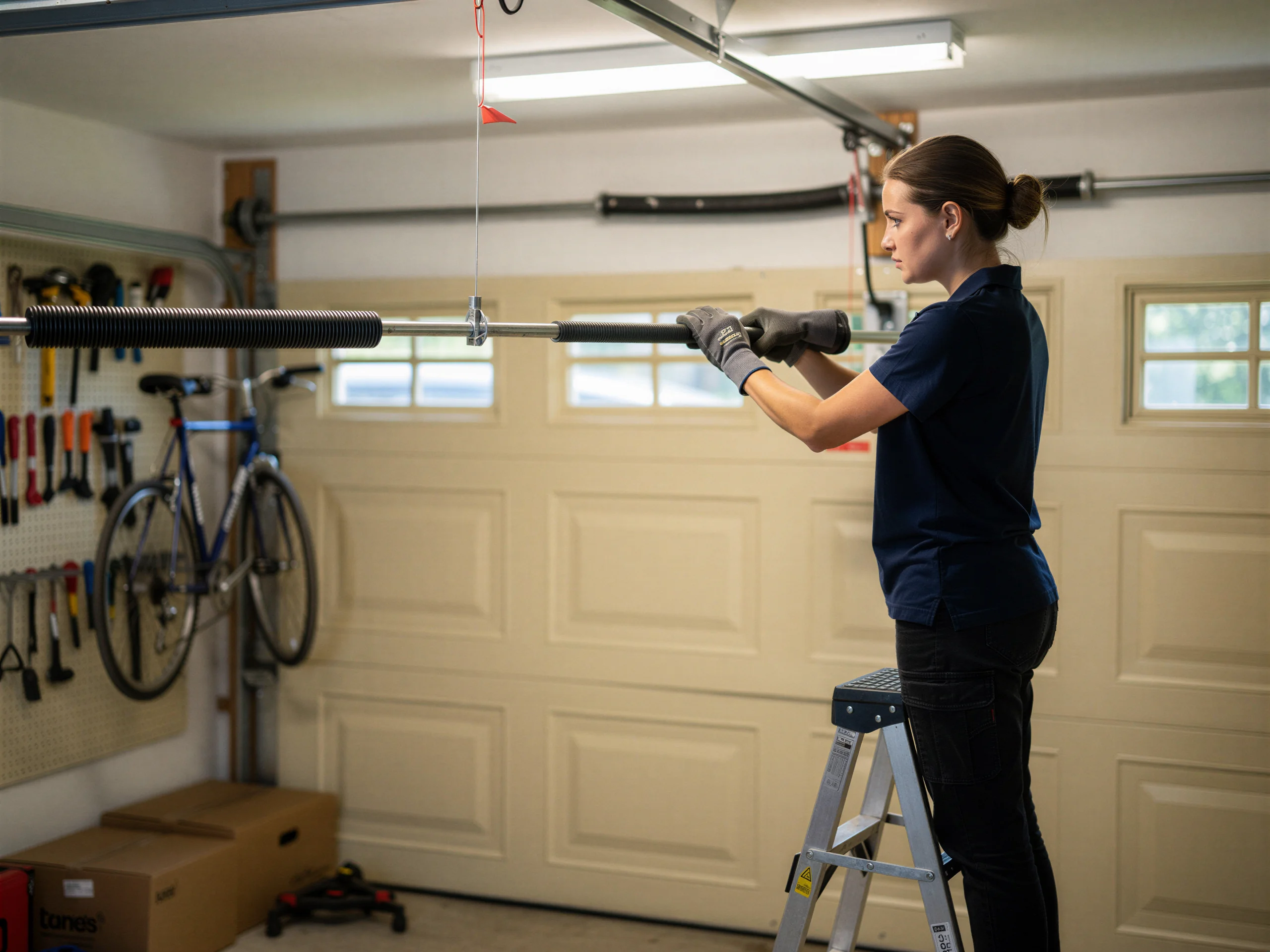
It's about servicing hardware that was installed, or replaced once already, on houses built within a few years of each other. We bring torsion spring gauges, lube rated for cold-weather service, and track alignment tools sized for the single and double doors that era produced - not the wider carriage-style hardware newer builds sometimes carry.
Planned visits only
We travel to Darien from Fairfield, about 13 miles out, so a maintenance visit gets scheduled rather than walked up to. That's worth knowing going in: this isn't a drive-by stop, it's a planned call.
What Causes It Around Here
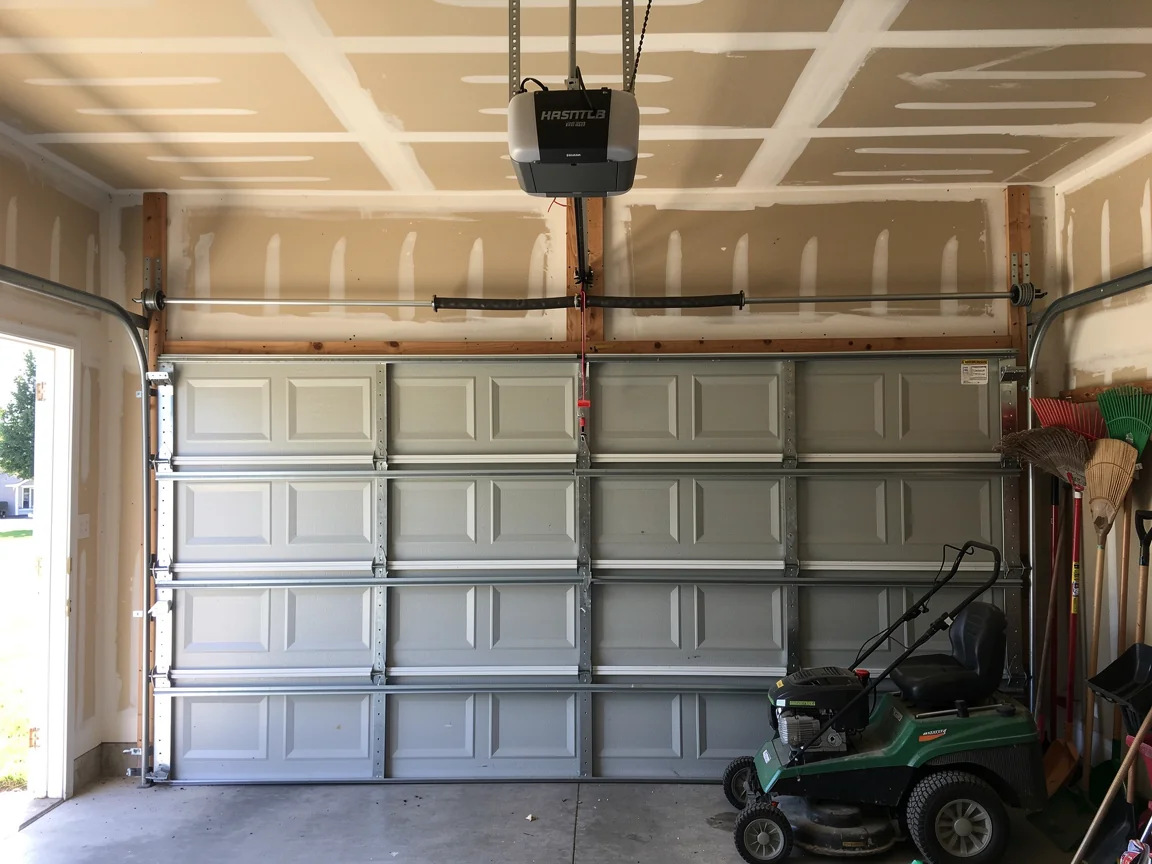
The service area sits in a cold, severe climate band, and Darien's housing - mostly mid-century construction - wasn't built with the insulation standards or the opener technology we'd spec today. Doors from the 1950s and 60s often run original or first-generation replacement torsion springs, and those springs lose tension faster through repeated freeze-thaw cycles than they would in a milder climate. Steel contracts in the cold, rollers stiffen, and lift cables that have a little fray in them tend to show it first on a January morning when the door won't come up smooth.
Darien's median household income, over $250,000, is well above the area norm, and that shows up less in the mechanics and more in what owners expect from a maintenance call: documentation, a clear explanation of remaining part life, and a straight answer about whether something needs replacing now or can run another season. We give the same answer regardless of the house.
Doing It Yourself
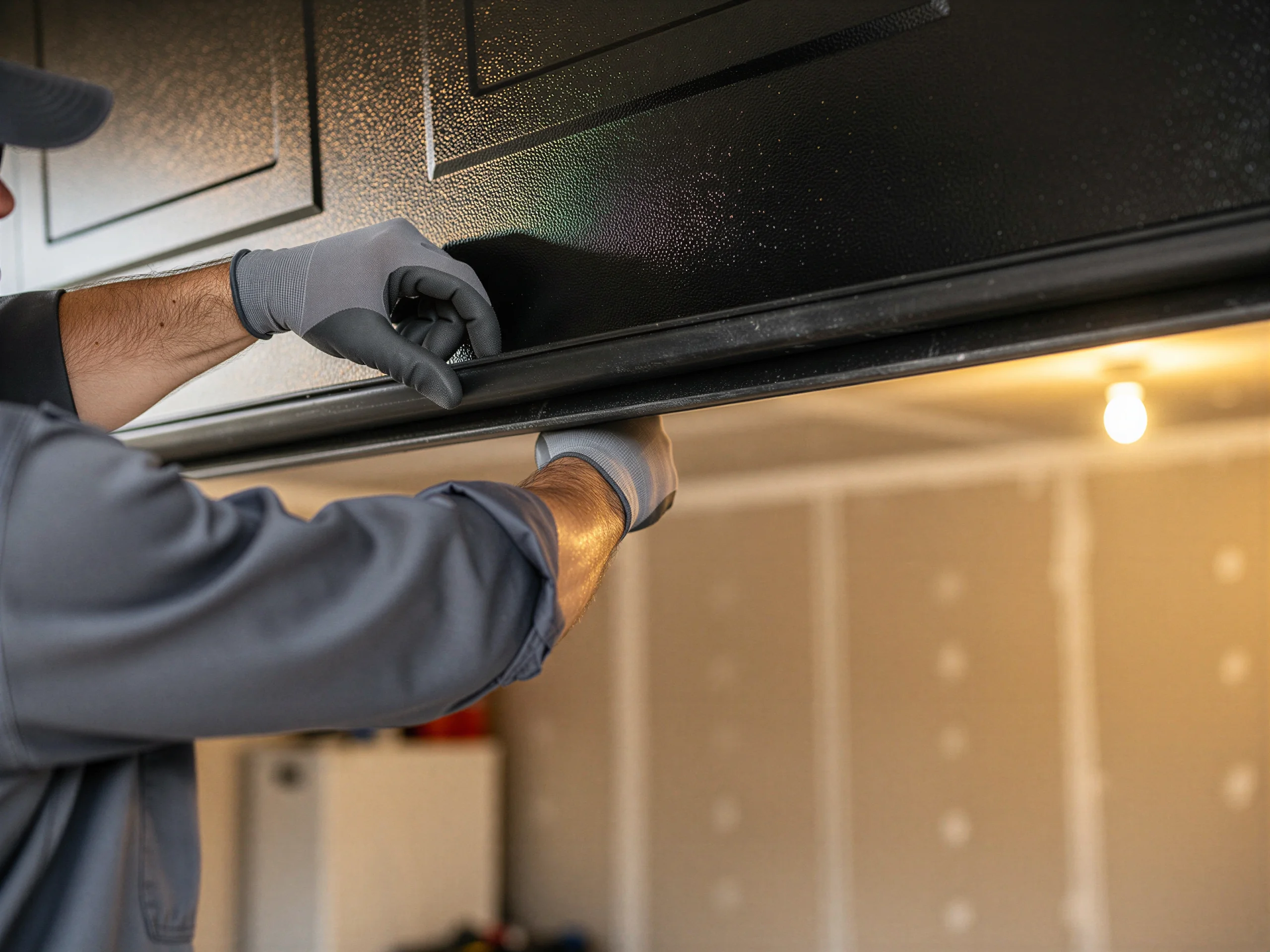
There's real maintenance a homeowner can do between visits. Wipe down the tracks and check for debris. Look at the weatherstripping along the bottom panel - on a door built or replaced in the 1957-era wave, that seal is often original or close to it, and cold-climate seals harden and crack faster than people expect.
Wood block reverse check
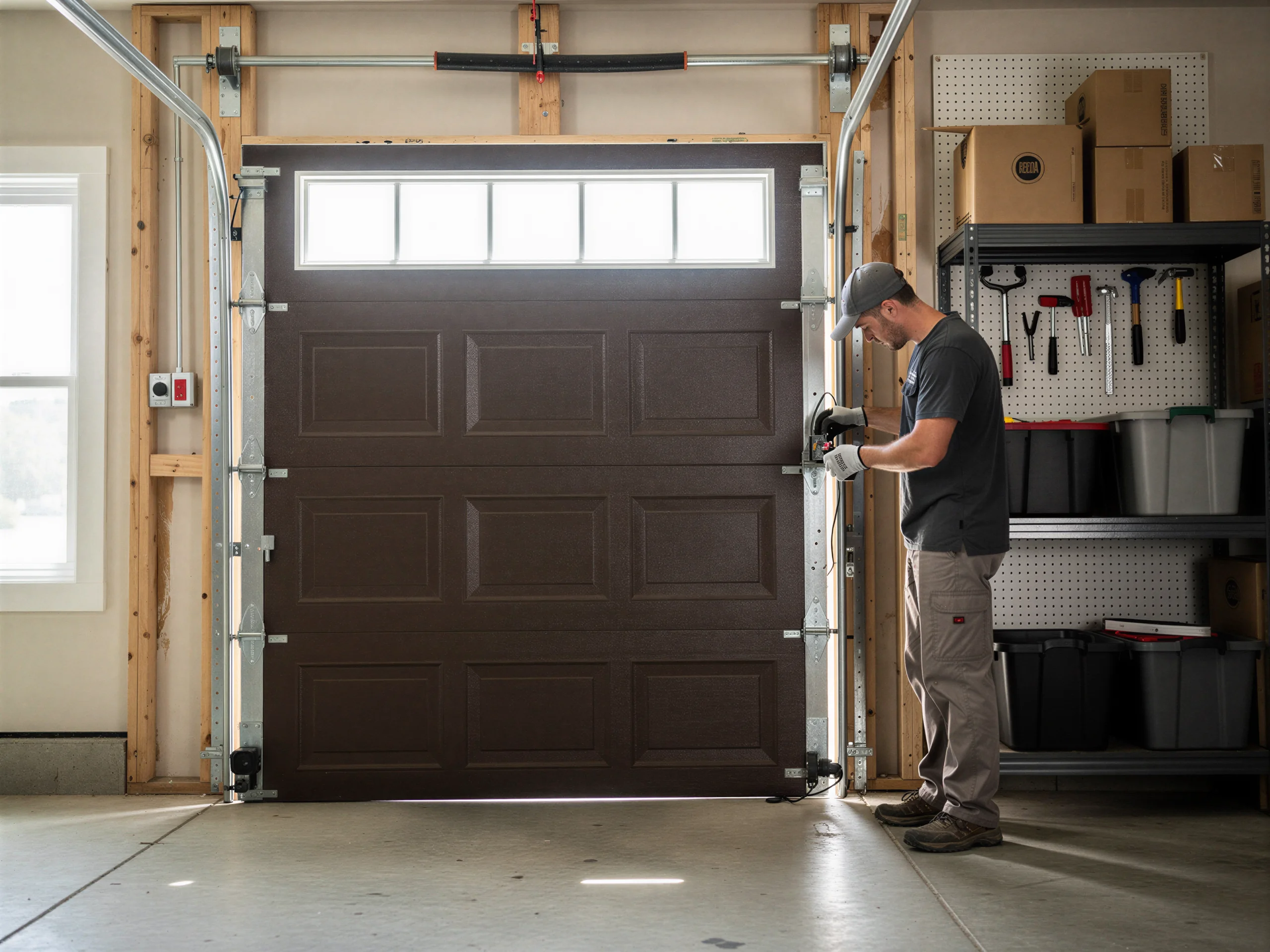
Test the auto-reverse safety feature by setting a block of wood under the door and watching it kick back. What you shouldn't touch: the torsion spring itself. It's under enough stored tension to cause a serious injury, and on a house this old, that spring has had decades to work.
Spring tension stays professional
We'll say this plainly because we'd rather lose a maintenance call than see someone get hurt over it - spring tension work is not a DIY job, full stop.
What Can Go Wrong
A door that's been running quiet for years can mask a spring that's close to its end. On a 1957-era door, a lift cable fraying at the bottom roller bracket is a common failure point - unglamorous, easy to miss during a quick visual check, and the kind of thing that turns an otherwise fine maintenance visit into an on-the-spot cable swap. We'd rather catch it during a scheduled visit than have it let go while the door's halfway up.
One honest limitation: if a panel or spring is genuinely original to a 1957 install, parts can take longer to source than a newer system would, since some of that hardware isn't made anymore in the same spec. In those cases, replacement of the specific part - not the whole door - is usually still the right call, but we'll tell you if it isn't.
What You Are Seeing
If your door is noticeably louder than it used to be, or the opener seems to strain for an extra second before the door starts moving, that's usually a spring losing tension rather than a motor problem - especially on hardware that's been in place since the house was built or last updated decades ago.
Drift toward one side
A door that drifts to one side as it closes points to uneven track wear, something more likely on original single-track setups than on newer double-track systems.
In-person diagnosis preferred
If you're not sure which you're looking at, that's what the visit is for. We'd rather look at it in person than guess over the phone.
Booking a Visit
We schedule maintenance visits to Darien out of Fairfield, roughly 13 miles each way, so booking ahead works better than expecting a same-day slot. Tell us the rough age of the door and opener if you know it - for a lot of Darien, that means late 1950s original hardware, or a replacement installed sometime after. That alone tells us what to bring. See our Darien coverage page for the full service area, or check general garage door maintenance for what a standard visit covers across the region.
Talk to a local pro
Garage door service in Fairfield?
Same-day service with honest, upfront quotes.