Booking a Visit
We run out of Fairfield, about 4 miles down the road, so a Westport call isn't a special trip, it's a normal one. When you call about a cable, we ask a few things first: does the door sag to one side, is there a frayed strand you can see at the bottom roller, or did it drop suddenly with a bang. Those answers tell us whether we're bringing a standard lift cable or dealing with a cable that's already taken the drum or the spring with it. If you want the broader rundown on what we cover out of the Fairfield shop, that's on our main cable repair page, but this page is specifically about the cable work we do for Westport doors. You can also check our Westport coverage if you want to confirm we reach your street before you call. We don't quote a cable swap over the phone sight unseen - too much depends on whether the drum or the bottom bracket got bent on the way down.
What Can Go Wrong
A lift cable doesn't usually fail on its own. It's the strand that's been slowly fraying against a rusted drum groove for years, and the morning it finally lets go, the door comes down unevenly because only one side is still holding weight.
Original drum never replaced
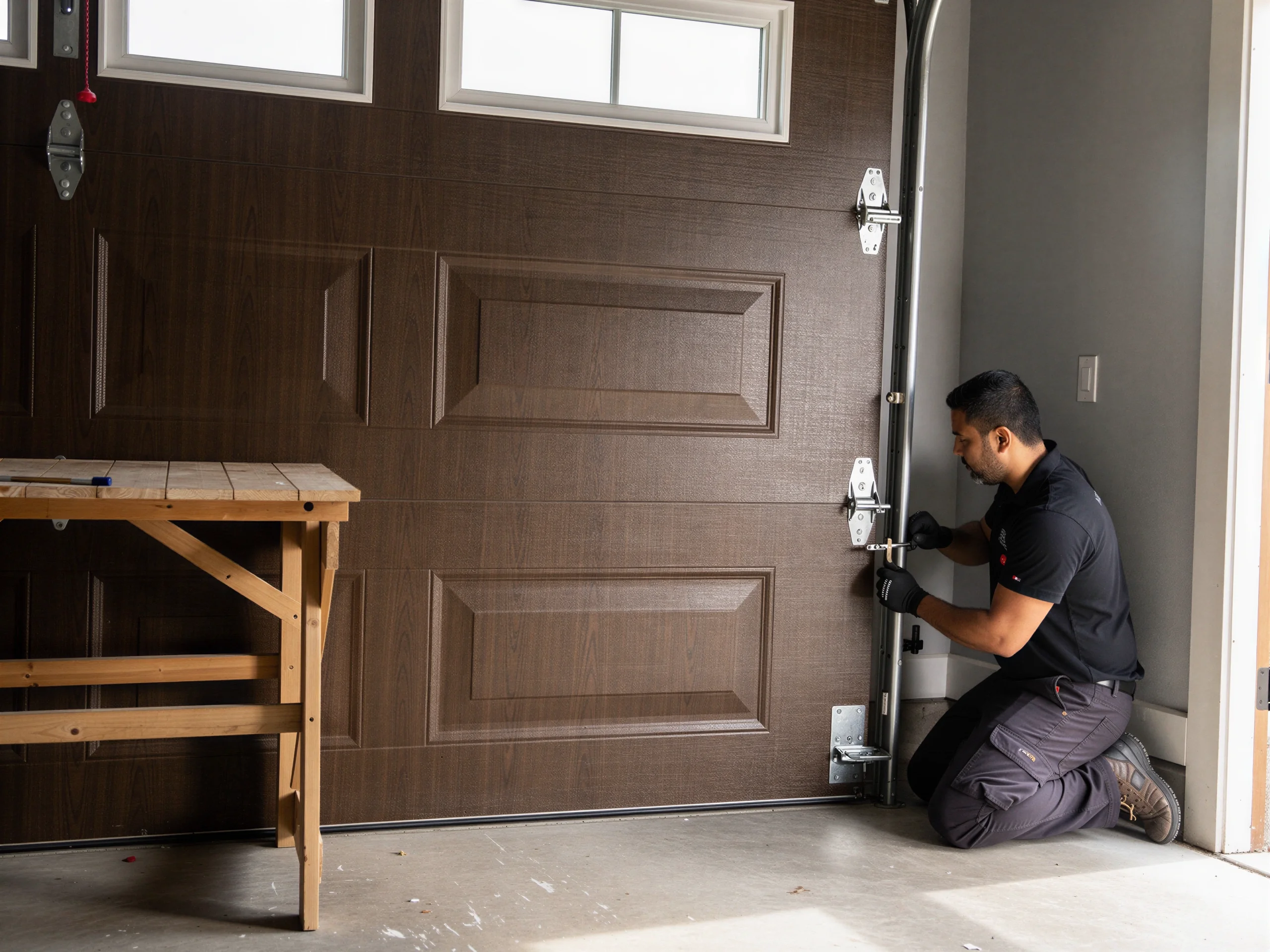
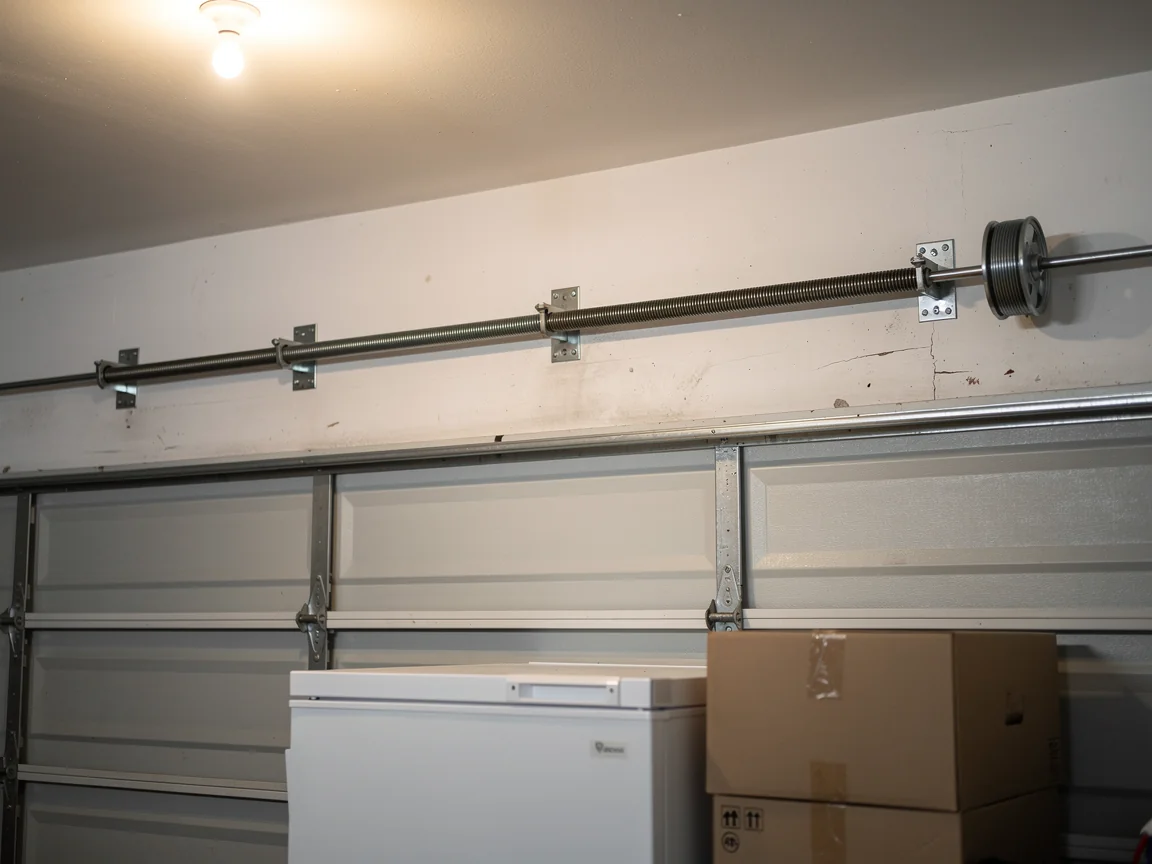
On a lot of Westport doors, that drum has never been replaced since the house was built around 1968, and the cable running over it is original-era gauge, thinner than what we'd spec today.
Rusted bottom fixture
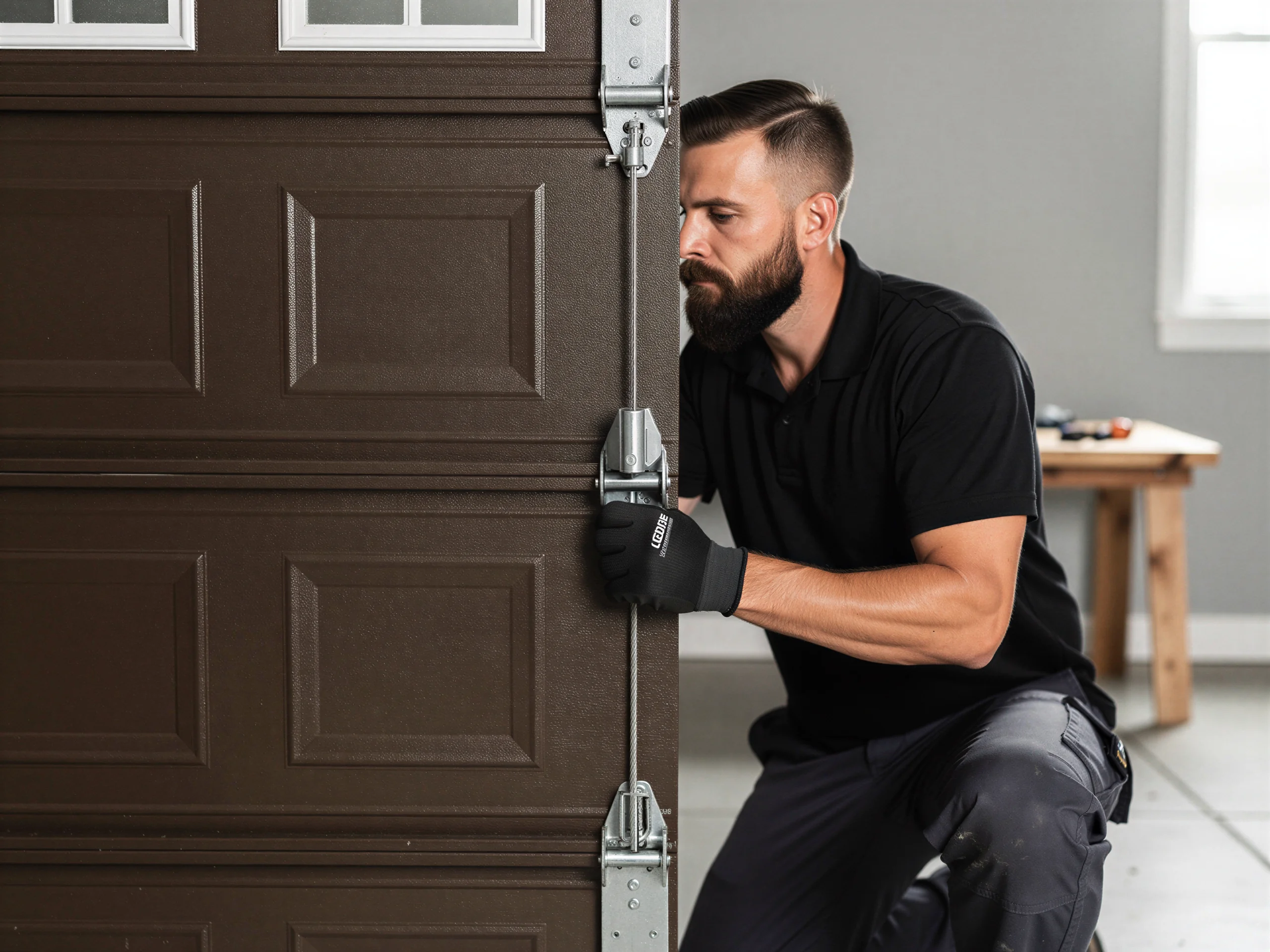
We also see cables that look fine until you notice the bottom fixture - the little bracket the cable clips into at the bottom corner of the door - has rusted and is about to tear through.
Free-fall panel damage
On heavier doors, a snapped cable can let the door free-fall far enough to crack a panel or bend a track, which turns a cable job into a bigger one. The honest limitation here: if the drum or the torsion tube is pitted from age, we're not just swapping a cable, and we'll tell you that before we start, not after.
Doing It Yourself
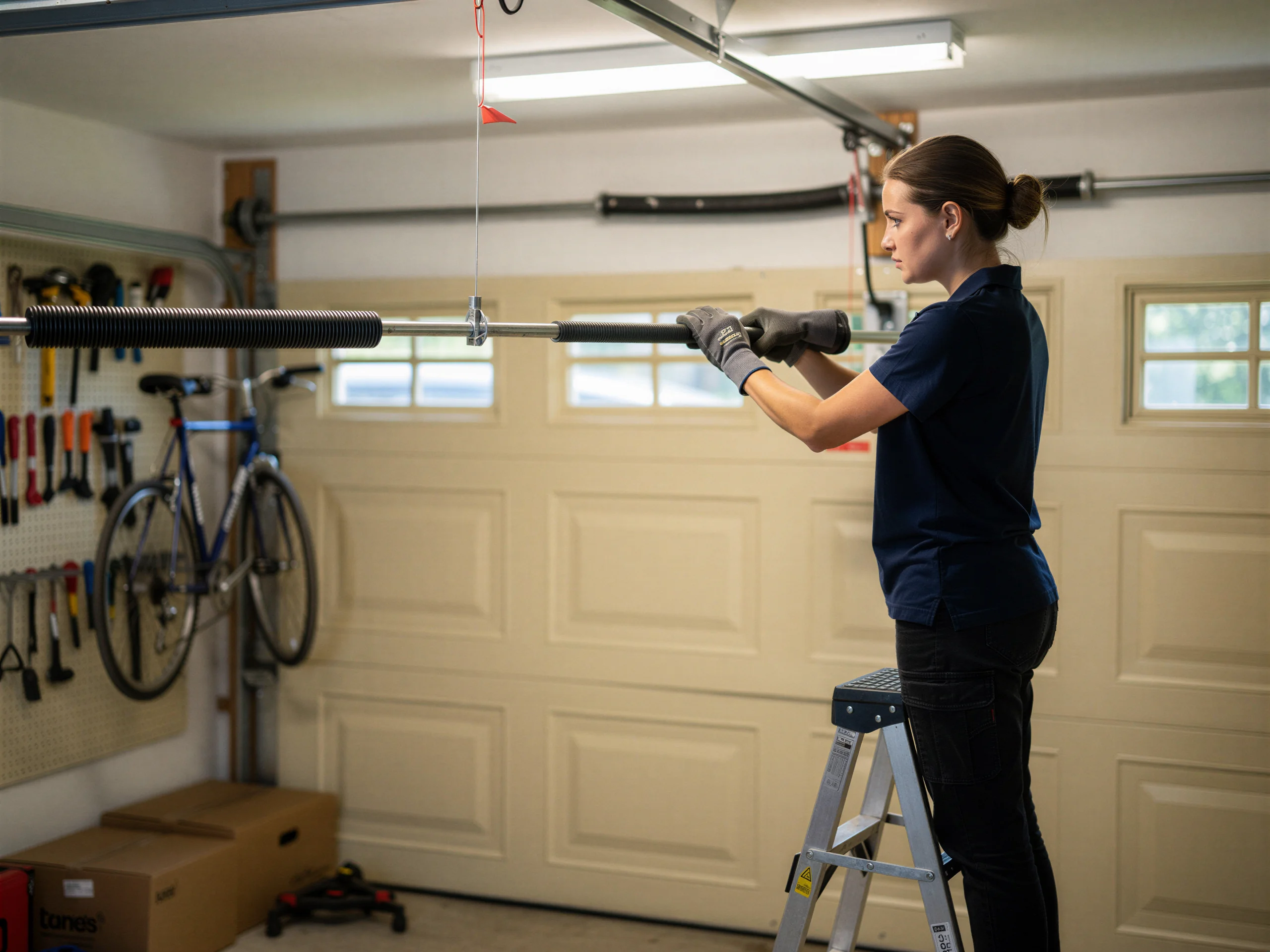
A garage door cable is under spring tension even when the door looks still, and that's the part that gets people hurt - the drum can spin fast enough to take a finger with it.
Leave it down safely
If a cable has already snapped and the door is down, the safest thing you can do yourself is leave it down, unplug the opener so nobody tries to run it, and don't reach under the door to lift it manually.
Second cable overloads
If the door is still up and a cable is just fraying, don't try to drive the car out past it; the second cable is carrying double the load it was built for and can go next.
Photograph frayed strand
Where a homeowner can reasonably help without a wrench: clearing the track of leaves and road salt residue, checking that nothing's rubbing against the cable path, and photographing the fraying strand so whoever comes out can bring the right size cable instead of guessing. Past that, this is a tensioned-hardware job, not a weekend one.
What Causes It Around Here
Westport's housing stock centers on 1968, right in the middle of the broader 1954-1984 build window that shaped most of the doors we work on across this service area. That means original torsion hardware is common, and a cable that's run 50-plus winters over the same drum groove is a cable due for failure, not a cable that's unlucky. The region sits in a cold climate band with real seasonal swings, and repeated freeze-thaw cycles work on exposed cable strands the same way they work on anything metal left outdoors - rust finds the weak point first. Westport's median household income runs well above the service area's overall median of $162,079, and in practice that shows up less in what breaks and more in what people choose to do about it: owners here are often quicker to replace aging drums and cables as a set rather than patch one side and wait for the other to go. The fault itself, though, traces straight back to the build year and the Northeast winters, not the town's income.
Talk to a local pro
Garage door service in Fairfield?
Same-day service with honest, upfront quotes.