Booking a Visit
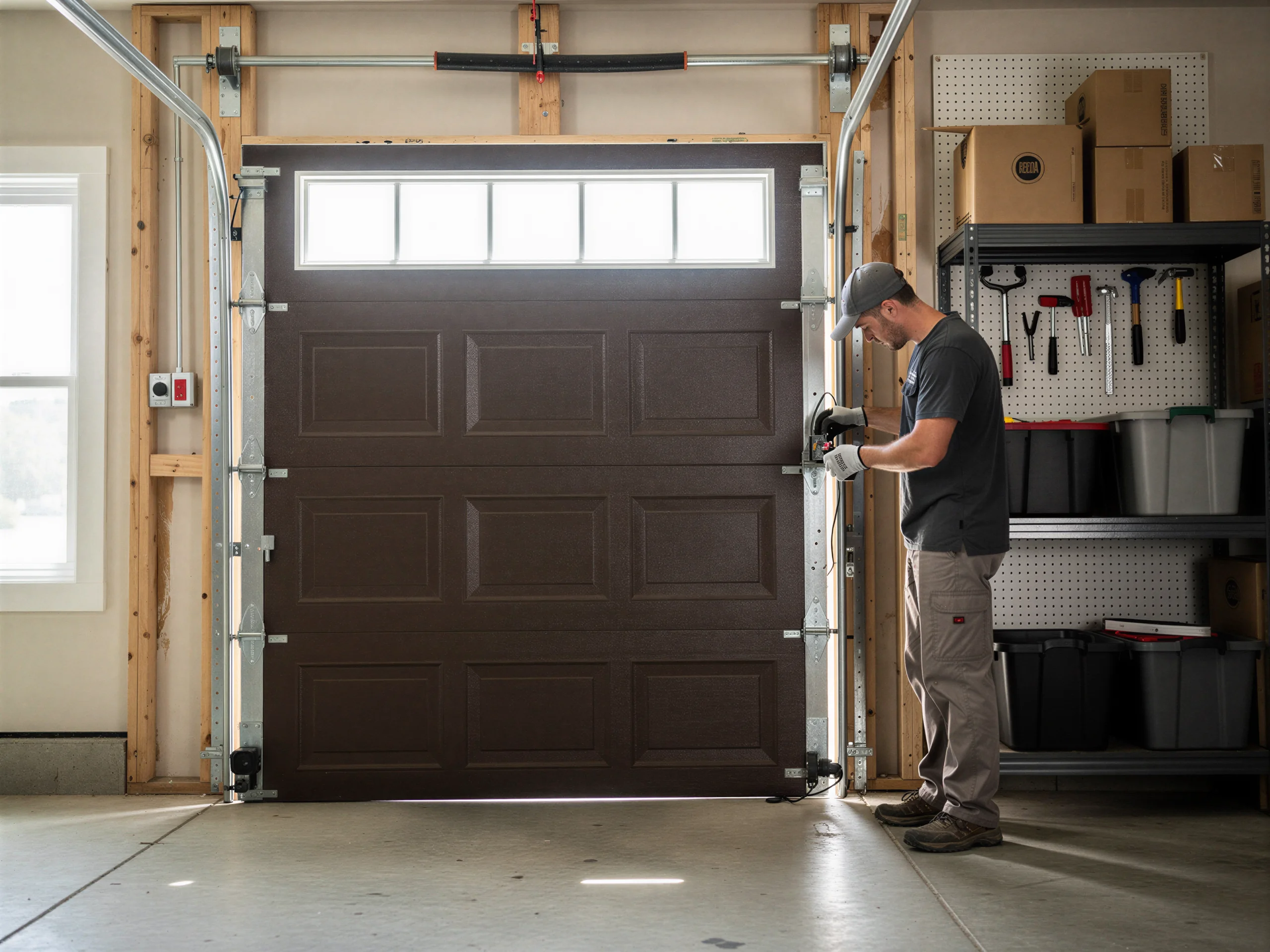
We work out of Fairfield, about four miles from Westport, and we come to you - there's no branch or depot inside town, just a truck that drives the four miles over. That matters for scheduling: we measure before we quote, because a lot of Westport garages still have the original 1960s opening, and a stock door ordered off a size chart won't always clear the header or the side room the way a newer build would. A visit starts with us looking at what's there now: the track, the spring type, the headroom above the opening, and whether the framing has settled since the house went up. From there we talk through door types that fit both the opening and the house - insulated steel, faux wood, full view - and give you a number before anything gets ordered. See our Fairfield installation page for how we handle the job itself, and the Westport coverage page for what else we do in town.
What Can Go Wrong
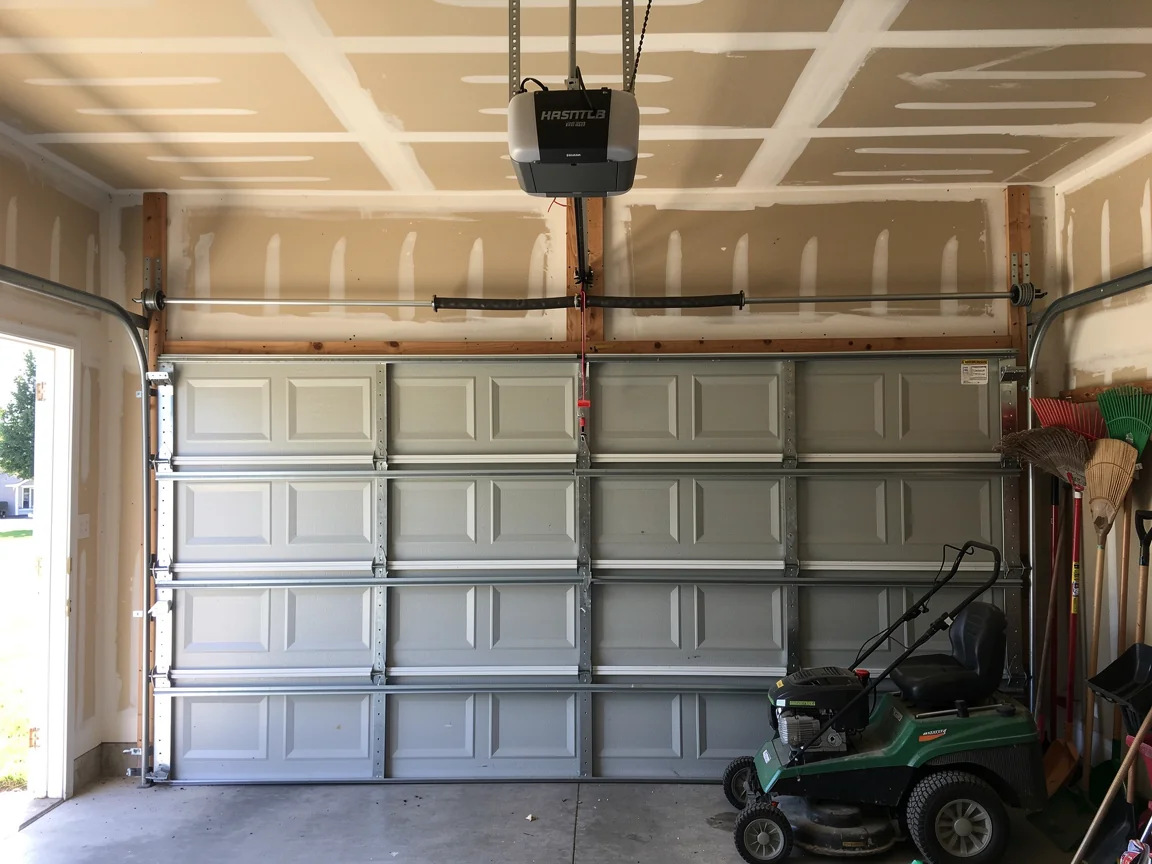
The fault we run into most in Westport isn't the door failing outright - it's the door being wrong for the opening. Houses here cluster around a median build year of 1968, square in the middle of the service area's 1954-1984 construction wave, and that era used narrower rough openings and lower headroom than anything sold new today. Drop in a standard current-stock door without checking clearance and the spring cone hits the header, or the track runs tight against a jamb that's shifted an inch over fifty-some years. The second fault is hardware mismatch. A lot of these original openings still carry torsion springs sized for the thin single-layer doors that shipped new in the late 1960s. Swap in a heavier insulated door - which most owners want now - on old spring hardware, and the opener strains, the cable wears fast, and the door doesn't balance right even when it looks fine from the driveway. We size new springs to the new door's actual weight, not to what was there before.
Doing It Yourself
Measuring your own opening before you call anyone is worth doing - width, height, and headroom above the track, since that's the number that trips people up most in a house this old.
Springs stay with pros
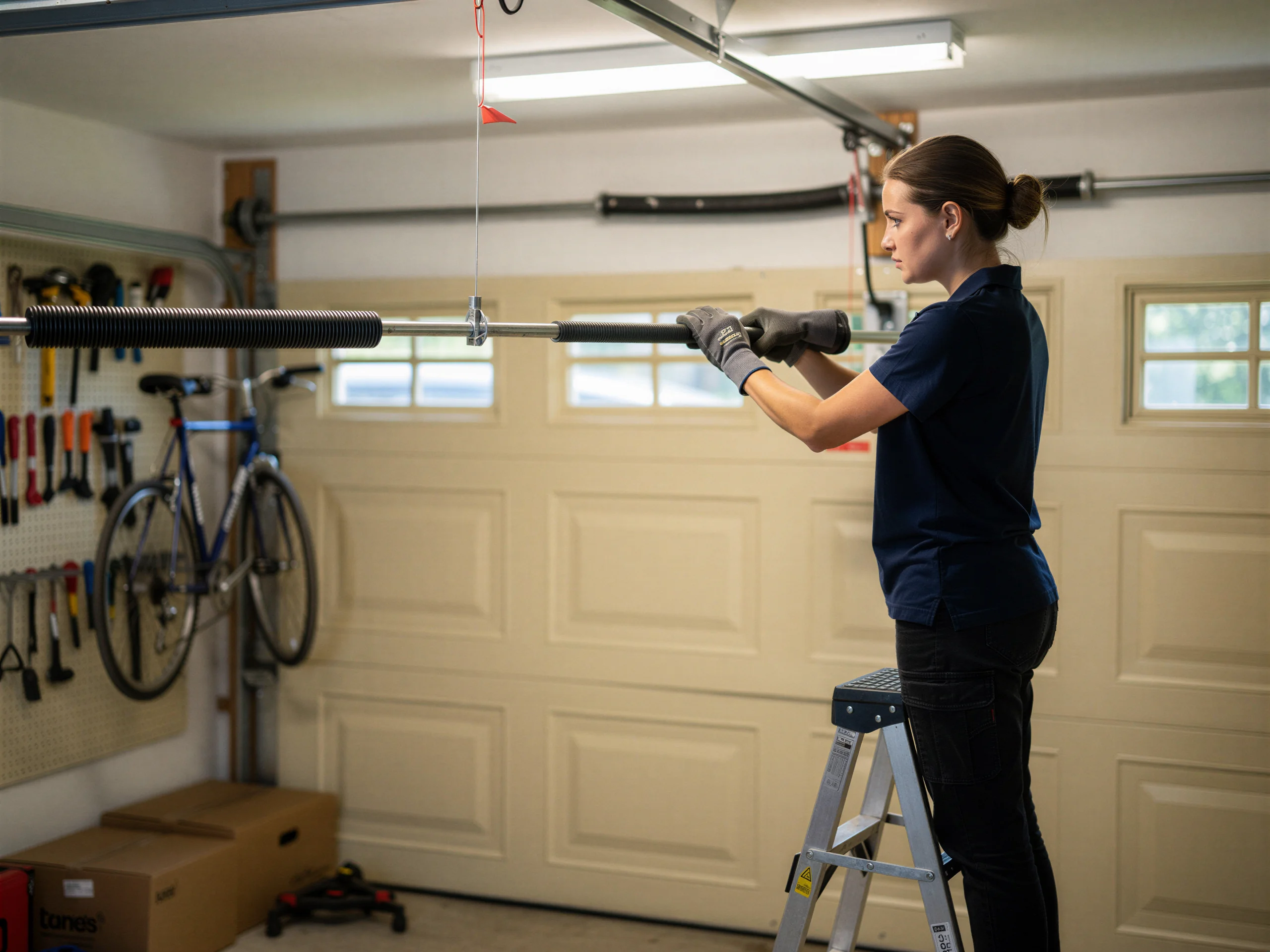
Where it stops being a DIY job is anything involving the spring. Torsion springs are under enough tension to break a wrist or worse, and a 1968-era opening often has tighter header clearance than install guides assume. Here's the honest limit: we don't sell or install doors we haven't measured for in person first.
Phone quotes are guesses
A phone quote on a door this age of house is a guess, and we'd rather tell you that up front than hand you a number we can't stand behind once we're on site.
Prep work owners can do
If you want to prep anything yourself, clearing the garage and photographing the opening from inside and out saves time on the visit, but leave the spring, the track alignment, and the final fit to us.
What Causes It Around Here
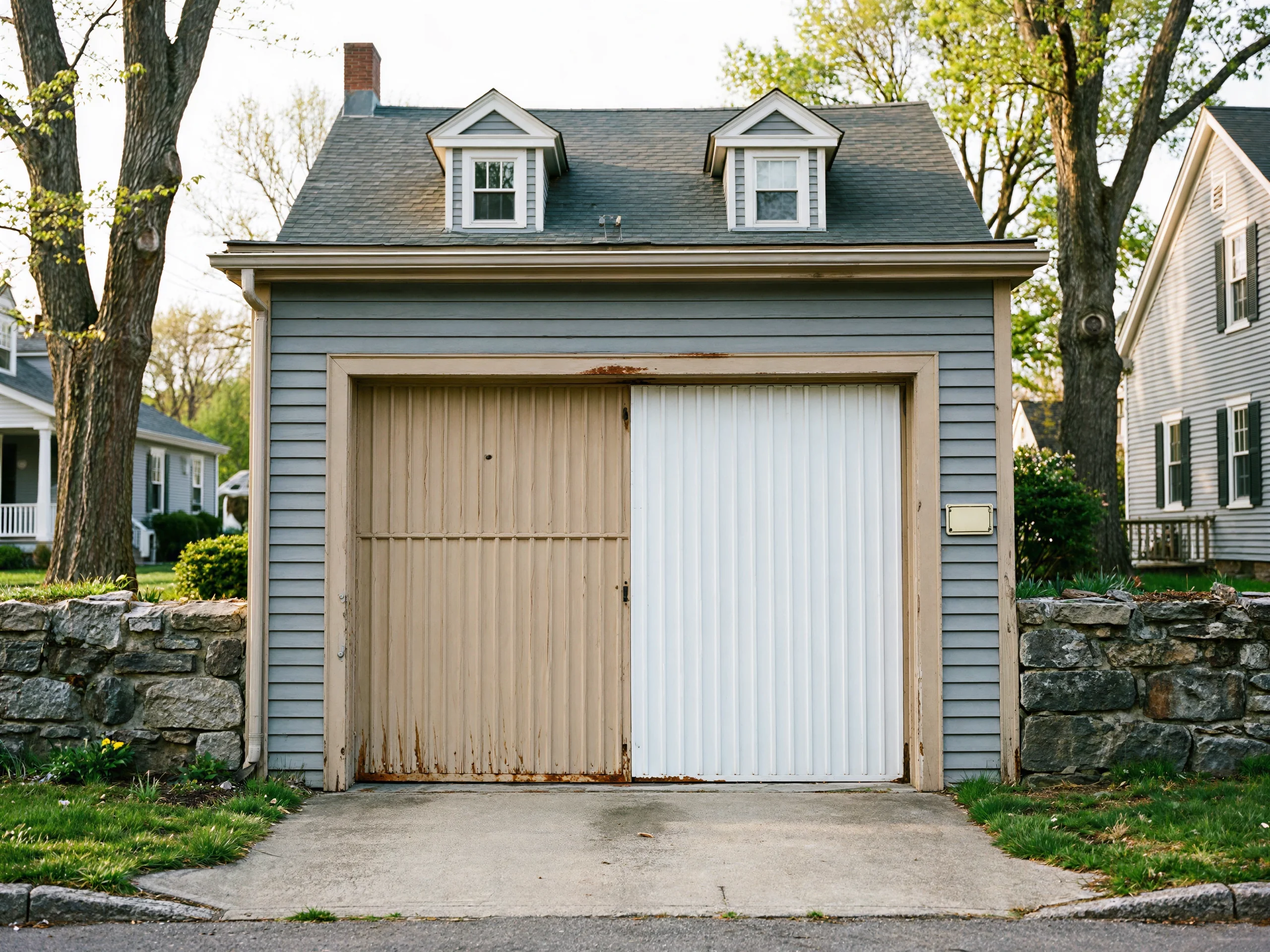
Westport sits in the same severe cold climate band as the rest of the service area, and that's the second force working on these doors besides age. A steel panel that's fine in August can warp slightly after a hard freeze-thaw run, and on a door original to a 1966-68 build, that slight warp is often the thing that finally makes the track bind. Uninsulated doors from that era also condense on the inside face in winter, which over decades rusts out the bottom panel and the hinges before anything else fails. At 9,698 households, Westport is a smaller town than some of the areas we cover, but it carries the same construction-era fingerprint as the rest of them - original openings, original spring hardware in many cases, and now, winter after winter, metal that's had fifty-some years to move. With median household income here running well above the wider service area's figure, we also see more owners choosing to replace a door that's still working rather than wait for a cold-morning failure, which is a reasonable call on a door this old.
Talk to a local pro
Garage door service in Fairfield?
Same-day service with honest, upfront quotes.