Booking a Visit
We run this job out of Fairfield, and Westport sits about 4 miles up the road, so a visit here doesn't add the kind of drive that pushes a job to next week.
Truck carries panel tools
That short run matters more than it sounds: when a panel's cracked or caved in, the truck needs to carry the right measuring tools and a few common panel profiles on the first trip, not a guess. What we can't promise is a same-day exact color or finish match pulled off the shelf.
Panel profiles vary widely
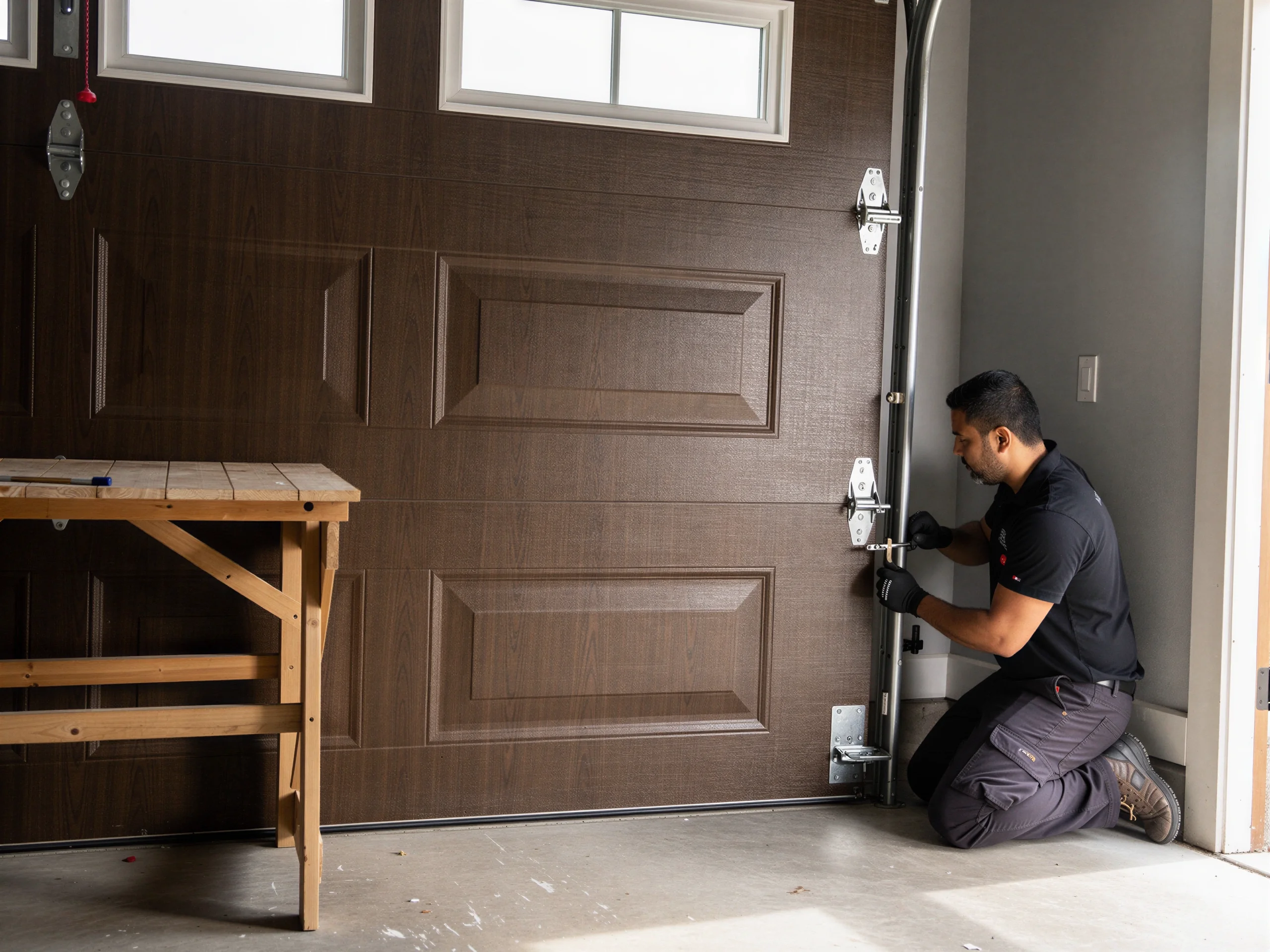
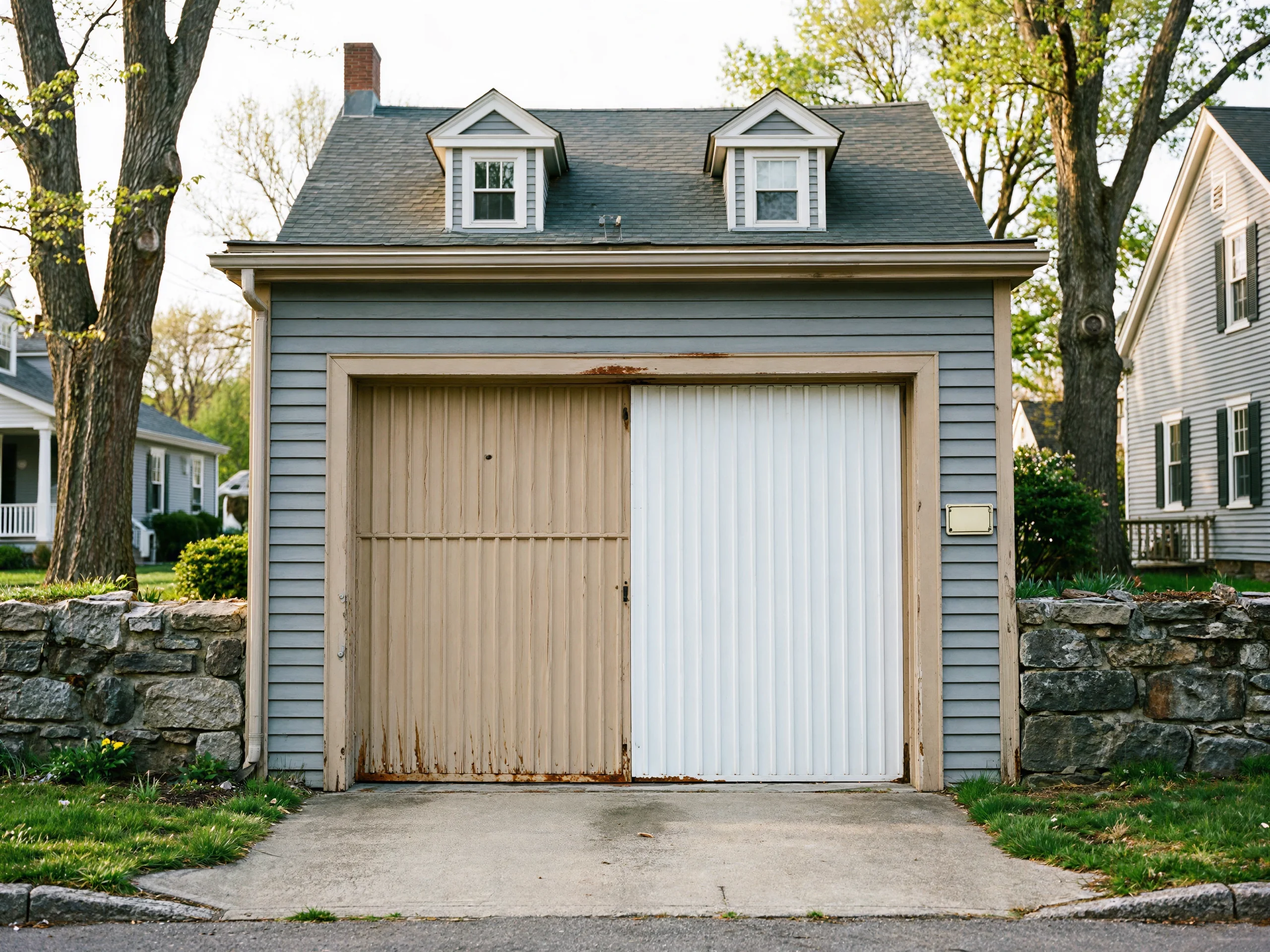
Garage door panels aren't a universal part - the run, the rib pattern, the finish all vary by manufacturer and by the decade the door was built. If your door dates to the 1960s or 70s, which a lot of Westport's housing stock does, we may need to order the matching panel section rather than swap one off a stock pile.
Whole door assessed first
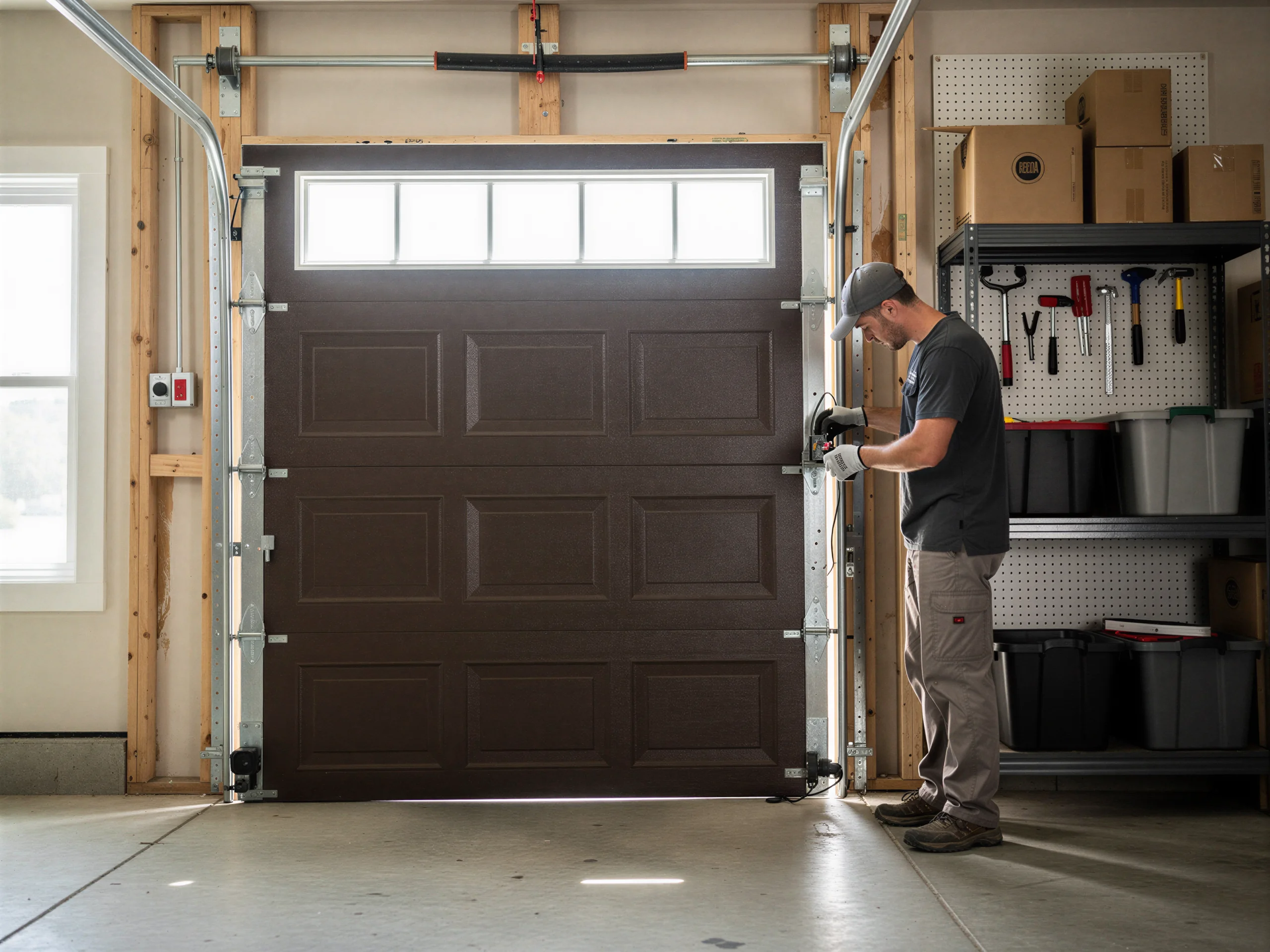
We'll tell you that on the visit, not after you've waited for it. We look at the whole door before we quote a panel swap - track alignment, hinge wear, whether the opener is fighting a bent section.
Photos before panel quotes
A panel replacement that goes in against a bent track just fails again in a season. We don't do a panel quote over the phone with no photos; we need to see the door or get clear pictures first, because panel sizing on an older frame is rarely a standard catalog number. Once we're on site the estimate is firm before anything comes off the hinges. We cover coverage details for this area at /coverage/westport/.
What Can Go Wrong
Westport's housing runs mostly 1960s and 70s construction, with a median build year around 1968 for homes in this part of the service area. Doors from that era were commonly steel or aluminum sectional panels on simpler hardware than what's sold today, and decades of expansion and contraction have usually left at least one section with a visible bow, rust bubble, or stress crack near a hinge bolt.
Insulation damage in panels
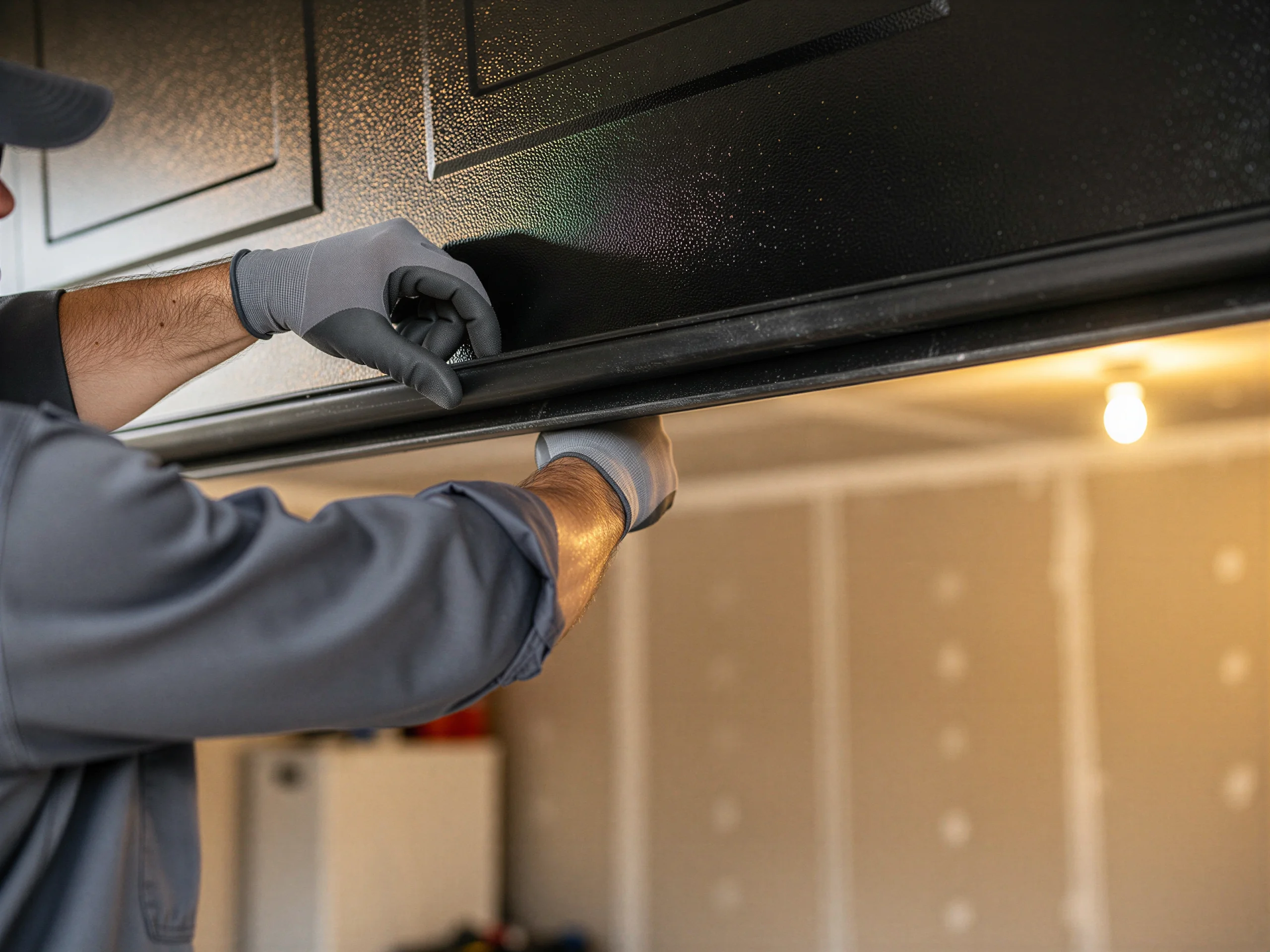
A single damaged panel on an otherwise sound door is a common call - a car bumper clips the bottom section, or a basketball dents a mid panel over a few seasons. On older doors, insulation inside steel panels can also break down, so a section that looks fine from outside is colder or heavier than its neighbors, which throws off spring balance even after the panel itself is swapped.
Balance check after swap
What we won't do is replace one panel and call it finished if the door's spring tension is already off for the new panel's weight. We check balance as part of the job.
Panel swap or full door
If the rest of the door is near the end of its life - multiple panels showing fatigue, track worn thin - we'll say so and let you decide between a panel swap and a full door, rather than sell a patch that fails again in a year.
Doing It Yourself
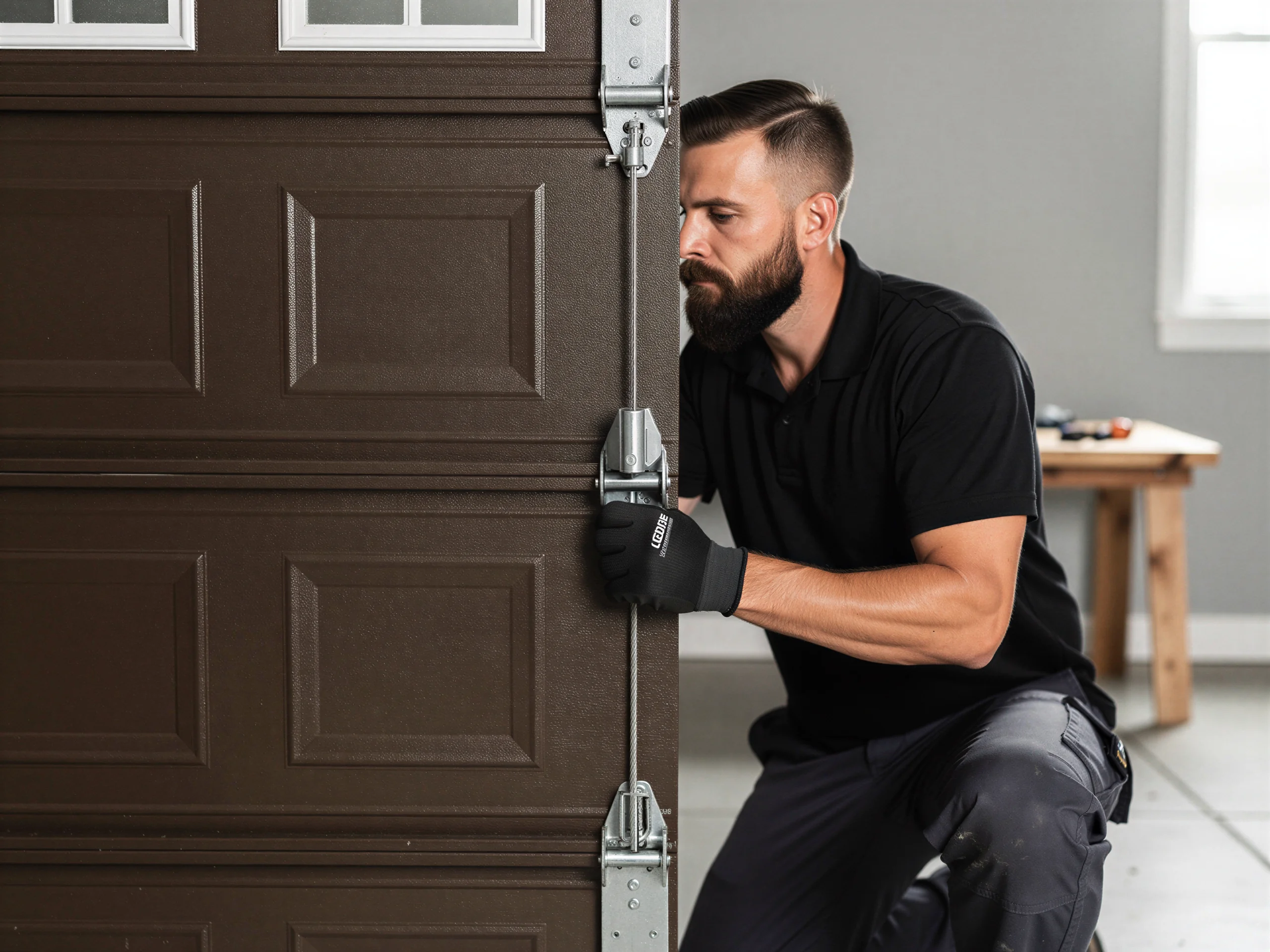
A single panel swap looks simple on video: pull the hinge bolts, slide the old section out, slide the new one in. On a door built in the 1960s or 70s, the complication is usually alignment - decades of settling can leave the track slightly out of true, so a factory-straight replacement panel doesn't sit flush without some adjustment at the hinge.
Spring risk while disassembling
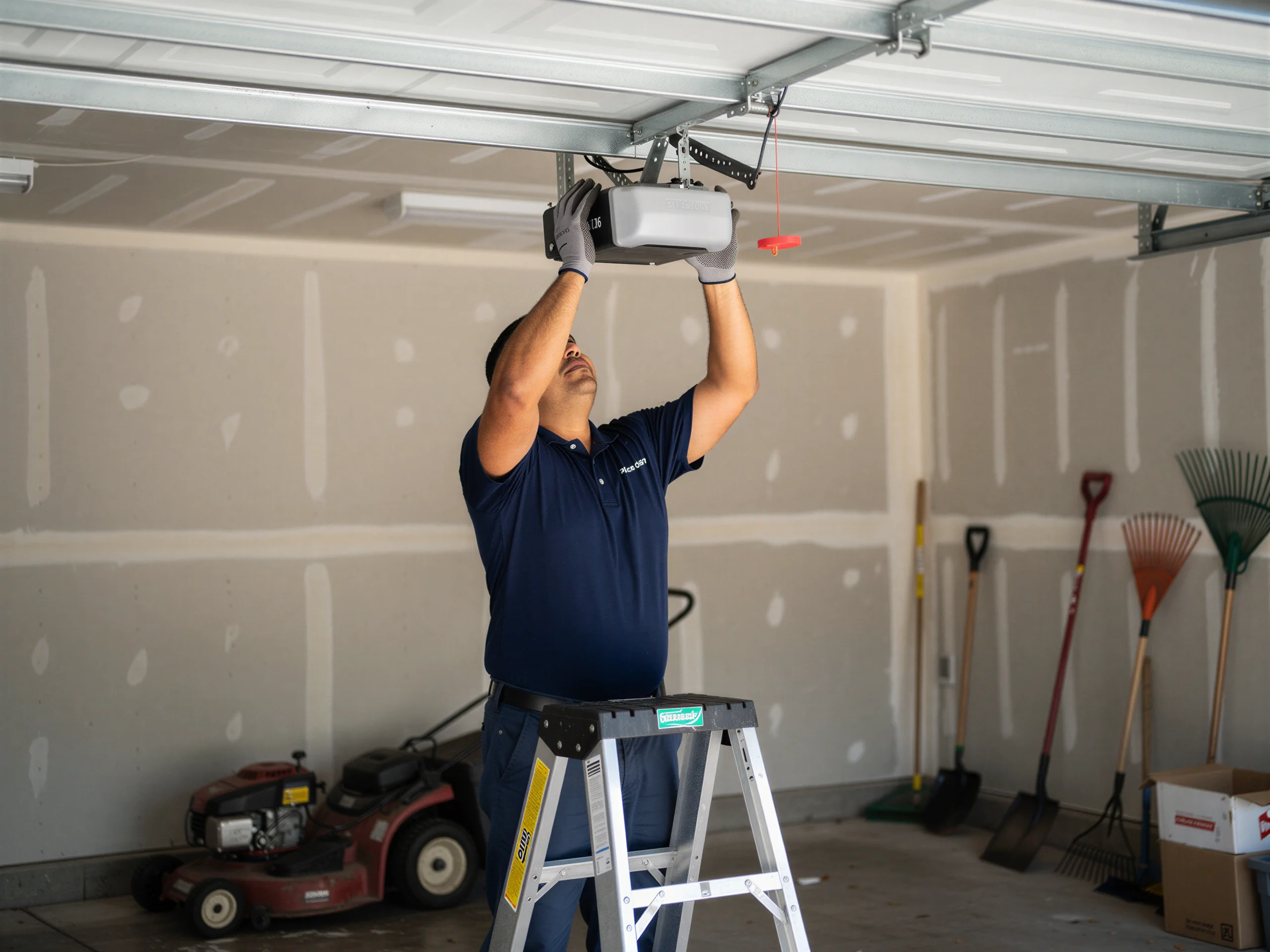
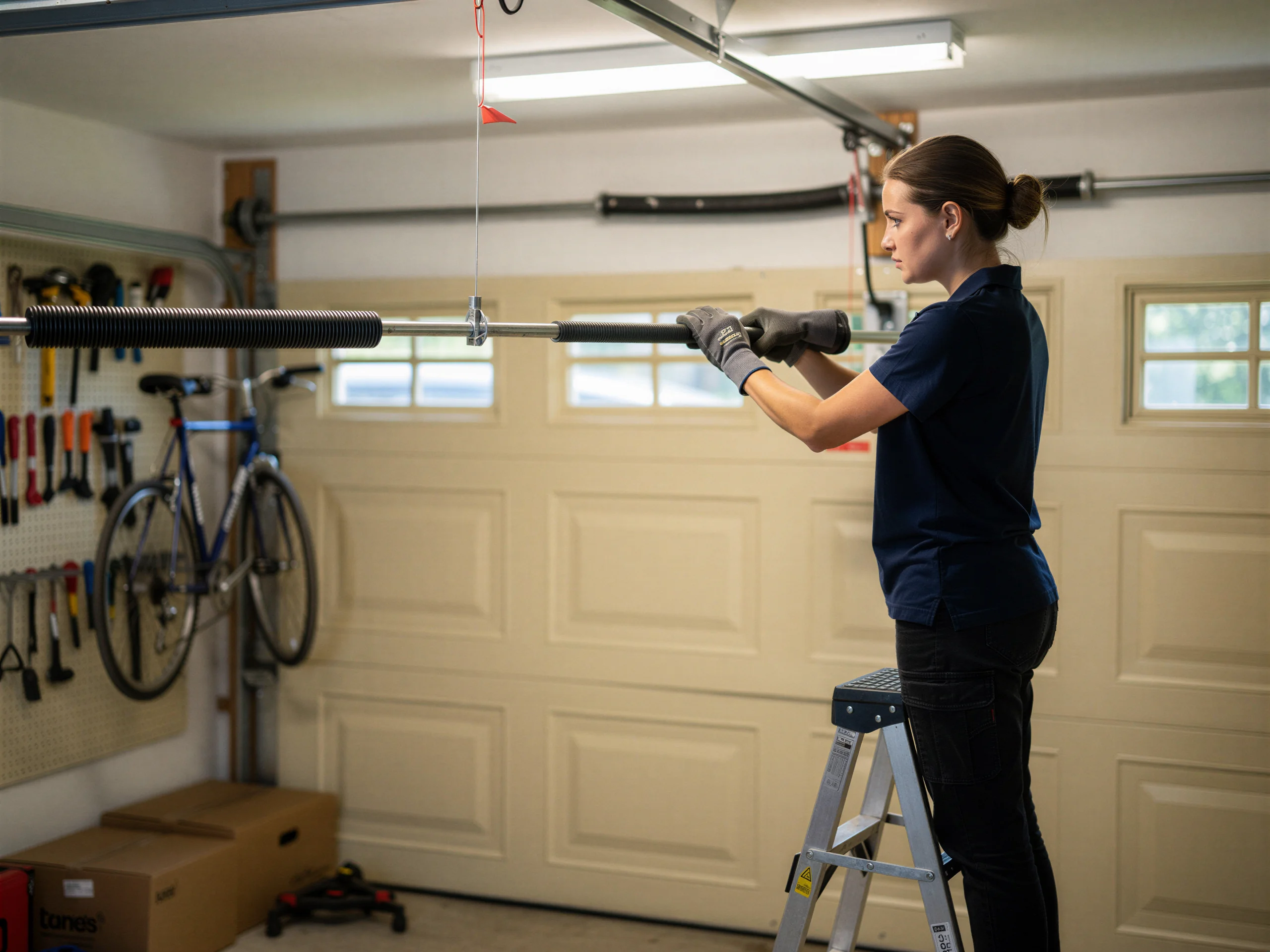
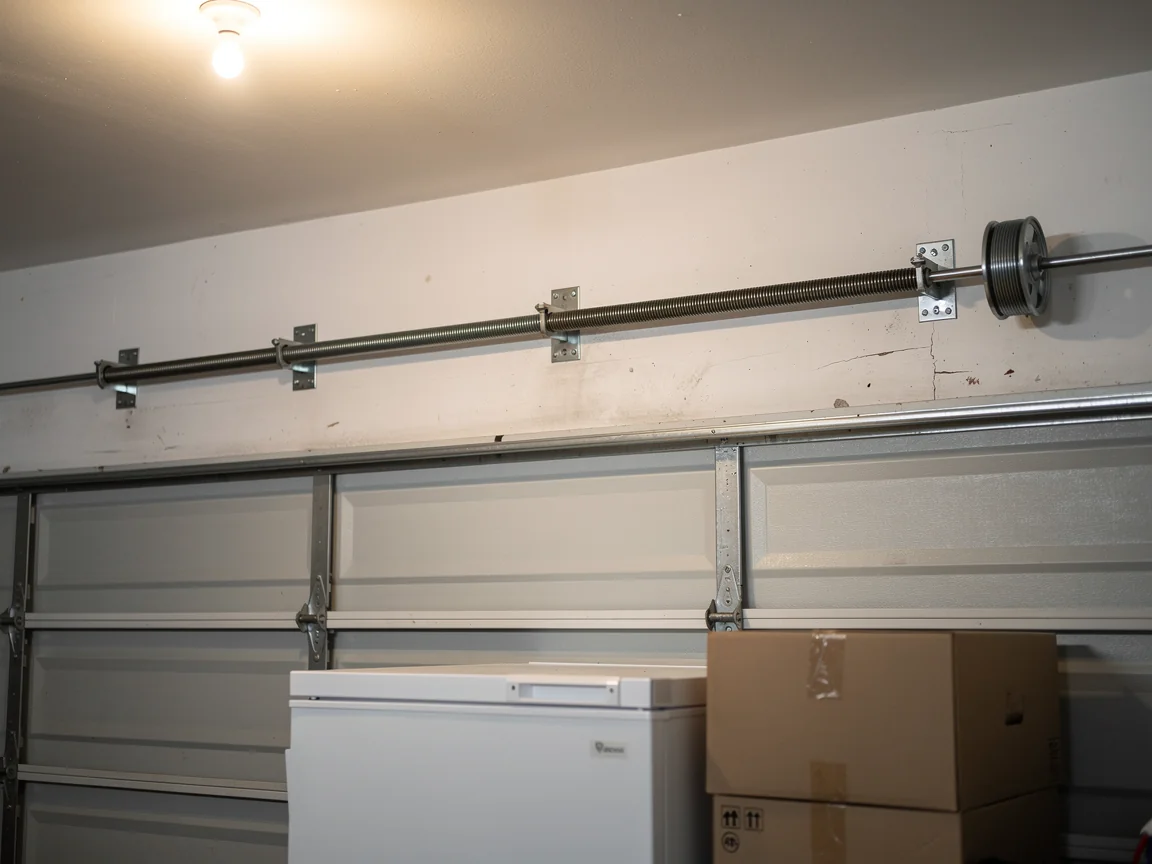
The bigger risk is the torsion spring. If the door has to come apart enough to pull a middle or bottom panel, you're working near a spring under real tension, and that's the part of this job that puts people in the ER, not the panel itself.
Color matching is hard
We'd rather talk you through what to check before you commit to doing it yourself than have you learn that the hard way. Color and finish matching is also harder than it looks without a parts number off the original door, and on an older door that number may not be on file anywhere.
Cosmetic dents can wait
If the panel is purely cosmetic - a dent with no crack, no insulation damage - and the door still balances fine, that's genuinely a case where living with it until a full repaint or replacement makes more sense than a rushed matched panel order.
What Causes It Around Here
This service area sits in a cold-climate zone with real seasonal severity, and that's harder on garage door panels than most homeowners expect. Steel panel sections built in the 1960s and 70s expand and contract with every freeze-thaw swing, and over enough winters that stress shows up as hairline cracks along panel seams or rust starting at the bottom edge where road salt and slush collect.
Snow load against a door that's parked at the end of a plowed driveway adds its own wear - repeated light impacts from thrown snow or ice chunks dent panels in the same spot season after season. Garages that aren't heated also see more condensation inside steel panels, which accelerates rust from the inside out, often before it's visible from the driveway.
None of this is unique to one house; it's the stock and the climate working on the same hardware for sixty years. A panel that's held up since the original build is doing well. One that's failing now is usually failing for a reason tied to that age and that climate, not bad luck - which is worth knowing before you pay to replace just the part that's visibly broken. For the broader service overview, see /garage-door-panel-replacement-fairfield-ct.
Talk to a local pro
Garage door service in Fairfield?
Same-day service with honest, upfront quotes.