Booking a Visit
We run out of Fairfield, about 4 miles from most Westport streets, so a maintenance visit here isn't a special trip, it's a short one.
Truck rolls from Fairfield
We don't keep a branch office or a drop-box in Westport itself, and we're not going to pretend otherwise - the truck comes from Fairfield, same as it does for every town we cover. What that means for you is simple scheduling: we tell you a window, we show up in it, and we don't pad the route with stops in between.
Fast checks for noise
Westport's median household income runs well above the regional figure, and we see that reflected less in the doors themselves and more in how fast owners want a small noise or a slow-closing door looked at before it becomes a weekend breakdown.
Asking if it can wait
If you're not sure whether what you're hearing is worth a call, that's a fair question to ask when you book - we'd rather tell you it can wait than run a truck out for nothing. Check our coverage area page for the towns around Westport we also service, or see what a maintenance visit covers in general on the Fairfield page.
What Can Go Wrong
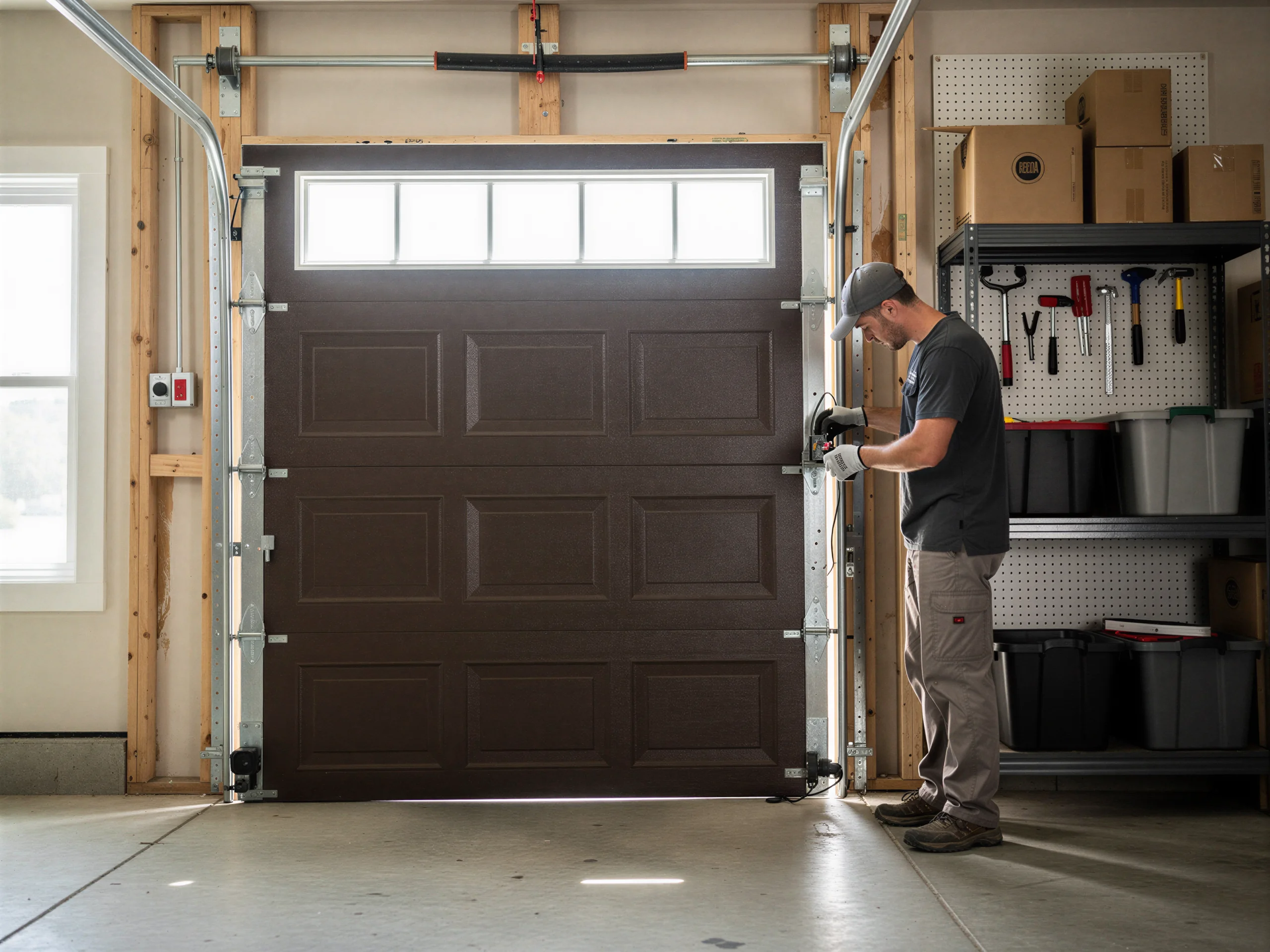
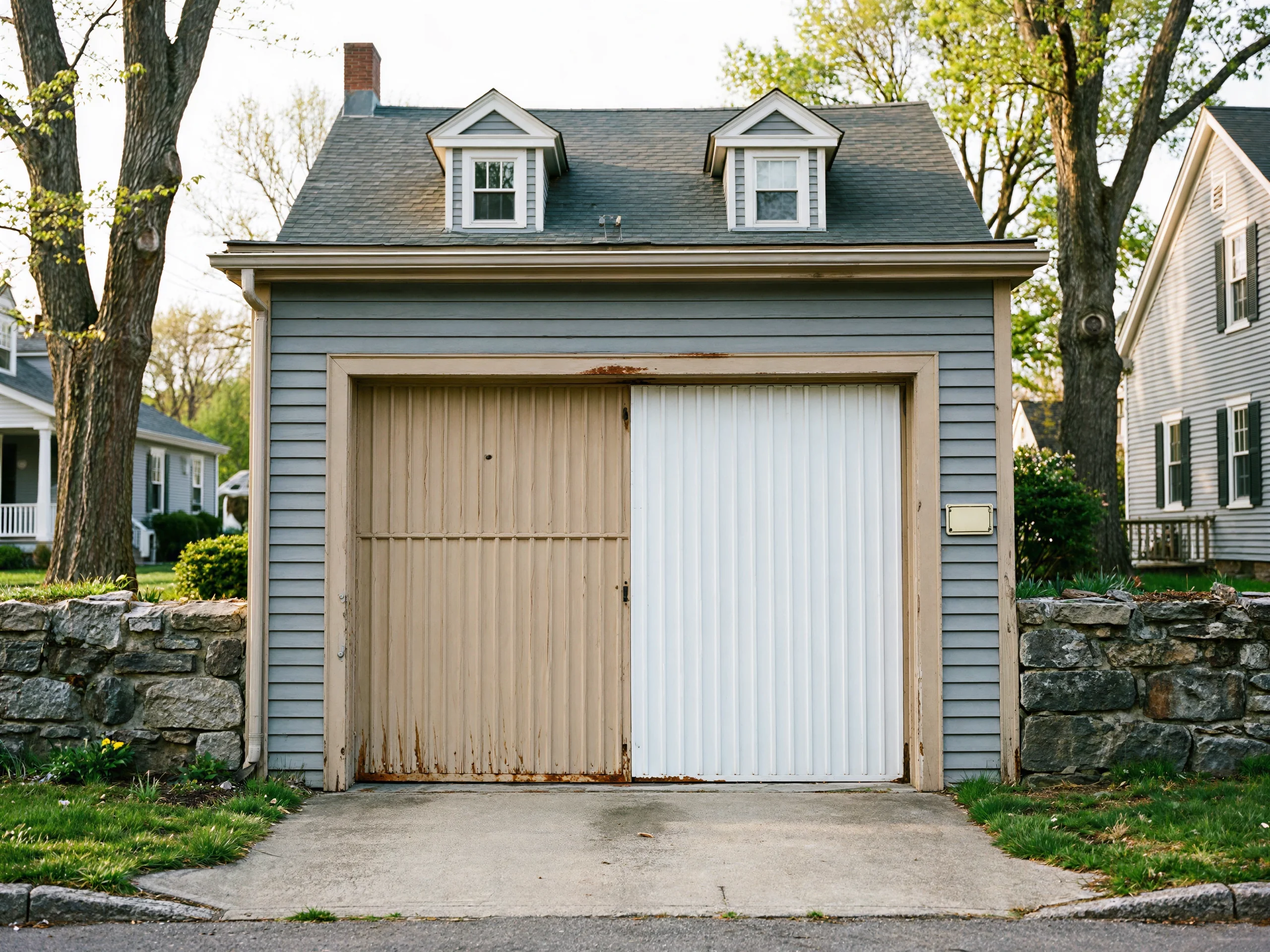
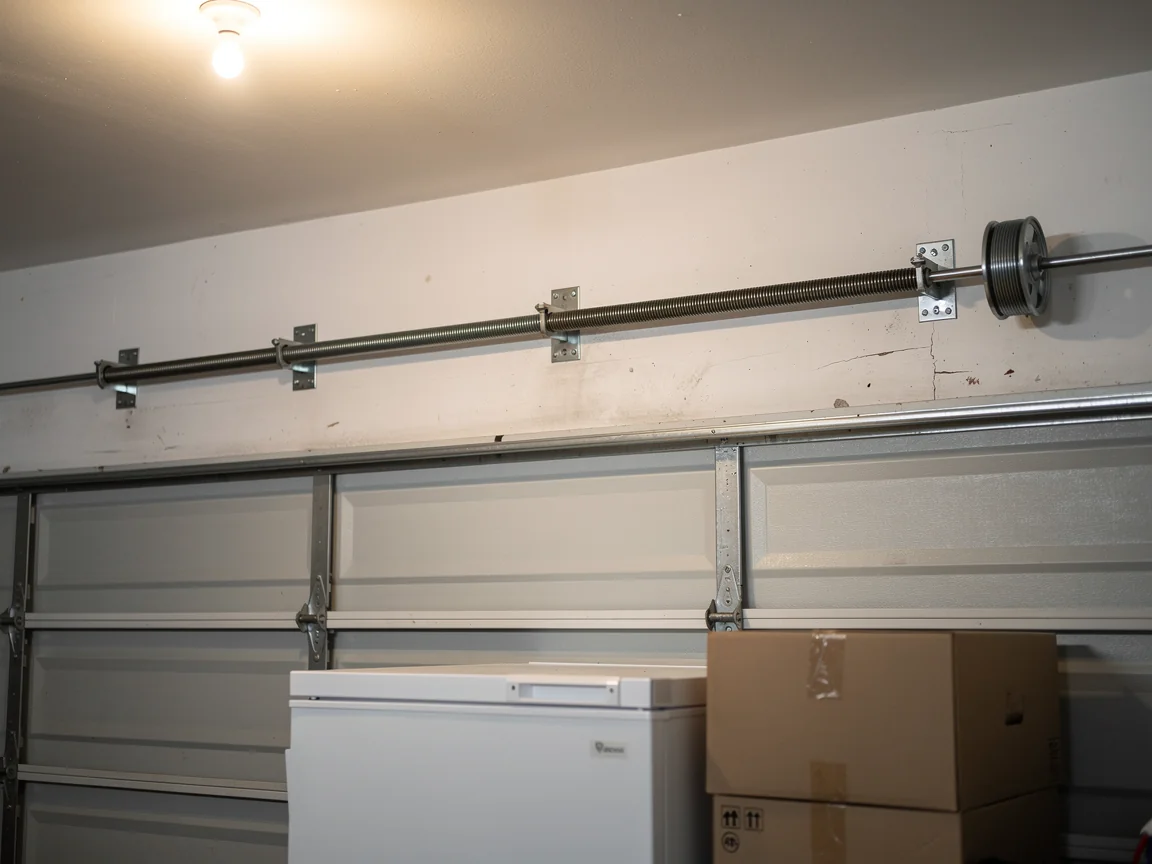
The typical Westport house dates to around 1968, which puts the garage door itself squarely in the extension-spring era - a pair of stretched springs running along the horizontal tracks, with safety cables (if they were ever retrofitted) doing the only thing standing between a snapped spring and a door panel coming down fast.
Steel sectional setups
These doors are usually steel sectional units, single or double width, hung on the same steel track and roller hardware the house was built with unless someone's replaced it since.
Frayed safety cables
Fifty-plus years in, the failure points are predictable: frayed or missing safety cables, extension springs that have lost tension unevenly on one side, hinges worn oval instead of round, and center bearing plates that have never been greased. None of that shows up as a dramatic failure until the day it does - usually a door that drops unevenly, or won't lift past waist height.
January stress on hardware
In this climate band, cold and severe by the numbers, steel contracts, lubricant thickens, and anything already marginal in the hardware gets worse faster in January than it would in July. That's not a Westport-specific fault, but on hardware this old, it's the thing that turns a stiff door into a stuck one.
Doing It Yourself
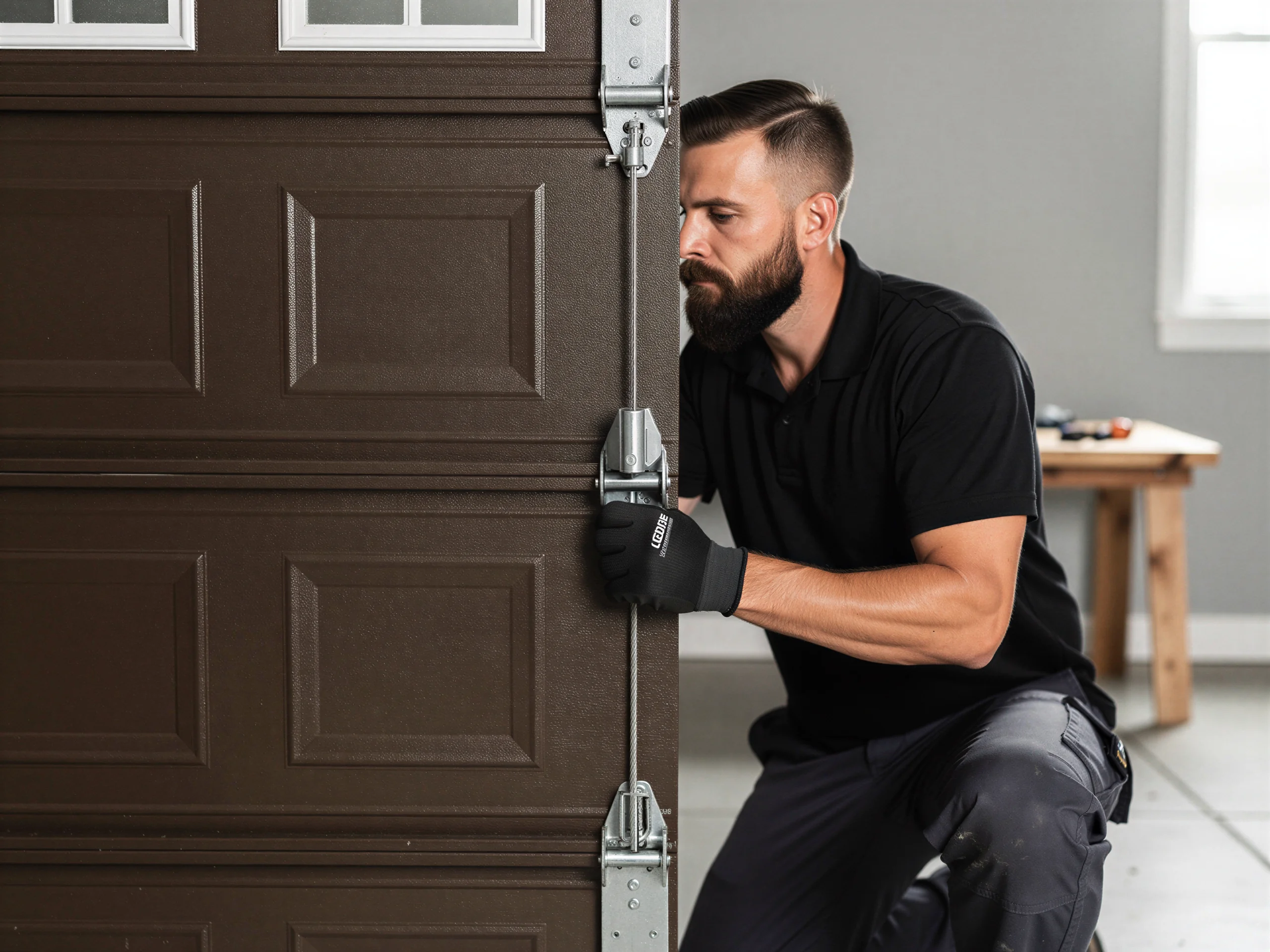
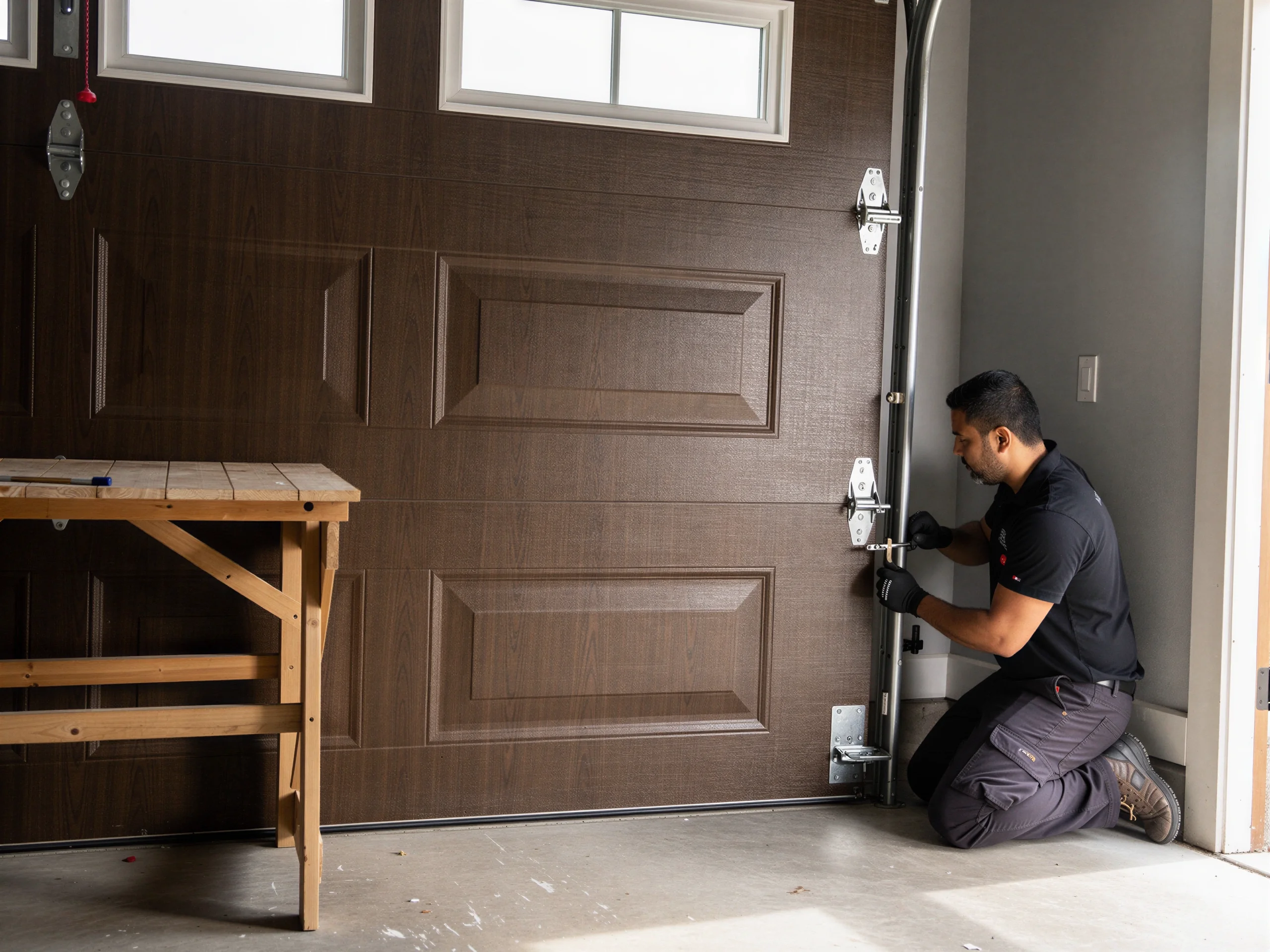
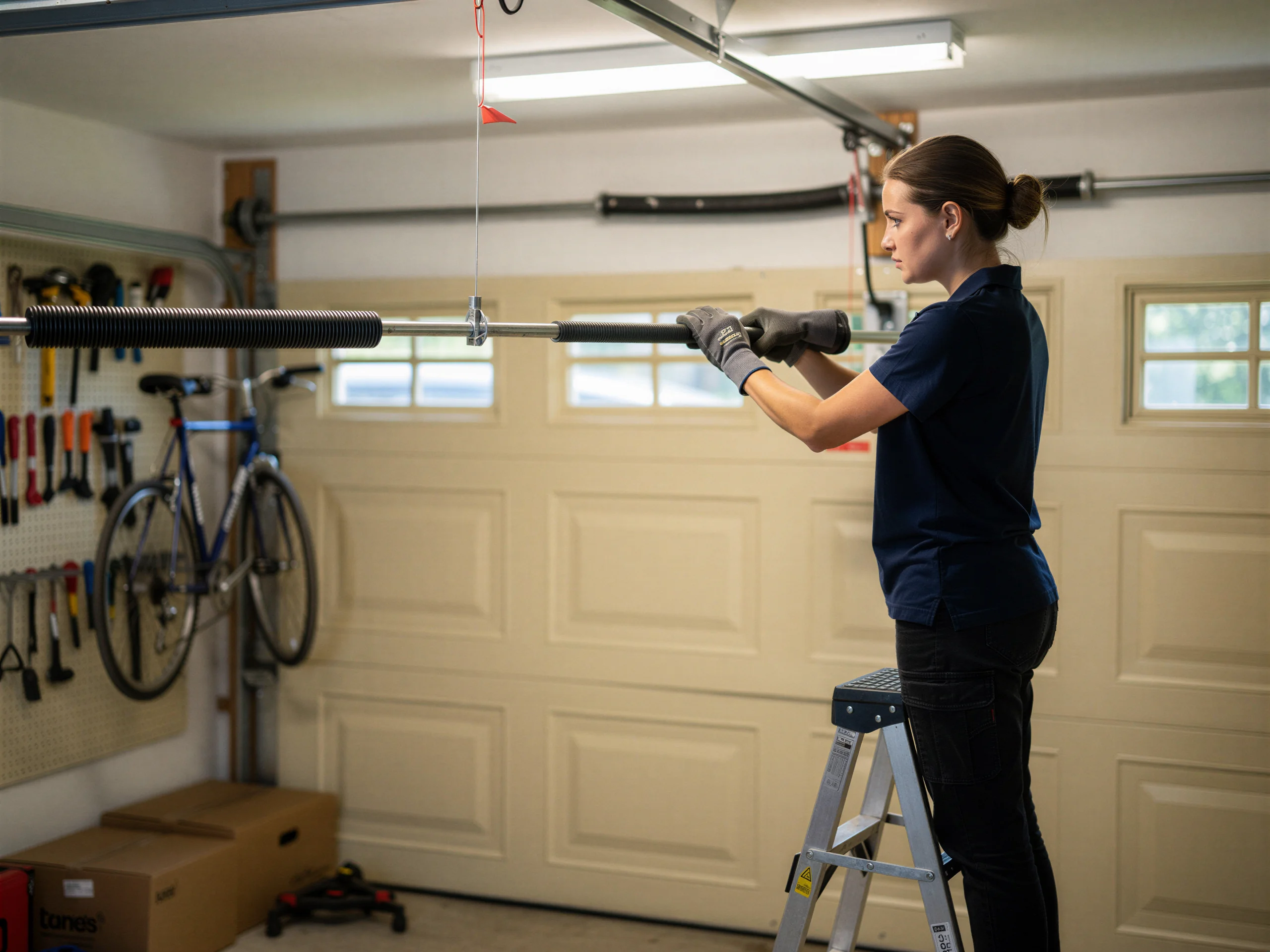
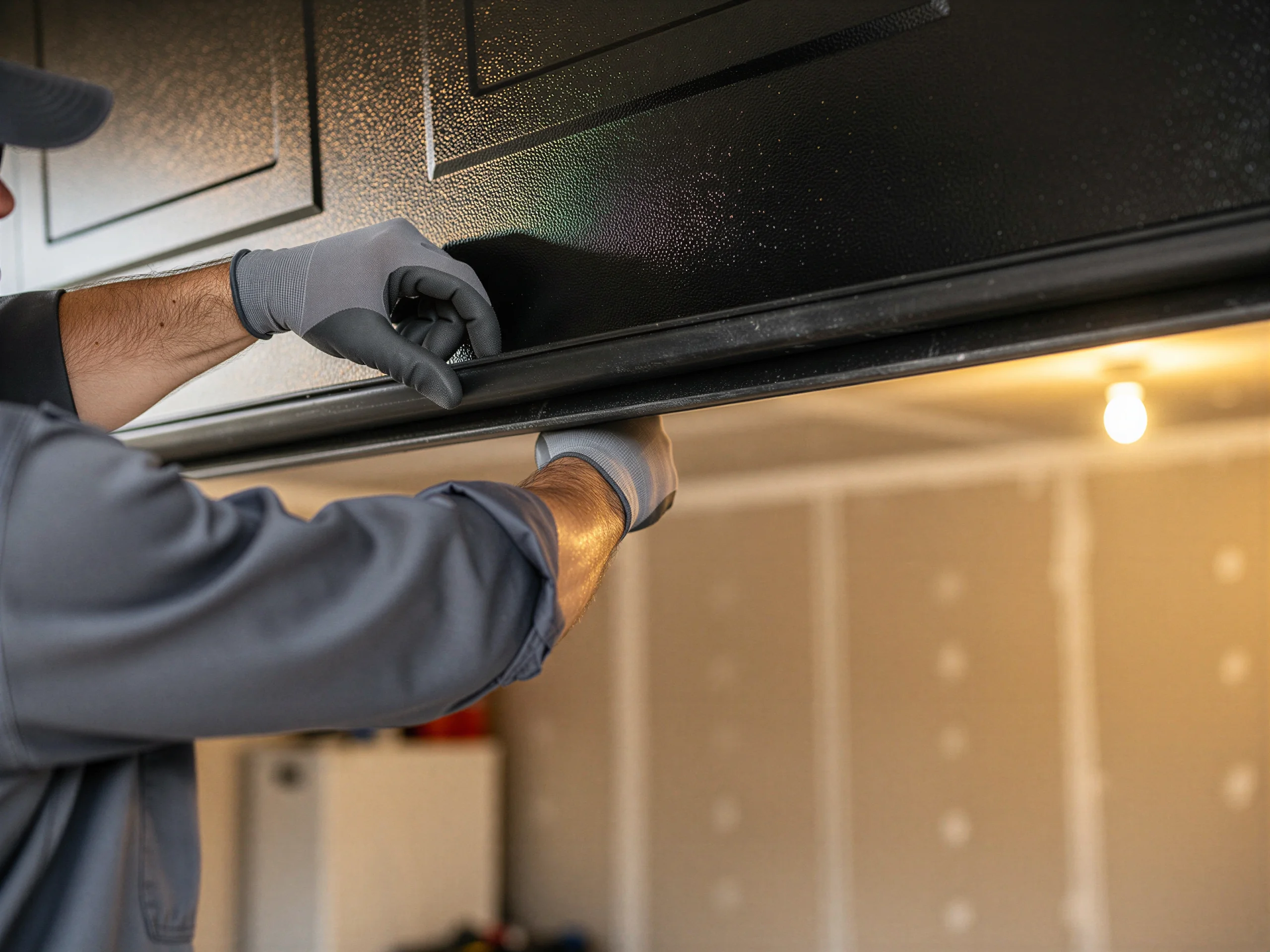
There's real maintenance a homeowner can do safely on a door this age, and real maintenance that isn't worth the risk. Safe: wipe down and lubricate the rollers and hinges with a garage-door-specific lubricant (not WD-40, which washes grease out rather than adding it), check that the photo-eye sensors near the floor are clean and aligned, and look at the safety cables for fraying.
Listening as a check
Also safe: listen. A door that's gotten noticeably louder over a season is telling you something before it fails outright. Not safe, on a house this old: touching the extension springs themselves.
Extension springs hands-off
They're under real tension, the brackets holding them are original hardware from 1968 or close to it, and a spring that lets go while you're near it can take a finger or worse. We don't do spring work as a DIY-adjacent service - if your springs look worn, that's a call, not a weekend project.
Maintenance has limits
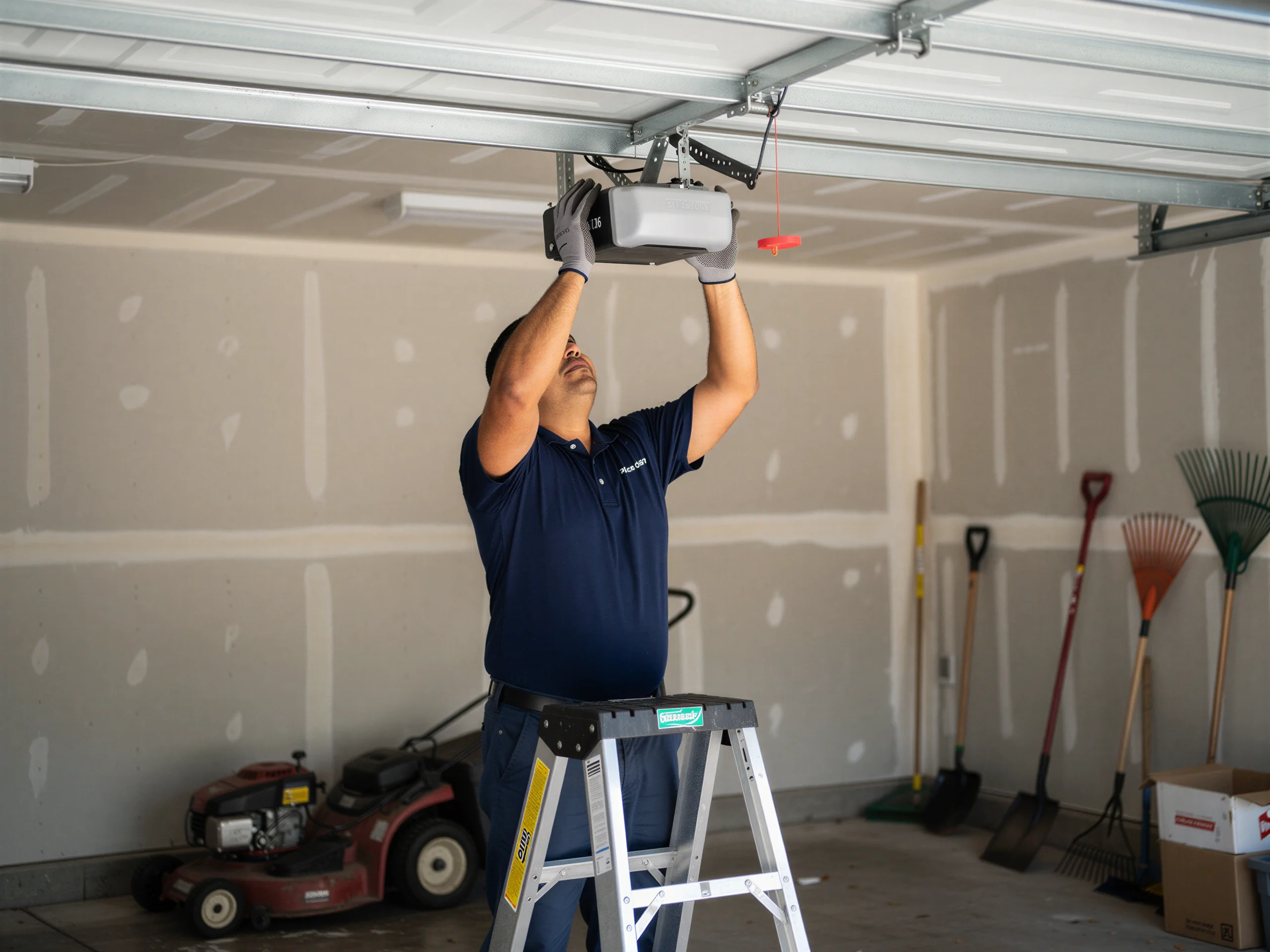
One honest limit on our end too: if a door's track is bent or the opener motor itself has failed, a maintenance visit won't fix that. At that point you're looking at a repair or replacement conversation, not a tune-up.
What Causes It Around Here
Westport's housing stock centers on 1968, which puts it right in the middle of the broader 1954-1984 build-out across this service area, and that era's garage doors were built to a different standard than what goes up today - lighter gauge steel, simpler spring systems, less insulation, and hardware that was never rated for the number of open-close cycles a door sees over five decades. Layer the climate on top of that: this is a cold, severe-winter region, and steel hardware that's been open to an unheated garage since the Johnson administration doesn't flex the way newer doors do when the temperature drops. Across the roughly 141,171 households in the wider service area, the large majority owner-occupied, we see the same pattern repeat - doors that worked fine for forty years start giving trouble in year forty-five, not because anything dramatic happened, but because lubricant breaks down, springs fatigue, and nobody noticed until the door got loud or slow. Westport's 9,698 households sit on largely the same building timeline as the rest of the area, which is the real reason a maintenance visit here looks the way it does: not a generic tune-up, but a check of specific, aging, predictable parts.
Talk to a local pro
Garage door service in Fairfield?
Same-day service with honest, upfront quotes.