What You Pay
Monroe is a smaller town by the numbers we work with - about 6,238 households, which is a fraction of the wider service area's 141,171.
No branch, rolled-in drive
That matters for pricing in one specific way: there's no branch here, so every job rolls in from Fairfield, 14 miles out. We don't pad a quote for the drive, but we also don't pretend the trip doesn't exist when we're scheduling a same-day call versus a routine tune-up.
Door age drives price
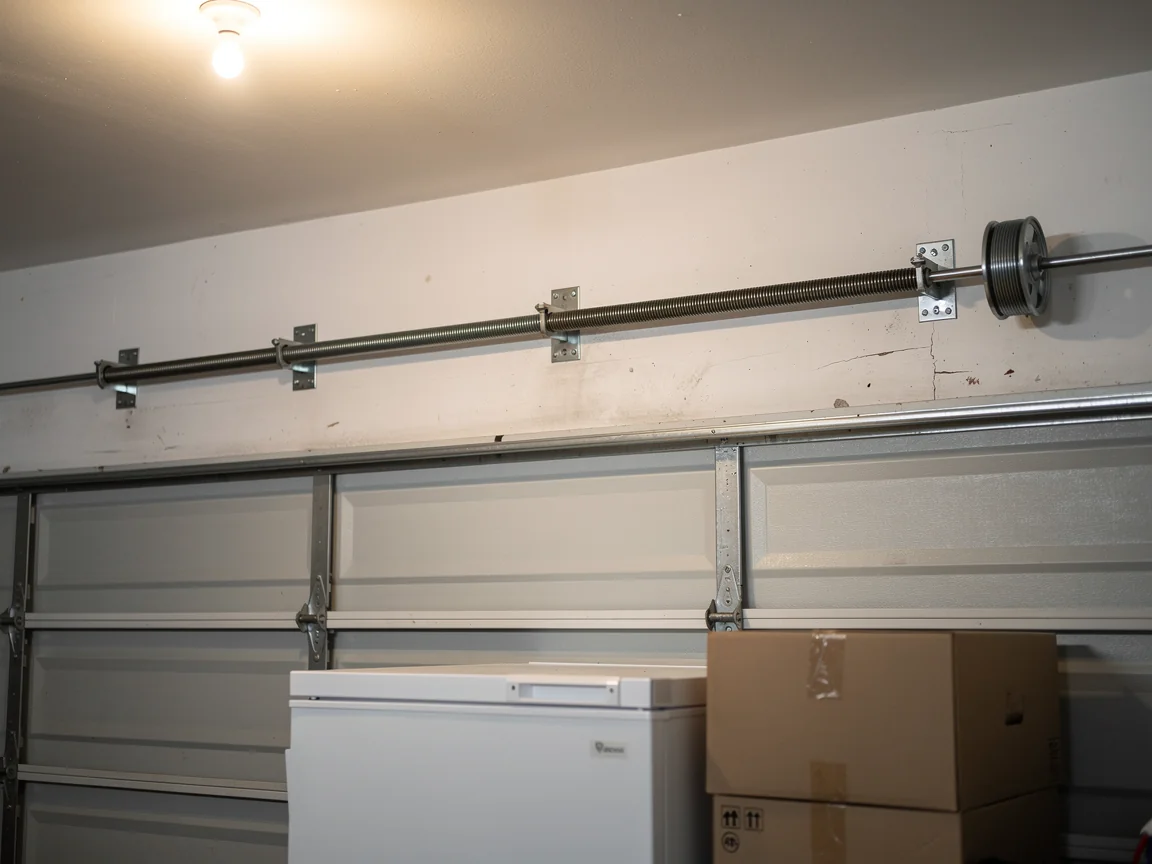
What actually drives the number on your invoice is the door itself. Monroe's housing stock centers on a median year built of 1978, a decade or so newer than much of the wider service area's 1966 median. That later build date usually means doors on extension spring systems rather than the older torsion setups common in homes built before the mid-1960s.
Extension spring pricing
Extension spring repairs and replacements tend to run a different cost than torsion jobs, partly because of the safety cables that should be present and partly because the parts themselves are priced differently. Household income in Monroe runs about $156,731, which is close to the broader area's $162,079 - we mention it only because it's the kind of town where owners tend to ask for the straight repair cost before signing off on a replacement, not the other way around.
Time on the Job
A straightforward spring or opener call doesn't take long once a truck is on site, but Monroe's distance from Fairfield - 14 miles - means the drive itself is often a bigger chunk of the day than the repair. We're upfront about that when we're setting expectations for a same-day visit versus something that has to get worked into the route.
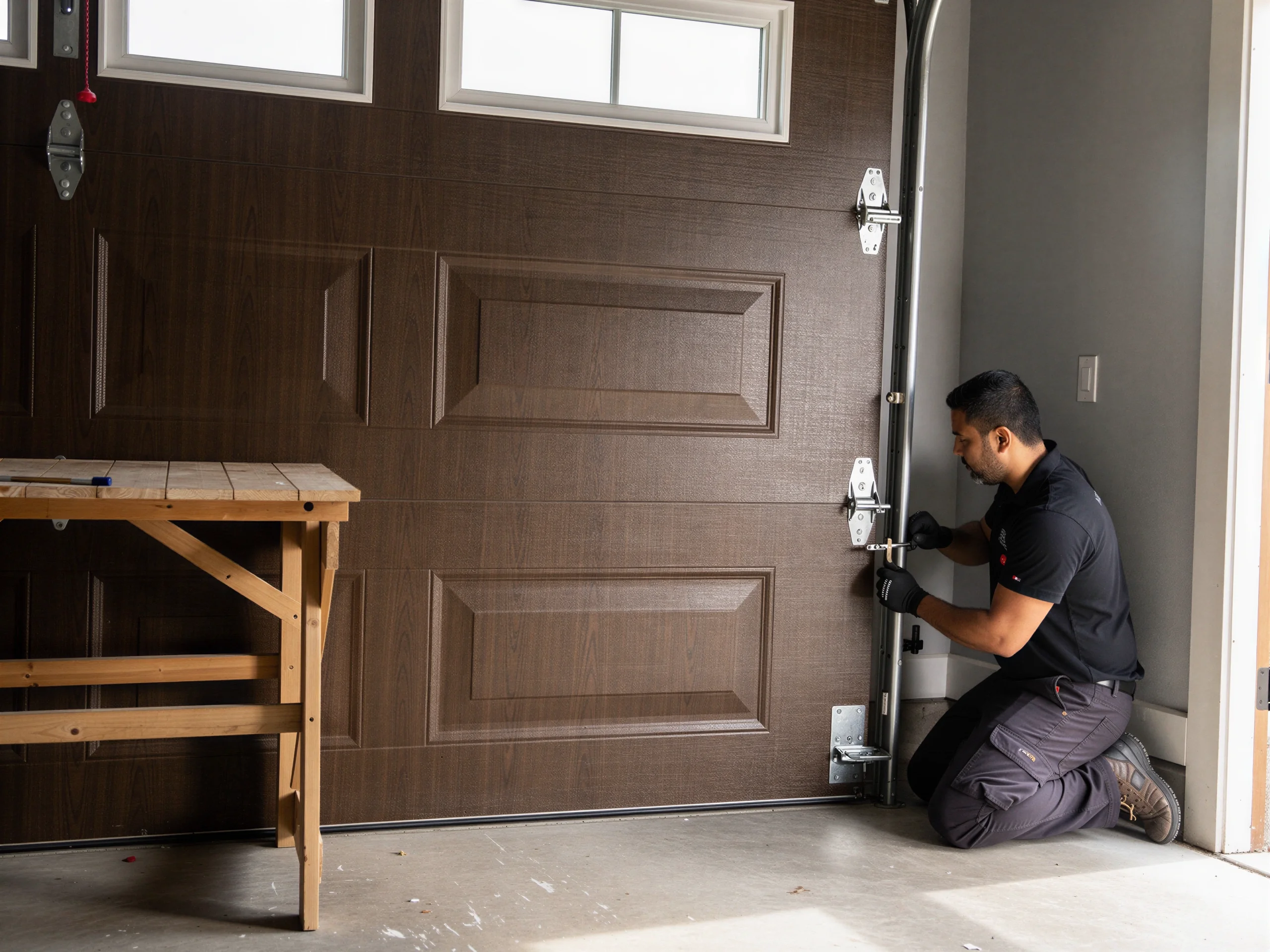
Once we're there, the job length depends on what era of door we're dealing with. A 1978-built house is old enough that the original opener, if it's still in place, is long past any reasonable service life, but the door panels and track are often still the originals too - steel sectional doors from that period were built heavier than today's, which means the track and roller work takes a bit more care to get right. We don't rush a torsion or extension spring swap regardless of the drive time; that's not where you want speed.
What Can Go Wrong
Monroe sits in the same cold-weather band as the rest of the service area, and that matters more for a 1978-era door than people expect.
Cold stiffens extension hardware
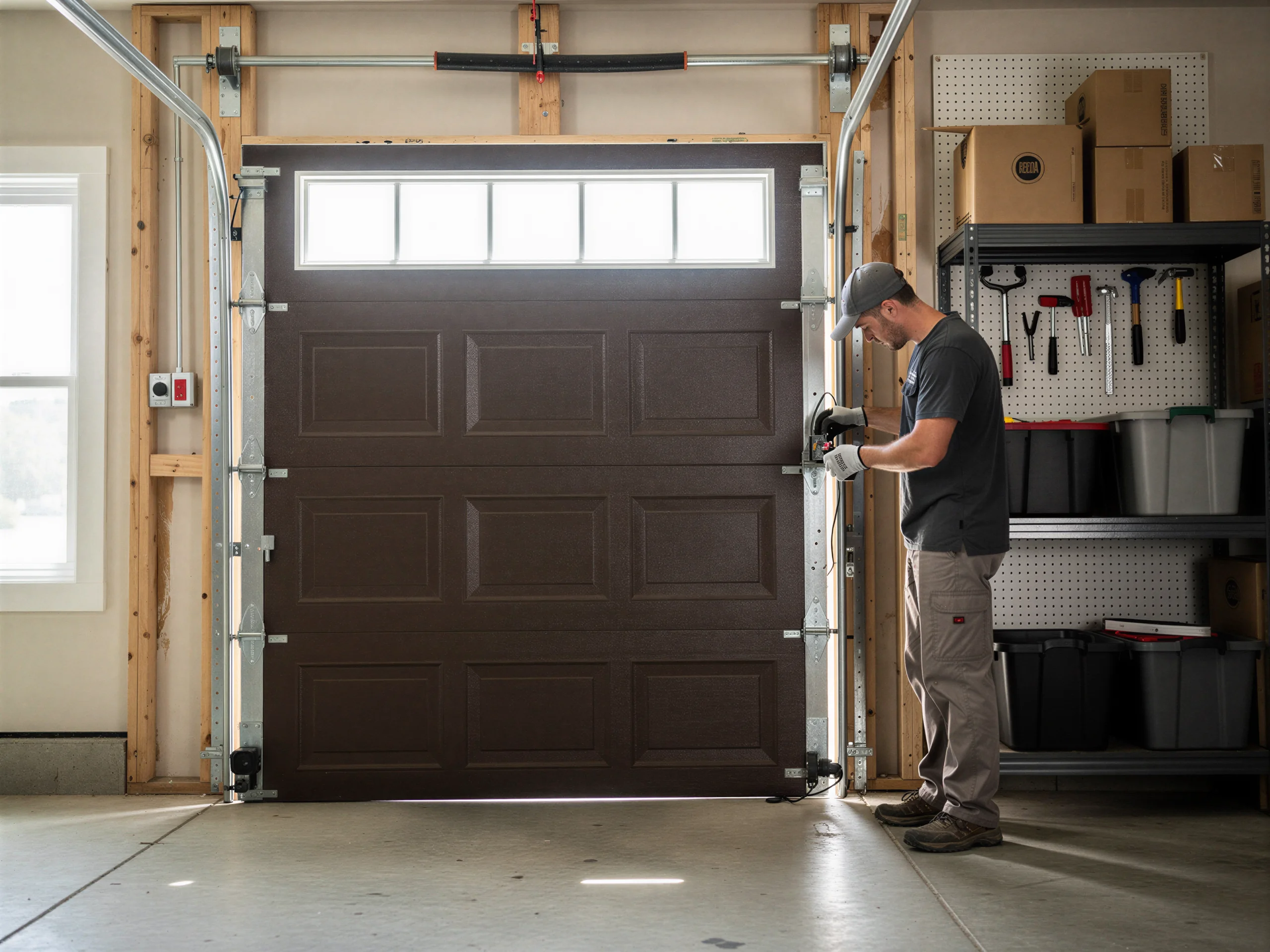
Winter cold stiffens lubricant in rollers and hinges, and on an extension spring system - the kind most common in houses built in this stretch - that stiffness puts extra load on the cables and pulleys rather than a torsion bar.
Pulley cracks and unevenness
When one of those cables frays or a pulley cracks, the door can come down unevenly or jam partway. The other issue we see tied to this build era is opener age.
Aged opener sensors
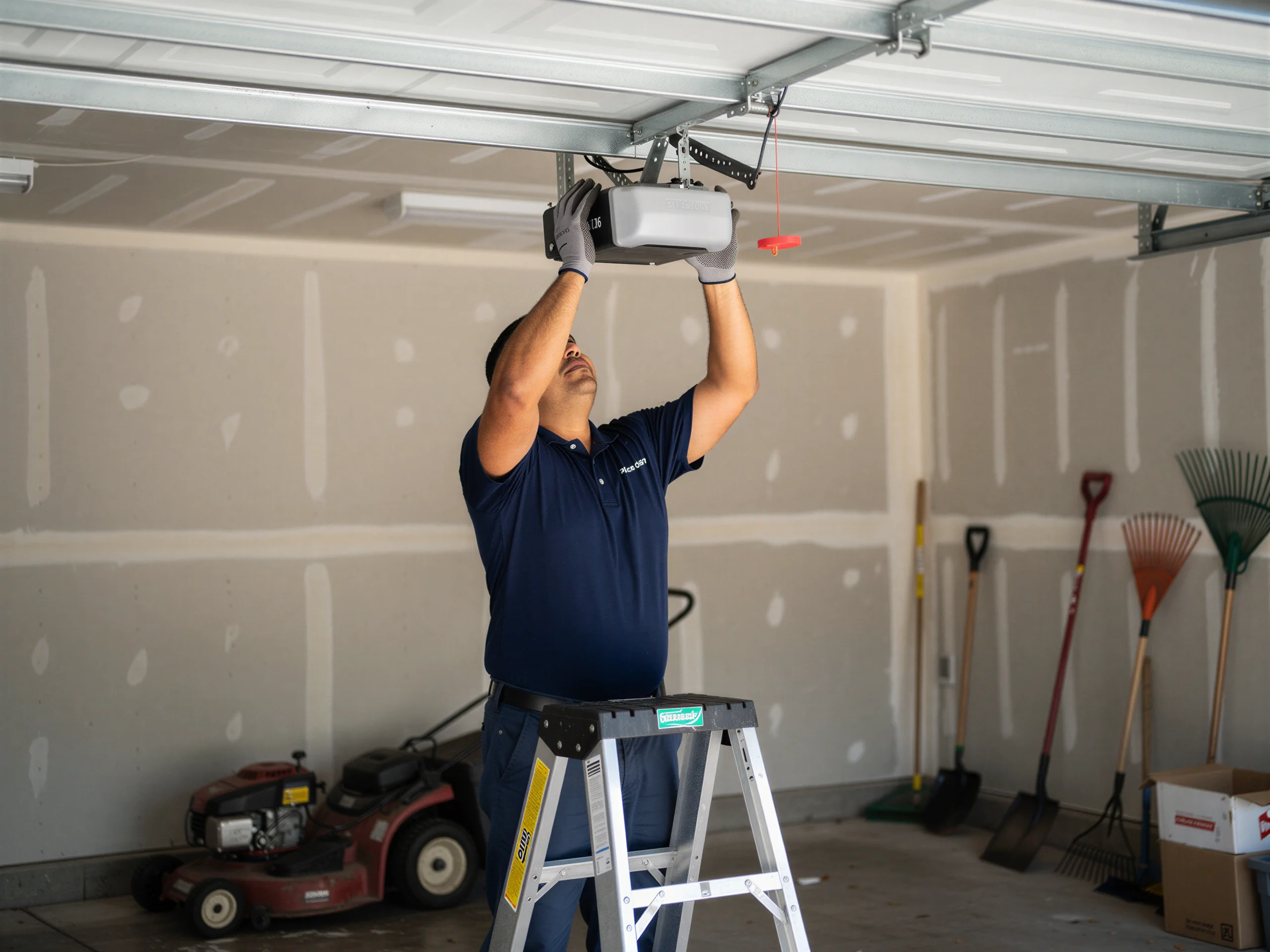
A door from 1978 may have had its opener replaced once or twice since, but if it hasn't, the gears and the safety reversal sensors are well past anything we'd consider reliable. Forcing a door past a failing sensor array isn't a repair you want to defer - it's a safety issue, not a convenience one.
Doing It Yourself
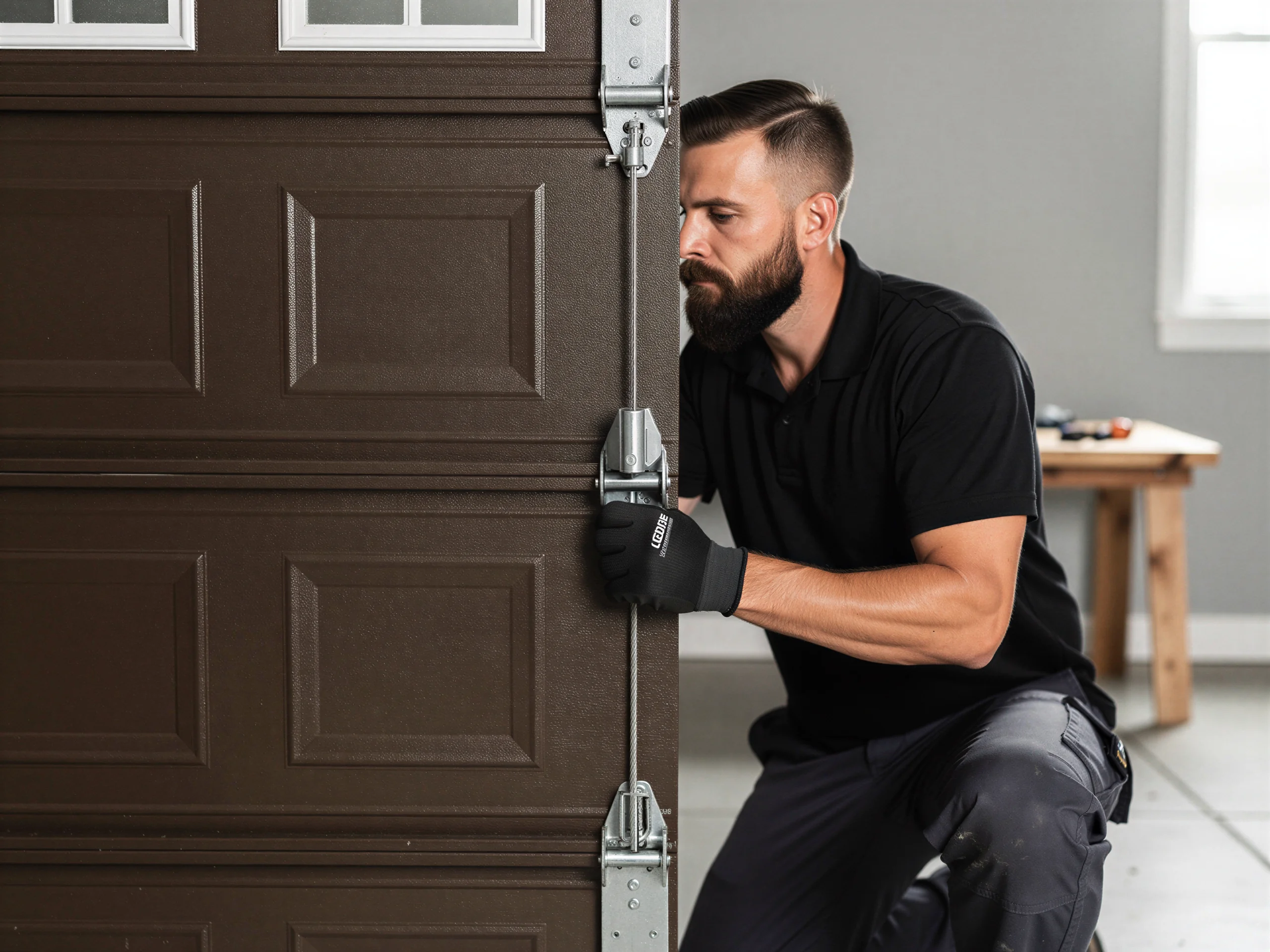
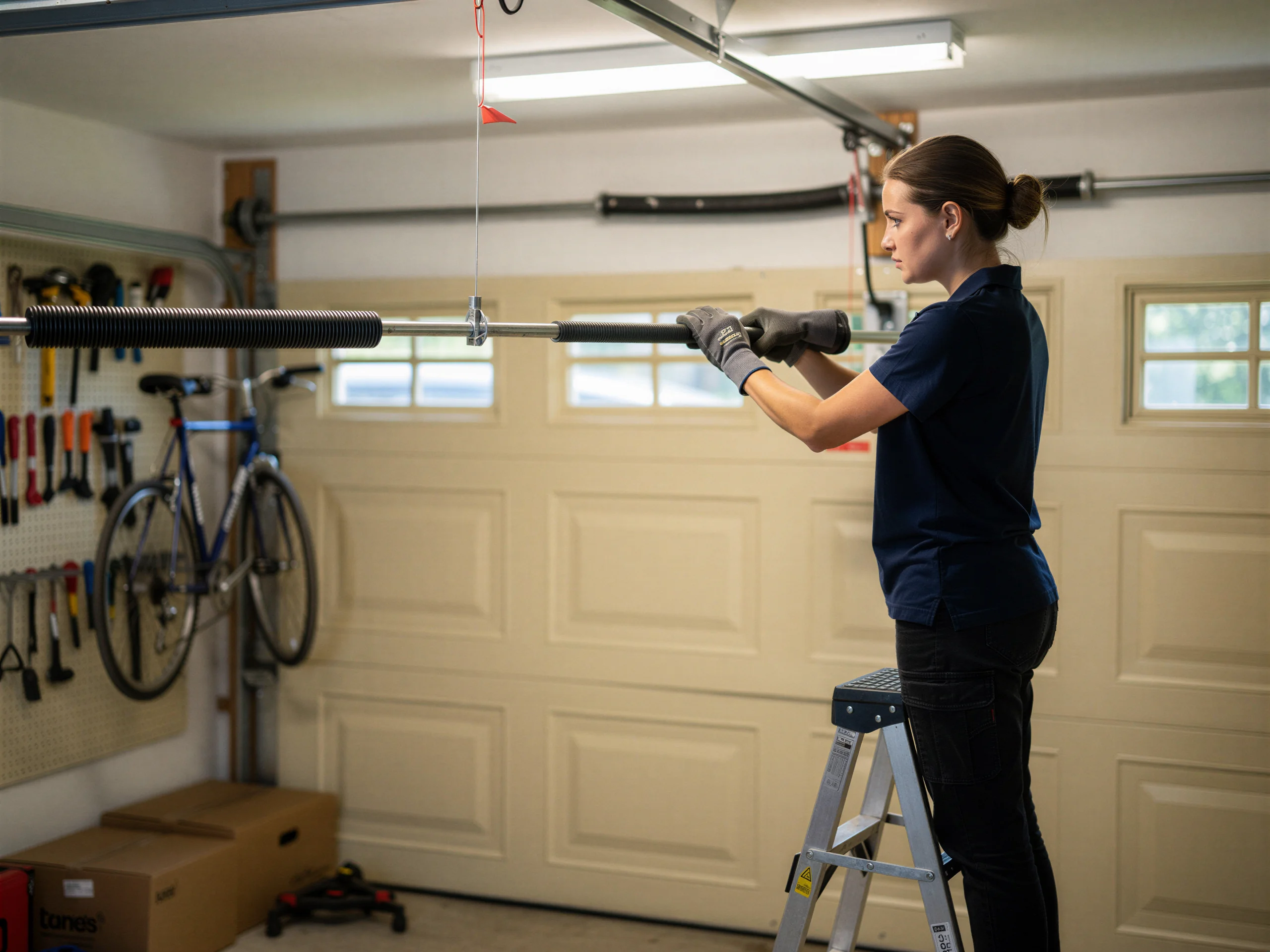
Lubricating hinges, tightening loose hardware, and clearing track debris are all fine to handle yourself, and they go a long way on a door that's been sitting since 1978. What we don't recommend touching yourself is anything involving the spring system. On an extension spring door, the cables run under real tension, and a frayed one that lets go while someone's hands are on the track can cause a serious injury.
One honest limitation here: if your opener or spring assembly is original to a 1978 build, parts for it may simply not be made anymore, and a repair that looks small on paper can turn into a full replacement once we're actually looking at the hardware. We'd rather tell you that up front than quote a repair we can't actually deliver.
Talk to a local pro
Garage door service in Fairfield?
Same-day service with honest, upfront quotes.