What You Pay
We don't quote a number here without seeing the door, and we're not going to pretend otherwise. What we can tell you is what drives the cost on a Monroe job.
Late-sixties torsion setups
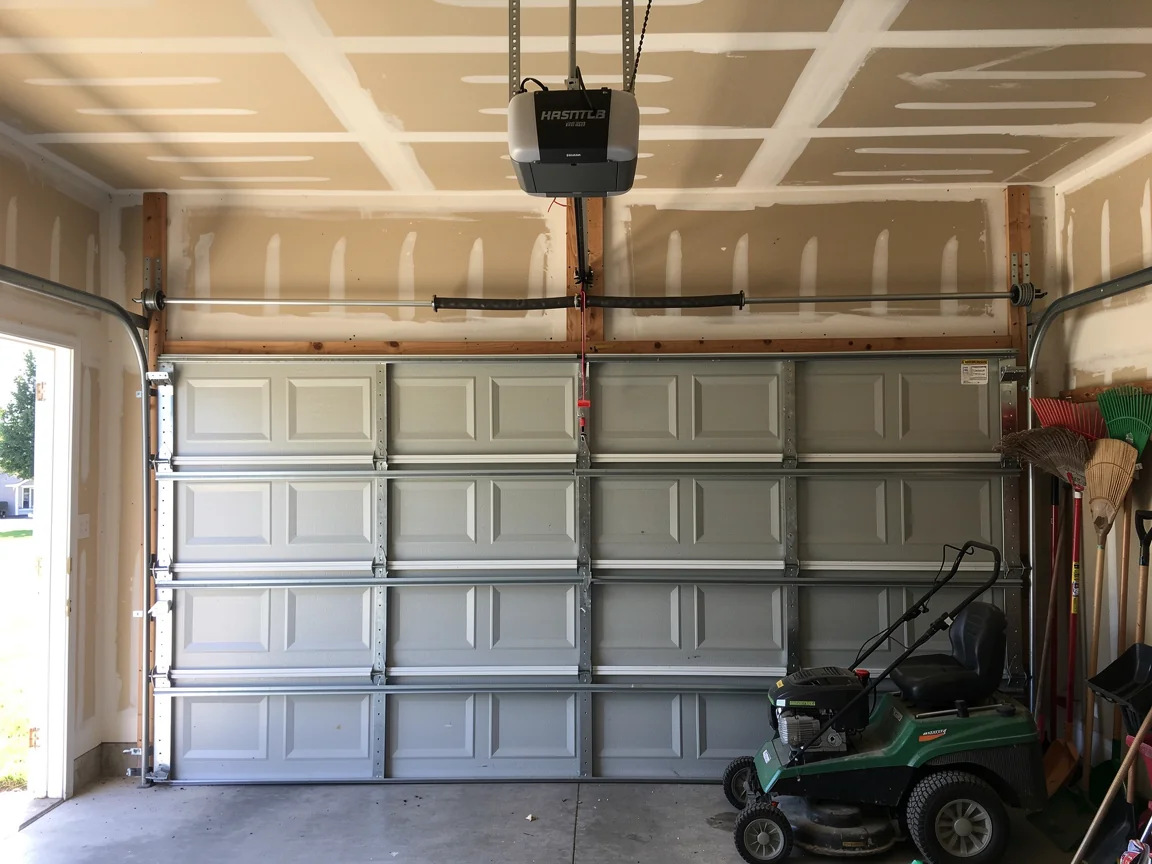
Most houses in town went up through the late 1960s and into 1978 - the newer edge of this area's 1954-to-1984 build window - which means the garage doors on them mostly shipped with torsion springs mounted over the header rather than the side-mounted extension coils you still find on the oldest 1950s houses closer to the shoreline.
Two springs per door
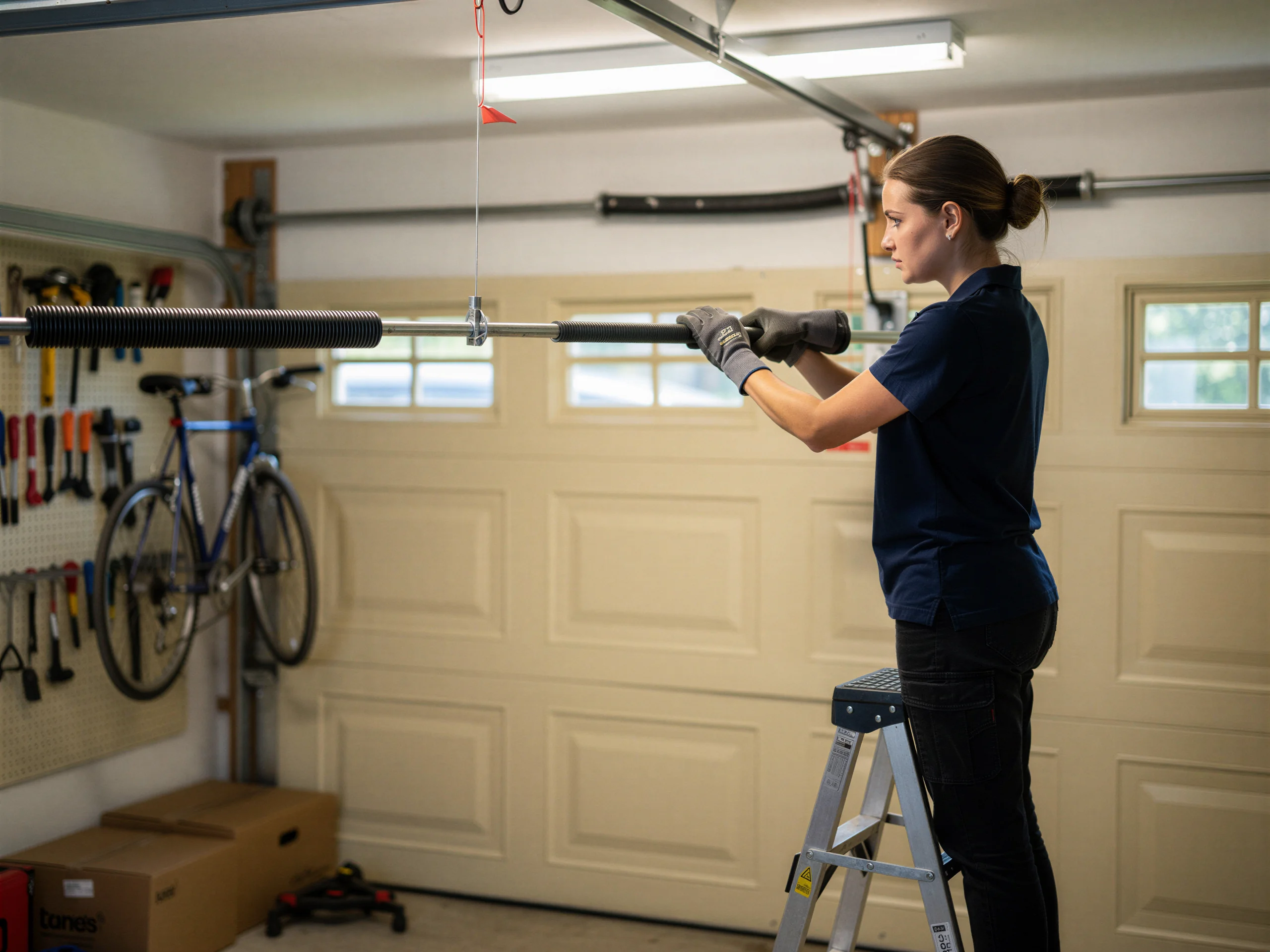
Torsion setups are more standardized, which usually makes parts easier to match than extension kits, but a double door still needs two springs sized to its weight, and a heavier insulated door costs more in spring than a light single-layer one. Cold-climate steel springs, which is what this whole region runs on, also wear by cycle count, not by calendar age, so a door that gets opened six times a day fails sooner than one that sits.
Pricing page reference
For a full breakdown of how we price spring jobs, our main spring repair page covers that in more detail than we will here. We travel to Monroe from Fairfield, about 14 miles. That distance doesn't change the price of the spring - it's the same part whether we drive 1 mile to Southport or 14 to you.
Time on the Job
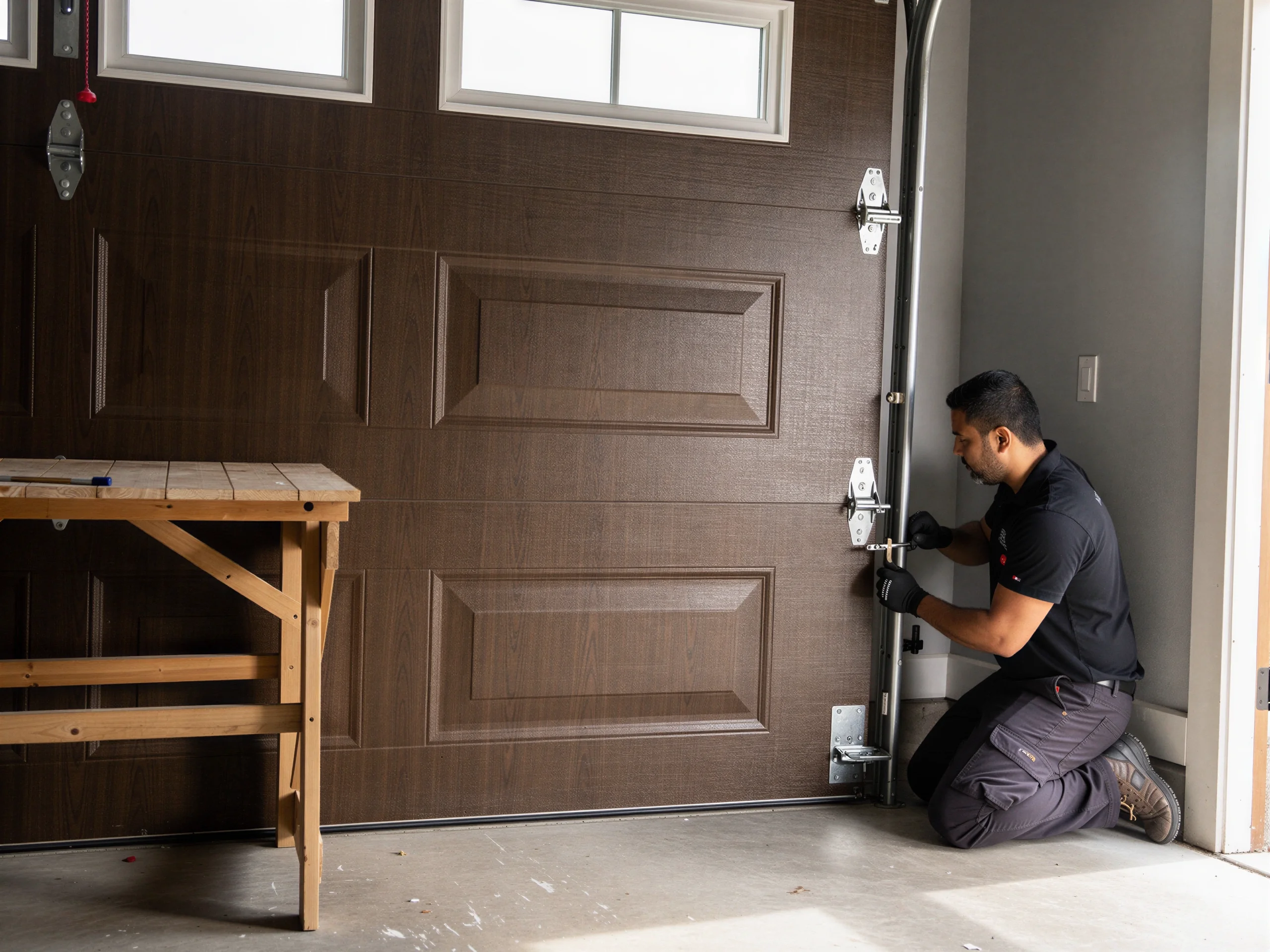
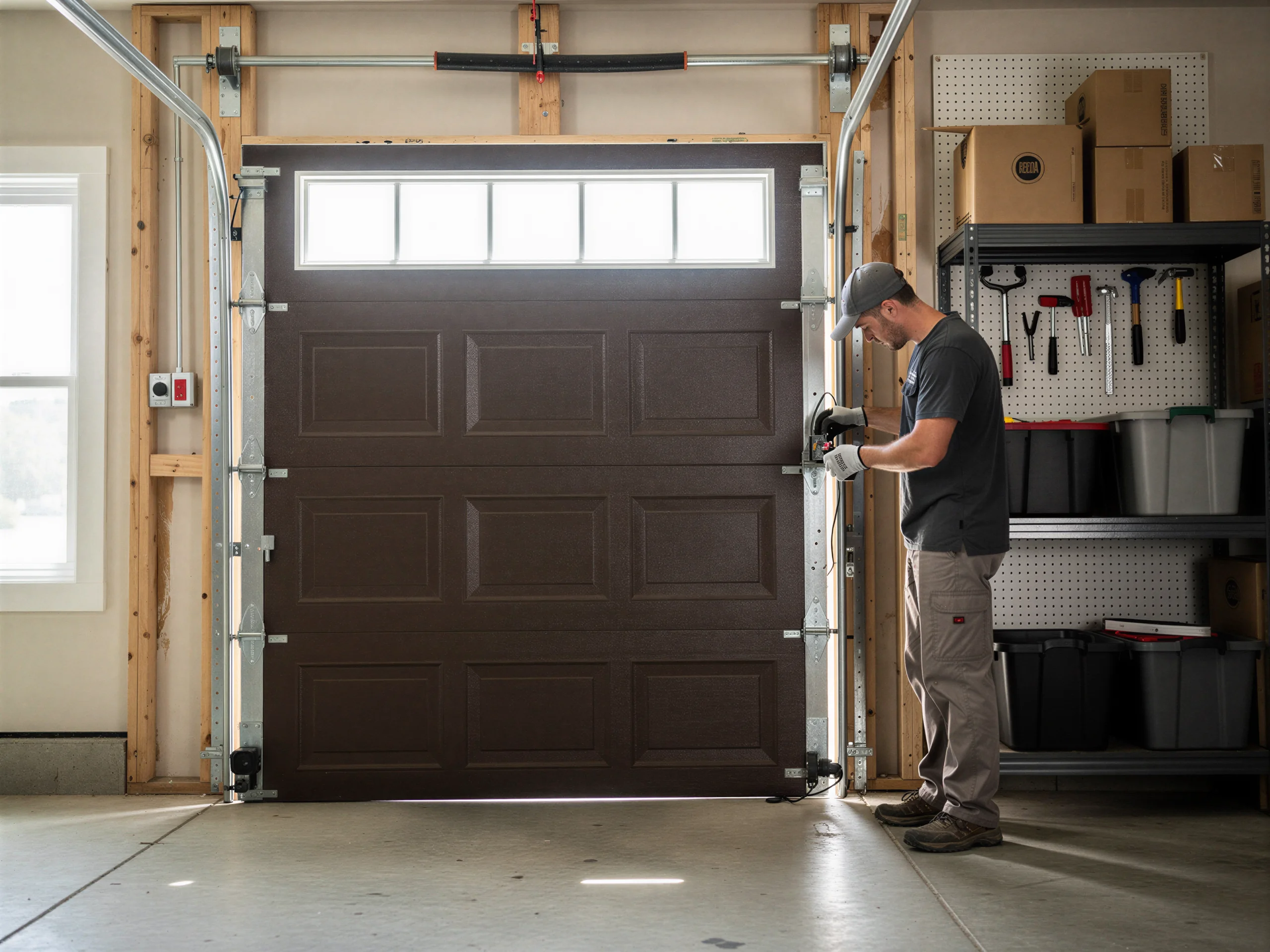
A straight torsion spring swap on a double door, once a truck is actually in the driveway, is a job measured in an hour or two, not a day - that's true of this hardware anywhere it shows up, not just Monroe.
Standard torsion hardware match
What does change by town is what's waiting behind the panel. In Monroe, because most doors date to the late 1960s through 1978, the torsion hardware is close to standard: same drum style, same shaft size, same basic bracket pattern across a lot of houses built in that same decade-and-a-half window. That consistency means less time spent sourcing an odd part and more time spent on the actual repair.
Extension routing varies
Extension-spring doors, more common on the handful of older houses built right at the start of the 1954 window, sometimes take longer because the pulley and cable routing varies more house to house. We won't promise a same-day slot from this page - that's a scheduling question, not a hardware one, and it depends on the day you call.
Only all-day with extras
What we can say is that once we're on site, a spring job doesn't stretch into an all-day affair unless the opener or the track turns out to need work too.
What Can Go Wrong
The springs going into Monroe doors in the late 1960s and through 1978 are now pushing past the point most torsion springs are rated for, even accounting for how many cycles a given household runs.
Fatigue on first cold
That's not a defect, it's just steel fatigue on a 45-to-55-year-old part. In a cold-climate region, that fatigue shows up fastest on the first hard cold snap of the year - steel contracts, gets brittle, and a spring that was already near the end of its cycle count lets go.
Partner spring fails next
On a double door, when one spring breaks, the other one is usually not far behind it, since they were wound and installed at the same time. The other failure mode we see on 1960s-70s stock is a cable that's frayed from running over a worn-out drum for decades without anyone noticing, because the spring takes the blame for every noisy door even when it's actually fine.
Pulleys wear out first
On older extension-spring setups from right at the front edge of the 1954-1984 window, the pulleys wear out before the springs do, and that gets missed because nobody thinks to look there.
Doing It Yourself
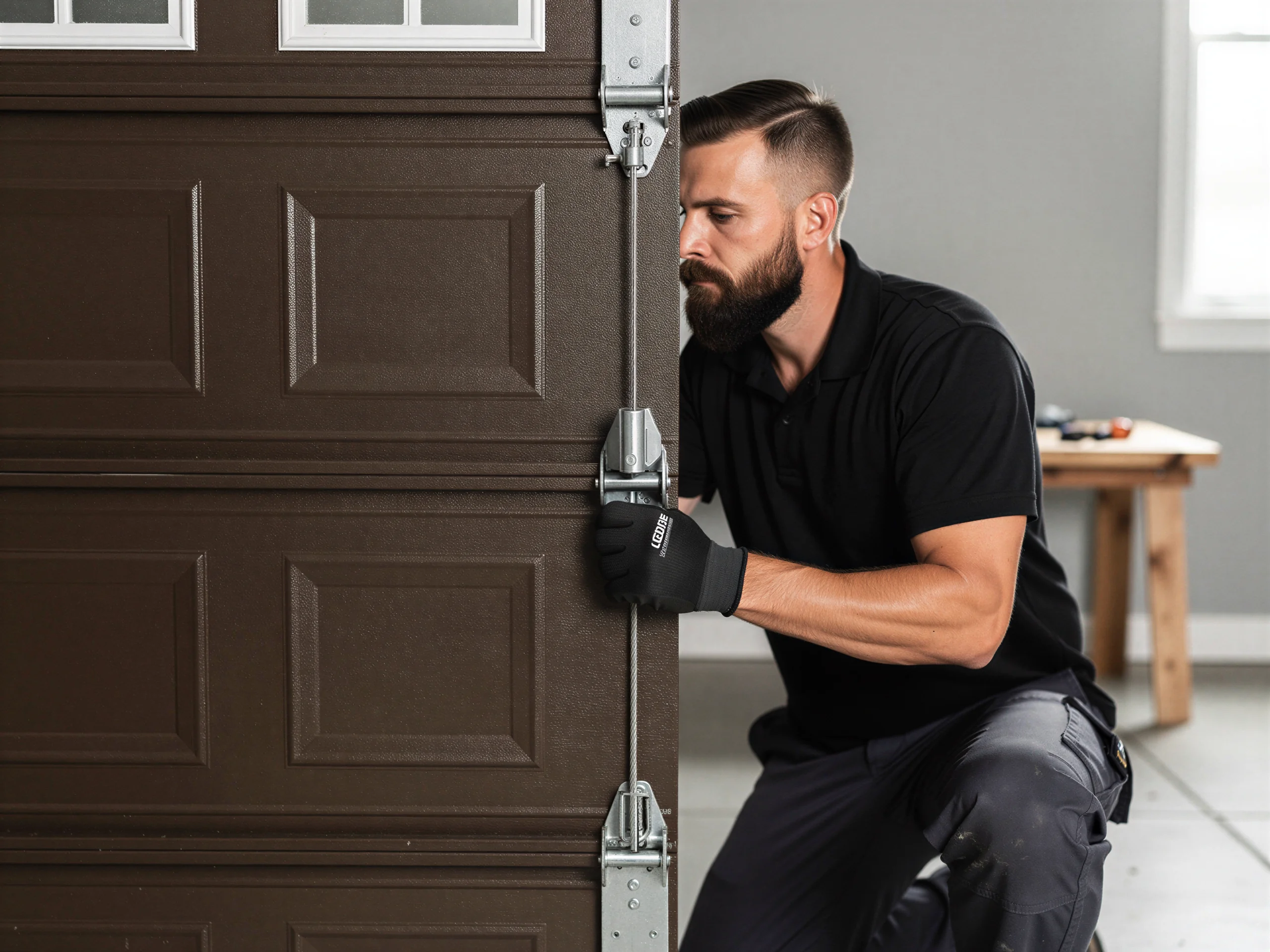
A torsion spring is wound under enough tension to break a bone or worse, and that's true no matter how old the door is or who built the house. We don't recommend homeowners attempt a torsion spring replacement, full stop - the winding bars and the clamping step are not something to learn on your own garage. Extension springs carry less stored energy and are a little more forgiving, but even those have hurt people who didn't use a safety cable. If you're set on doing something yourself, the safe jobs are lubricating hinges and rollers, tightening loose bracket bolts, and listening for a cable that's starting to fray before it snaps. Replacing the spring itself isn't one of those jobs, and we'll say that plainly rather than hand you a list of tools and wish you luck. If your door is original to a late-1960s or 1970s build, there's also a decent chance the spring size on it is no longer a stocked size, and guessing wrong on torsion wire gauge is how a repair turns into a second service call.
Talk to a local pro
Garage door service in Fairfield?
Same-day service with honest, upfront quotes.